How Many Silverback Gorillas Are left in the World?
How Many Silverback Gorillas Are left in the world? Ultimate Guide 2026 Update
Understanding how many silverback gorillas are left in the world in 2026 is essential for anyone considering a gorilla trekking safari in Uganda, Rwanda, or DR Congo.
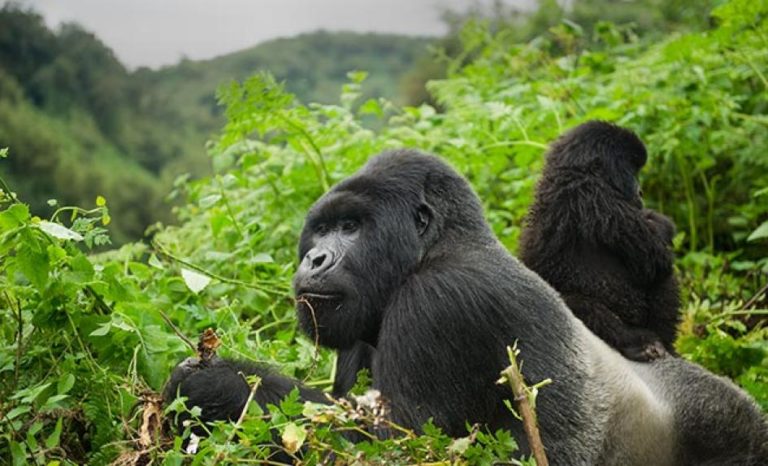
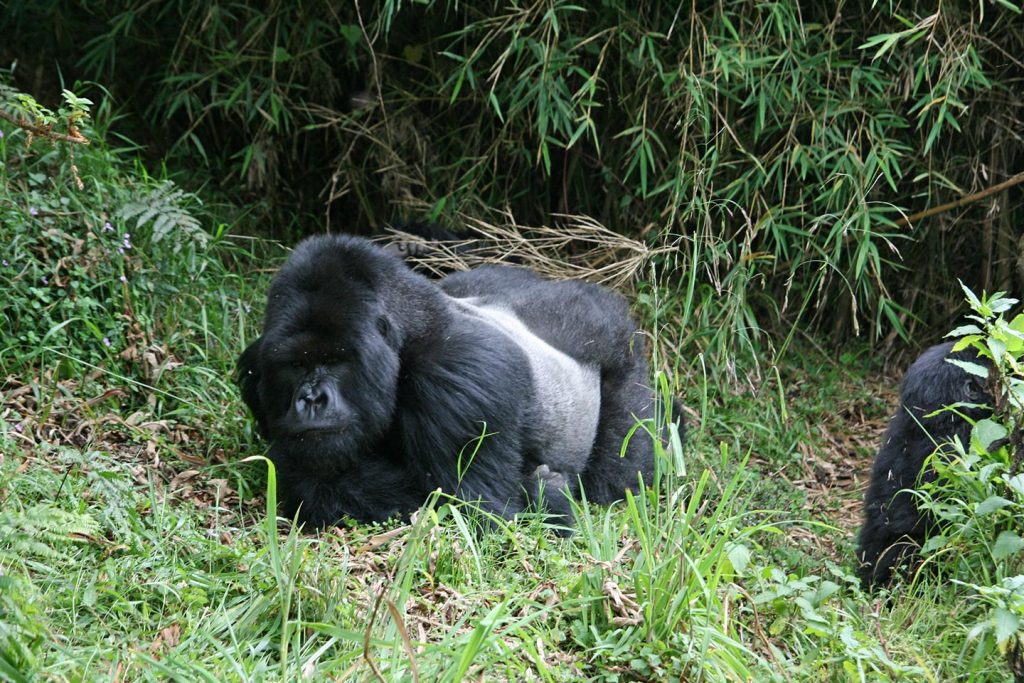
Silverbacks are not a separate species; they are adult male gorillas, typically over 12 years old, characterized by the distinctive silver-grey hair on their backs and shoulders.
These males are the dominant leaders of gorilla families, responsible for security, group decisions, and mating.
Because silverbacks exist only within larger gorilla populations, we estimate their numbers by looking at total gorilla counts and family structures rather than an exact standalone figure.
As of recent assessments, about 1,063–1,064 mountain gorillas remain in the wild, primarily in the Bwindi Impenetrable National Park in Uganda and the Virunga Massif shared by Rwanda, Uganda, and DR Congo.
This makes mountain gorillas one of the rarest great apes on earth. By contrast, western lowland gorillas number in the hundreds of thousands, although their populations are still under threat and classified as ‘critically endangered’.
When you ask how many silverback gorillas are left in the world, you are really asking how many mature male leaders exist within these fragile, scattered populations of mountain and lowland gorillas.
Thanks to intensive conservation efforts, strict protection, regulated gorilla trekking, and community-based tourism, mountain gorilla numbers have slowly increased over recent decades.
However, they remain classified as Endangered, and every single silverback is vital to the stability of its family and the future survival of the species.
This is why well-managed gorilla tourism and responsible tour operators like Adventure Uganda Safaris / Maranatha Tours and Travel play a direct role in conservation funding and local livelihoods.
Are you interested in seeing silverback gorillas during a gorilla trek in Africa, but you are not certain about how many there are in the wild? Discover everything about how many silverback mountain gorillas are in the wild today, facts, where to find silverback gorillas, permits, and how many mountain gorillas still survive in the wild.
Getting up close with silverback mountain gorillas in the wild is 100% possible during silverback gorilla trekking adventures.
How Many Mountain Gorillas and Silverbacks Exist Today?
To understand how many silverback mountain gorillas are left in the world, we need to start with total mountain gorilla numbers and then look at how gorilla families are structured.
Mountain gorillas only occur in two main regions:
-
The Bwindi Impenetrable Forest in Uganda
-
The Virunga Area, including:
-
Volcanoes National Park (Rwanda)
-
Virunga National Park (DR Congo)
-
Mgahinga Gorilla National Park (Uganda)
-
Across these regions, the latest consolidated estimates place the global mountain gorilla population at around 1,063 individuals in the wild.
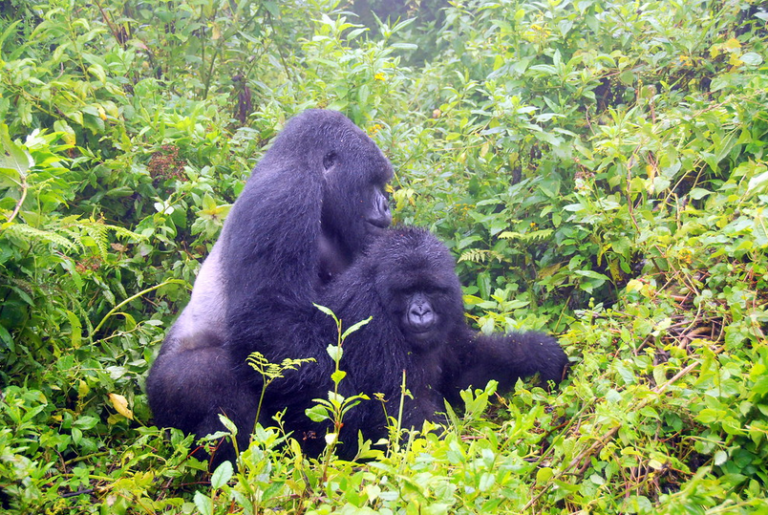
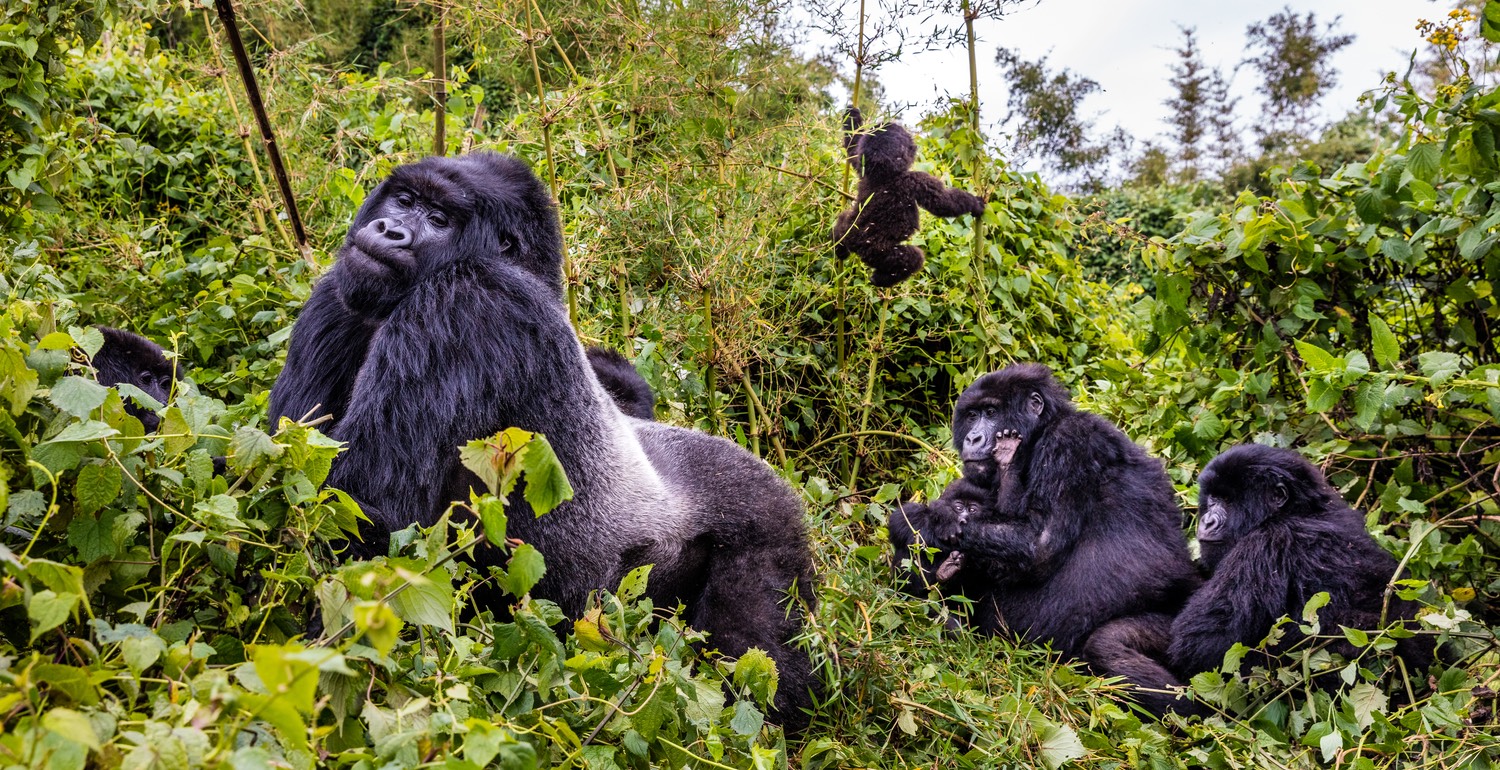
These gorillas are divided into multiple family groups, each led by one dominant silverback, although some families may have additional subordinate males, including younger blackbacks that later become silverbacks themselves.
Because gorilla families split, merge, and sometimes change structure, it is almost impossible to state an exact number of silverbacks worldwide.
-
Globally, there are just over 1,000 mountain gorillas.
-
Only a portion are mature males aged 12+ with silver hair and full leadership status.
-
Most gorilla families have one dominant silverback, while a smaller percentage have multiple adult males.
This means that the silverback population is measured indirectly, based on habituated gorilla groups, known family sizes, and census data.
Silverback Gorilla Populations by Gorilla Destination
Here is the breakdown of where silverback gorillas live and how many habituated families exist in each destination.
Uganda: Bwindi & Mgahinga
In Uganda, silverback mountain gorillas live in:
-
Bwindi Impenetrable National Park
-
Mgahinga Gorilla National Park
Across Bwindi and Mgahinga, there are about 25 habituated gorilla families/groups open for tourism.
Each of these groups is led by at least one adult silverback gorilla, and some families may have more than one mature male.
In addition, there are non-habituated gorilla groups that are not open to tourists but are still monitored and protected; these also have silverbacks.
Silverback gorillas in Bwindi and Mgahinga occupy different sectors of the park, and each habituated group is assigned a limited number of daily trekking permits.
This is where Bwindi gorilla trekking safaris and Mgahinga gorilla trekking tours become essential keywords for your content and internal links.
Rwanda: Volcanoes National Park
In Volcanoes National Park in Rwanda, there are around 13 habituated mountain gorilla groups open for tourism.
Each habituated group has at least one silverback, sometimes more, especially in larger or split families.
Rwanda’s Volcanoes National Park is one of the most popular destinations for luxury gorilla trekking, and its permits are priced higher than neighboring countries, reflecting demand, management, and conservation funding.
DR Congo: Virunga National Park & Kahuzi‑Biega
In Virunga National Park (DR Congo), there are about 8 habituated mountain gorilla groups, each led by silverbacks.
Virunga is part of the greater Virunga Massif ecosystem and is known for its wild, dramatic scenery and conservation challenges.
DR Congo also hosts eastern lowland gorillas, including eastern lowland silverbacks, in:
-
Kahuzi‑Biega National Park
-
Maiko National Park (with many non‑habituated groups)
Why It’s Hard to Count Silverback Gorillas Exactly
A strong ranking signal is explaining why data is uncertain instead of giving a misleading exact figure.
You can build topical authority by clarifying the reasons:
-
Family structure changes. Gorilla groups frequently split, merge, or form new families, changing which individuals are silverbacks or blackbacks.
-
Multiple males per group. Some groups have more than one adult male, including retired or subordinate silverbacks.
-
Habituation status. Not all gorilla families are habituated for tourism; many non‑habituated groups are harder to monitor accurately.
-
Natural life cycles. Gorillas age, die, and mature over time, so counts are always estimates rather than fixed numbers.
Therefore, rather than claiming a precise global number of silverbacks.
It is more accurate and authoritative to state that silverbacks represent the mature male leadership segment of a population of just over 1,000 mountain gorillas and several hundred thousand lowland gorillas and that their exact count changes over time.
How many Silverback Gorillas are there in the wild?
How many silverback mountain gorillas are left in the world? The silverback gorilla population can be determined depending on the number of gorilla families.
Across destinations such as Bwindi Impenetrable National Park, Mgahinga Gorilla National Park, Volcanoes National Park, and Virunga National Park.
each of these mountain gorilla safari destinations, there are gorilla families, each led by mature adult male gorillas (silverback gorillas).
In Uganda’s Bwindi and Mgahinga National Park, there exist about 25 habituated gorilla families/groups.
In Volcanoes National Park, there are 13 habituated groups of mountain gorillas, and Virunga National Park in Congo comprises 8 habituated groups.
These habituated gorilla groups are led by silverback mountain gorillas.
Aside from the above-habituated gorilla families, other groups have not been opened for actual gorilla tourism. They are also led by silverback gorillas.
Ascertaining the exact silverback gorilla population isn’t easy because the composition of gorilla families keeps changing.
These primates often split, creating different families, and some groups may have more than one silverback.
We can estimate how many silverback gorillas are left in the world by looking at how many silverbacks are in each gorilla family group.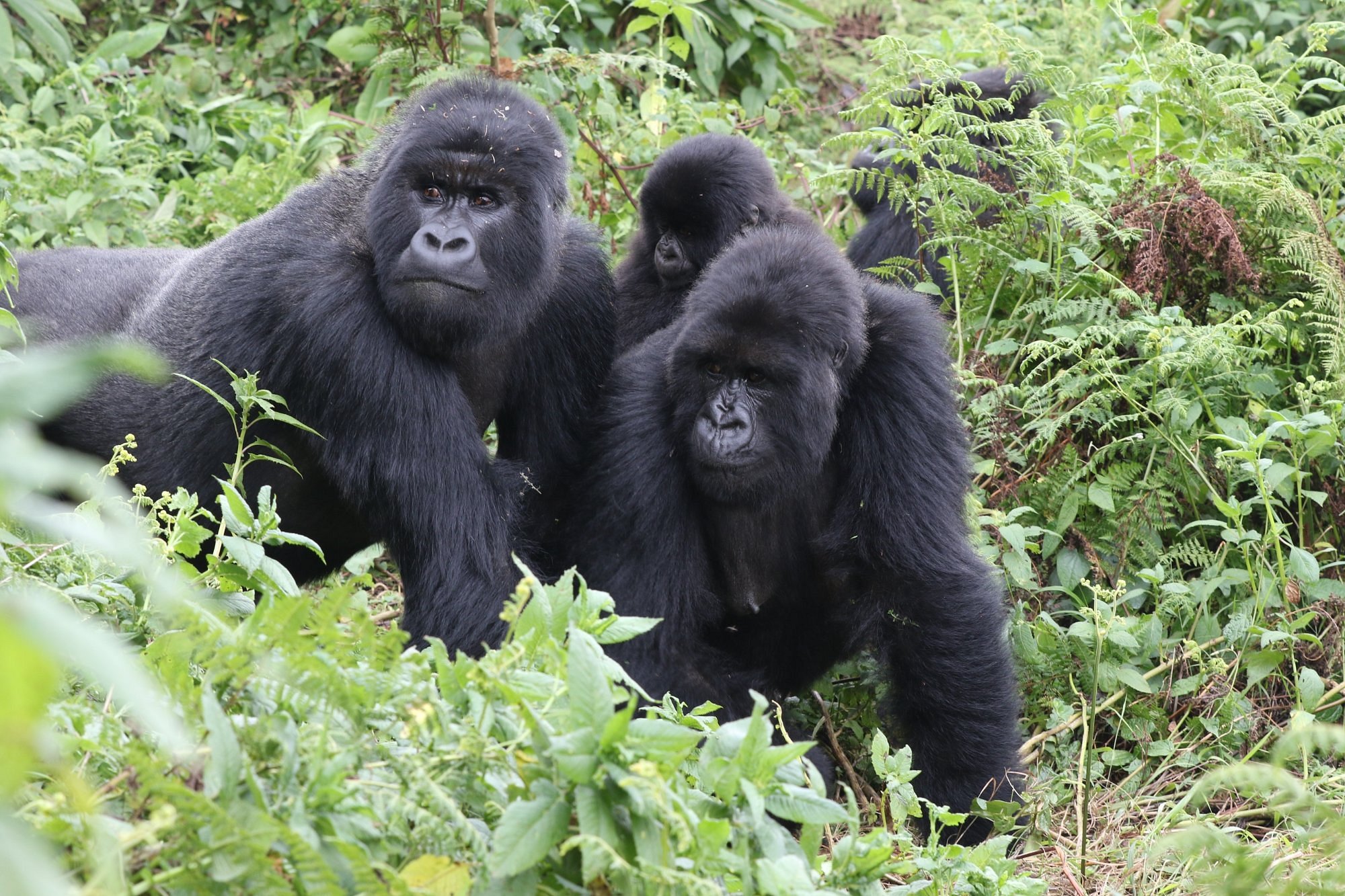
Where can I see Silverback Gorillas in the Wild?
The best places to find Silverback Gorillas in the wild are Uganda, Rwanda, and Congo. These are excellent for Silverback Mountain Gorilla encounters.
Eastern Lowland Silverback gorillas are best explored in Kahuzi-Biega National Park, but a section of them also exists in Maiko National Park, although most of the Eastern Lowland gorillas in Maiko have not undergone habituation.
Do Silverback Gorillas live in the wild?
Absolutely YES! Silverback gorillas survive in the natural tropical rainforest. Particularly, the mountain gorilla silverbacks occupy only the jungles of Bwindi, Mgahinga, Volcanoes, and Virunga National Park.
Up close with these massive creatures in the wild is possible on a guided Silverback Gorilla Trekking tour in Uganda, Rwanda, and Congo with the local expert – Maranatha Tours and Travel.
Are Silverback Gorillas Endangered?
Yes. Silverback gorillas are part of gorilla species that are Endangered or Critically Endangered, and their survival is under constant pressure from human activities and environmental changes.
The current conservation status is:
-
Mountain gorillas – Endangered
-
Western lowland gorillas – Critically Endangered
-
Eastern lowland gorillas – Endangered/Critically Endangered in many areas
Key threats include:
-
Habitat loss due to agriculture, logging, and human settlement
-
Poaching and illegal wildlife trade
-
Infectious diseases, including those transmitted by humans
-
Civil conflict and instability affecting protected areas
Despite these threats, the mountain gorilla population has slowly increased over the last decades thanks to strong cross‑border collaboration, park protection, gorilla tourism revenue, and community engagement.
How many silverback mountain gorillas are left in the world? Visit Bwindi, Mgahinga, Volcanoes, and Virunga National Park to unearth more about silverback gorillas and discover how many there are in the wild.
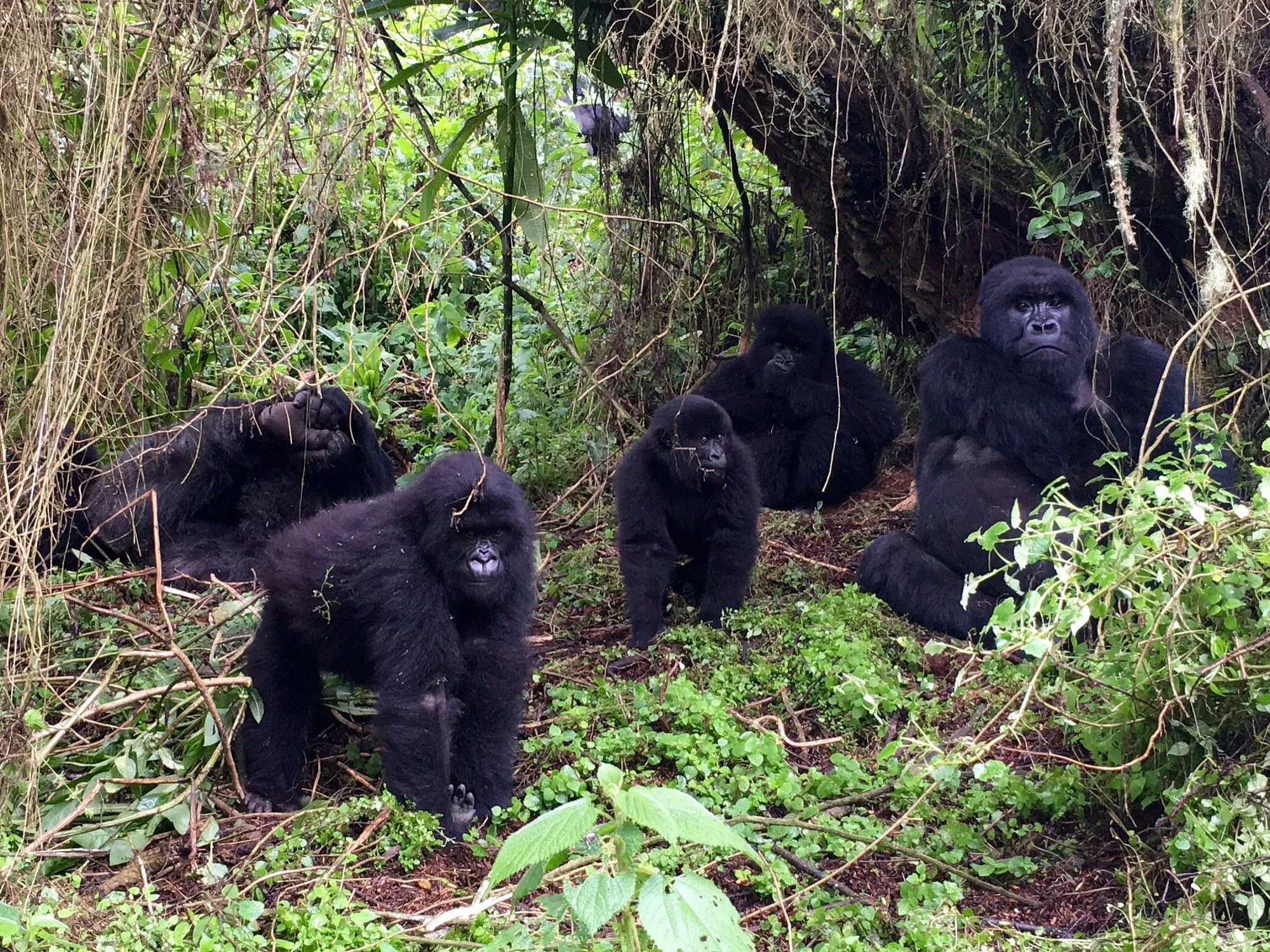
Silverback Gorilla Behavior and Facts
To deepen topical authority and user engagement, enrich your silverback gorilla facts section with behavior and ecology:
-
Diet: Silverback gorillas are mainly vegetarians, feeding on leaves, stems, shoots, fruits, and other plant parts. An adult silverback can consume up to 40 pounds of vegetation per day.
-
Strength: Silverbacks are extremely powerful, often estimated to be around 9 times stronger than an average adult human, with dense muscle mass and robust jaws.
-
Size: Many silverback gorillas weigh 400+ pounds, depending on habitat and individual health.
-
Social role: Silverbacks lead the group, protect members, make decisions about movement and feeding, and are responsible for mating with adult females.
-
Age and appearance: Around 12–13 years, males develop the characteristic silver-grey hair on their backs, signaling maturity and leadership status.
Who Is Eligible to Trek Silverback Gorillas?
Not everyone can trek gorillas. To protect both visitors and gorillas, strict eligibility rules apply:
-
Minimum age: Only people 15 years and above are allowed to participate in gorilla trekking.
-
Physical fitness: Trekkers should be reasonably fit, as hikes can be steep, muddy, and last several hours.
-
Health considerations: Visitors with contagious illness may be restricted to prevent disease transmission.
Travelers within this age and health bracket can book gorilla permits in their preferred destination (Uganda, Rwanda, or DR Congo).
How Much Are Silverback Gorilla Permits in 2026?
-
Uganda Gorilla Permits (Bwindi & Mgahinga)
-
Foreign non‑residents: USD 800 per person
-
Foreign residents: USD 700 per person
-
Rest of Africa category: USD 500 per person
-
East African citizens: payable in UGX (local currency)
-
-
Rwanda Gorilla Permits (Volcanoes National Park)
-
Standard price: USD 1,500 per person
-
-
DR Congo Gorilla Permits (Virunga / Kahuzi‑Biega)
-
Approximate price: USD 450 per person
-
These gorilla permits must be booked in advance due to limited daily slots.
They can be secured through a local tour operator such as Adventure Uganda Safaris / Maranatha Tours and Travel via email at info@adventureugandasafaris.com or through their contact page.
Best Time to Trek Silverback Gorillas
The best time to go for silverback gorilla trekking is primarily during the dry seasons, when trails are less slippery and access is easier:
-
Short dry season: December, January, February
-
Long dry season: June, July, August, September
During these months, rainfall is lower, forest paths are more manageable, and visibility is usually better for trekking and photography.
However, gorilla trekking is technically possible year‑round, and some travelers prefer shoulder seasons for fewer visitors and slightly lower demand.
What to Pack for Silverback Gorilla Trekking
Packing correctly ensures comfort, safety, and enjoyment.
Essential items include:
-
Long‑sleeved shirts
-
Long, durable trousers
-
Waterproof hiking boots
-
Rain jacket or poncho
-
Safari hat or cap
-
Waterproof daypack
-
Insect repellent
-
First aid kit
-
Valid gorilla permit
-
A good camera without flash
Optional items: gardening gloves, gaiters, snacks, and extra layers for higher altitudes.
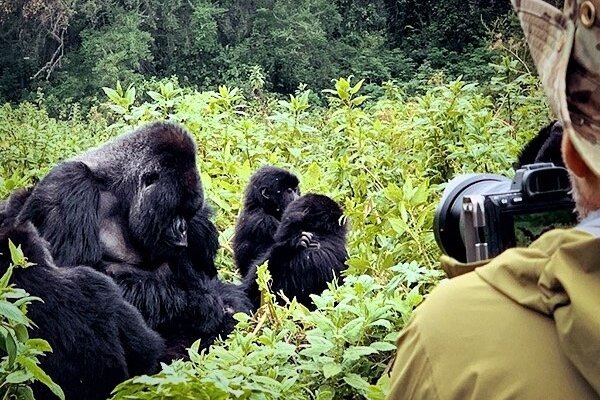
Emphasize that flash photography is not allowed because it can disturb gorillas and may cause stress or aggression.
How Long Does a Silverback Gorilla Trek Take?
A typical gorilla trek to see silverback gorillas lasts around 2–6 hours, depending on where the gorilla family is located on the day of your visit.
The experience usually follows this pattern:
-
Morning briefing at park headquarters about rules, safety, and gorilla behavior.
-
Group allocation, where visitors are assigned to specific gorilla families based on fitness and other factors.
-
Guided trek through forest or mountain terrain to locate the gorilla group.
-
One hour of viewing with the gorillas once they are found, at a regulated distance (usually 7–8 meters).
The park officials also allocate visitors to gorilla groups to trek during the briefing session.
How Many Days Do You Need for a Silverback Gorilla Trek?
Silverback gorilla trekking itineraries can be tailored to different travel schedules:
-
2–3 days – short gorilla trekking tour
-
4 days – double gorilla trek or gorillas plus wildlife
-
5–6 days – extended gorilla and wildlife combination safaris
-
Longer itineraries (8–22 days) – multi‑country safaris combining Uganda, Rwanda, and DR Congo
Highlight popular packages and include internal links such as:
-
3 Days Bwindi Gorilla Trekking
-
4 Days Double Gorilla Trek
-
5 Days Gorillas & Chimps Safari
-
12 Day Uganda & Rwanda Safari
-
22 Days Uganda Rwanda Tour
Plan and book your silverback gorilla trek in advance with the local expert Maranatha Tours and Travel.

Key Regulations for Silverback Gorilla Trekking
To protect gorillas and visitors, strict gorilla trekking rules apply. Emphasize these to show expertise and support safety‑related queries:
-
Maintain a 7–8 meter distance from gorillas.
-
Stay calm and follow ranger instructions if a gorilla shows signs of aggression or charges.
-
Avoid direct eye contact with gorillas; lowering your face shows submission.
-
Do not use flash photography.
-
Keep noise to a minimum during the trek.
-
You must be 15+ years old to participate.
-
A valid gorilla permit is mandatory.
Where to Stay on a Silverback Gorilla Trek
Accommodation around gorilla parks ranges from budget to ultra‑luxury. Mention well‑known lodges to improve topical depth and support travel planning queries:
In Bwindi & Mgahinga (Uganda):
-
Buhoma Lodge
-
Nkuringo Bwindi Gorilla Lodge
-
Chameleon Hill Lodge
-
Sanctuary Gorilla Forest Camp
-
Ichumbi Gorilla Lodge
-
Clouds Mountain Gorilla Lodge
-
Engagi Lodge
In Volcanoes National Park (Rwanda):
-
Wilderness Bisate Lodge
-
Virunga Lodge
-
Sabyinyo Silverback Lodge
-
Five Volcanoes Boutique Hotel
-
One & Only Gorilla Nest
-
Muhabura Hotel
Popular Gorilla Safari Packages Worth Booking
- 3 Days Bwindi Gorilla Trekking
- 3 Days Congo Gorilla Safari
- 4 Day Gorillas &Wildlife Safari
- 4 Days Double Gorilla Trek
- 4 Days Rwanda Gorillas and Mt Bisoke
- 4 Days Gorilla Trekking Safari
- 4 Days Gorilla Trekking Safari
- 5 Days Gorilla and wildlife safari
- 5 Days Gorilla Safari
- 5 Days Gorillas & Chimps Safari
- 6 Days Bwindi Gorillas & Wildlife safari
- 8 Days Rwanda Safari
- 12 Day Uganda & Rwanda Safari
- 22 Days Uganda Rwanda Tour
Frequently Asked Questions
How many silverback gorillas are left in the world?
There is no exact number of silverback gorillas alone, because a silverback is a mature male within a gorilla group. However, globally there are about 1,000 mountain gorillas and over 300,000 western lowland gorillas, meaning only a fraction of these are silverbacks. Each gorilla family typically has one dominant silverback, making them relatively rare.
What is a silverback gorilla?
A silverback gorilla is an adult male gorilla, usually over 12 years old, identified by the distinct silver hair on its back. The silverback is the leader of the group, responsible for protecting members, making decisions, and guiding daily activities like feeding and movement.
Are silverback gorillas endangered?
Yes, silverback gorillas are part of species that are classified as endangered or critically endangered.
- Mountain gorillas are Endangered
- Western lowland gorillas are Critically Endangered
Threats include habitat loss, poaching, disease, and human conflict.
Where Can Silverback Gorillas Be Found?
Silverback gorillas live in the dense forests of Central and East Africa, especially in:
- Bwindi Impenetrable National Park
- Mgahinga Gorilla National Park
- Volcanoes National Park
- Virunga National Park
These are the only places in the world where you can see mountain gorillas in the wild.
Can tourists see silverback gorillas in the wild?
Yes, tourists can see silverback gorillas through guided gorilla trekking safaris in Uganda, Rwanda, and DR Congo. In Uganda, trekking in Bwindi Impenetrable National Park offers one of the best chances to encounter a silverback up close. Permits are required and should be booked in advance due to limited availability.
Conclusion
In conclusion, the number of silverback gorillas remaining in the wild is still critically limited, with just over a thousand mountain gorillas surviving today.
While conservation efforts have led to encouraging population growth, these powerful yet vulnerable primates continue to face threats from habitat loss, poaching, and human encroachment.
Every single gorilla matters, and their future depends heavily on responsible tourism and continued protection efforts.
This is where your journey can make a real difference. By choosing to experience gorilla trekking, you are directly contributing to conservation funding, local community support, and the long-term survival of these magnificent creatures.
Seeing a silverback gorilla in its natural habitat is not just a safari—it’s a once-in-a-lifetime, life-changing encounter that connects you deeply with nature.
Now is the time to turn your dream into reality. Book your unforgettable gorilla trekking adventure with Adventure Uganda Safaris today and be part of the global effort to protect these endangered giants.
Permits are limited and in high demand, so secure your spot now and experience one of Africa’s most extraordinary wildlife encounters while helping preserve it for generations to come.