
Mountain Gorillas: Facts, Pabitat, Population, Conservation & Safaris Guide 2026 Guide
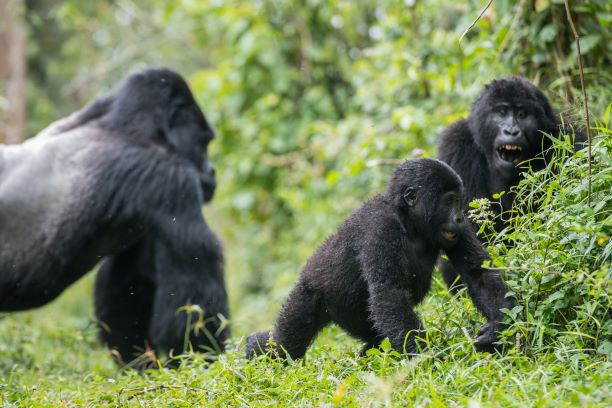
Mountain gorillas represent the pinnacle of Africa’s wildlife majesty, drawing adventurers to gorilla trekking safaris across Uganda, Rwanda, and DR Congo.
As gentle giants with profound family bonds and awe-inspiring strength, these endangered mountain gorillas captivate millions, fueling conservation tourism that sustains their fragile existence.
This ultimate guide explores their biology, habitats, threats, and gorilla trekking experiences, mountain gorilla facts, where to see mountain gorillas, and best Uganda gorilla tours—equipping you to plan an unforgettable Africa gorilla safari while contributing to their survival.
What Are Mountain Gorillas?
Mountain gorillas belong to the Hominidae family, sharing 98% DNA with humans, which underscores their evolutionary closeness and vulnerability.
Scientific classification places them as a subspecies of Eastern gorillas: Kingdom Animalia, Phylum Chordata, Class Mammalia, Order Primates, Family Hominidae, Genus Gorilla, Species beringei, Subspecies beringei.
They differ markedly from lowland gorillas (Gorilla gorilla gorilla) by their larger size, thicker fur, and adaptation to high altitudes—lowland cousins thrive in West/Central African forests at sea level, while mountain gorillas endure cooler climates up to 4,300 meters.
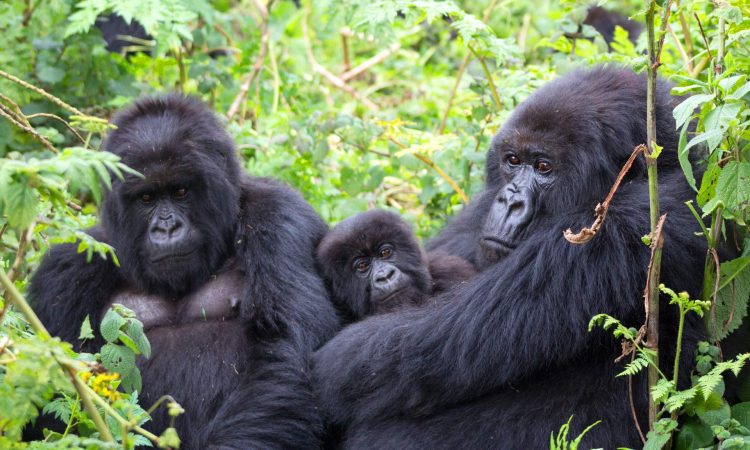
What makes mountain gorillas unique? Their sagittal crest—a bony ridge anchoring massive jaw muscles—enables herbivorous diets of tough vegetation, unlike frugivorous lowlands.
Females weigh 90-100kg with shorter canines; males reach 220kg. Iconic silverbacks lead troops with protective authority, fostering social harmony rare in other primates.
These traits, combined with expressive faces and knuckle-walking gait, make mountain gorilla encounters profoundly moving, topping African wildlife safaris for emotional impact.
Where Do Mountain Gorillas Live?
The geographic range of mountain gorillas spans just 780 km² across three countries, making habitat protection critical for mountain gorilla conservation.
In Uganda, Bwindi Impenetrable National Park (Uganda’s UNESCO site) and Mgahinga Gorilla National Park host ~600 individuals amid impenetrable forests.
Rwanda‘s Volcanoes National Park shelters ~500 in the Virunga Volcanoes, famous for Dian Fossey’s research. DR Congo‘s Virunga National Park adds ~300, though instability hampers access.
Key parks define where to trek mountain gorillas:
-
Bwindi Impenetrable National Park: Dense, misty forests; 20+ habituated families.
-
Mgahinga Gorilla National Park: Smaller, steeper; Nyakagezi family treks.
-
Volcanoes National Park: Volcanic slopes; 10 tourist groups like Susa A.
These transboundary hotspots demand cross-border gorilla safaris for comprehensive views, blending Rwanda’s luxury with Uganda’s affordability.
Mountain Gorilla Population and Conservation Status
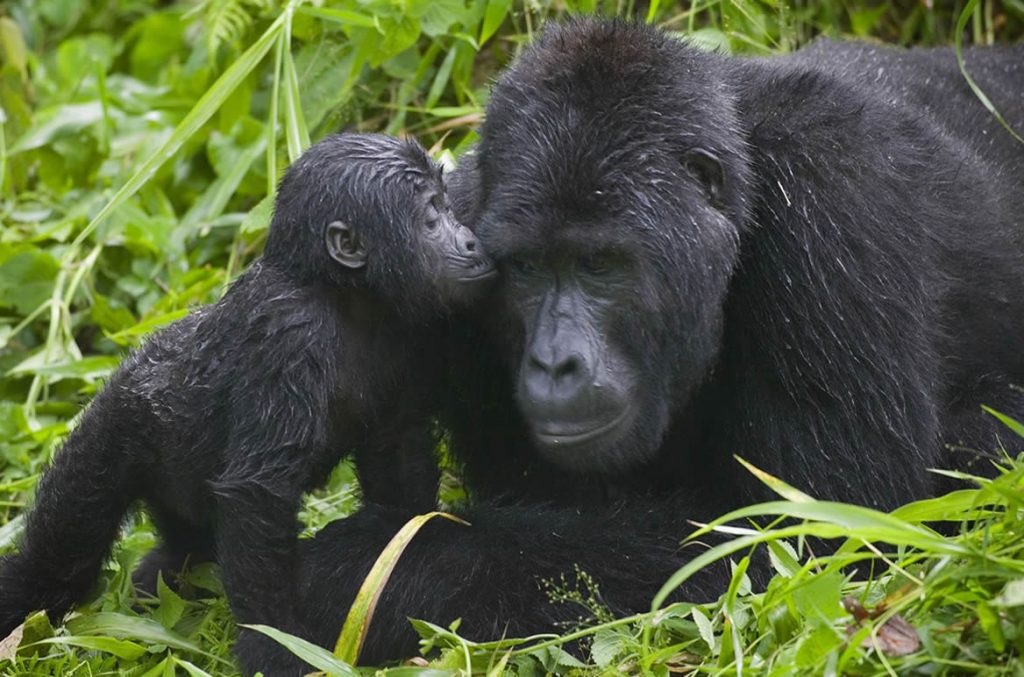
Current mountain gorilla population exceeds 1,000 individuals—1,063 per the 2018 census, with 2026 estimates nearing 1,100 thanks to vigilant monitoring.
The IUCN lists them as Endangered (down from Critically Endangered in 2018), a rare conservation win amid global declines. They were perilously endangered due to 1980s lows of ~250 from poaching and habitat loss, but sustained efforts reversed trends.
Population breakdown:
-
Bwindi: ~459 (stable).
-
Virungas: ~604 (growing 3-4% annually).
This rebound highlights successful gorilla conservation, yet small numbers risk inbreeding—your gorilla trekking permit funds censuses tracking every troop.
Why Mountain Gorillas Are Endangered
Despite progress, mountain gorillas remain endangered from multifaceted threats. Habitat loss devours forests via agriculture, logging, and mining—DRC coltan extraction fragments Virungas at 1-2% yearly.
- Poaching for bushmeat snares or trophies killed dozens pre-2000s; snares still maim limbs.
- Disease transmission from tourists (flu, Ebola) exploits low immunity, with genetic bottlenecks amplifying risks.
- Human-wildlife conflict arises from crop raids near parks, pitting farmers against gorillas.
Cumulative impacts halved populations in decades, but eco-tourism counters them—trekking revenue ($50M+ annually) funds patrols, proving vital for saving mountain gorillas.
Conservation Efforts Protecting Mountain Gorillas
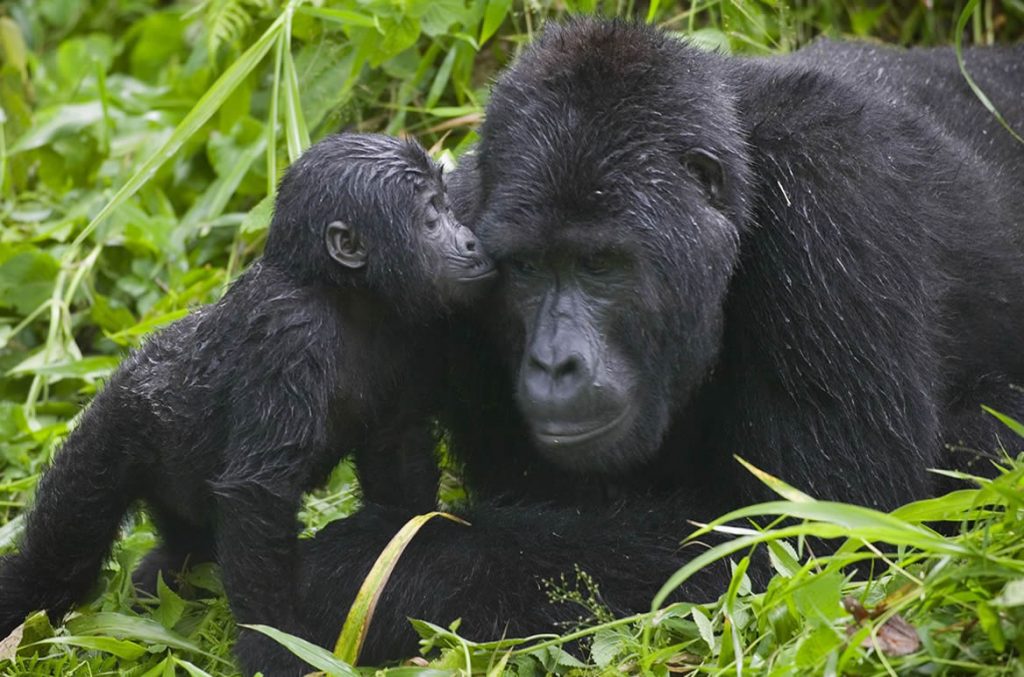
Robust conservation efforts shield mountain gorillas. Governments enforce anti-poaching via ranger patrols; Uganda/Rwanda allocate 70% of gorilla permit fees to protection.
NGOs like WWF, AWF, and IGCP deploy SMART tech for snare removal (5,000+ yearly) and veterinary care. Community tourism transforms locals into stakeholders—revenue-sharing builds schools, reducing encroachment.
Notable initiatives:
-
Dian Fossey Gorilla Fund: Anti-poaching, habituation.
-
Virunga Alliance: Transboundary monitoring.
-
Bwindi partnerships: Beekeeping alternatives.
These yield 26% growth since 2007, with gorilla safaris as economic engines.
Physical Characteristics of Mountain Gorillas
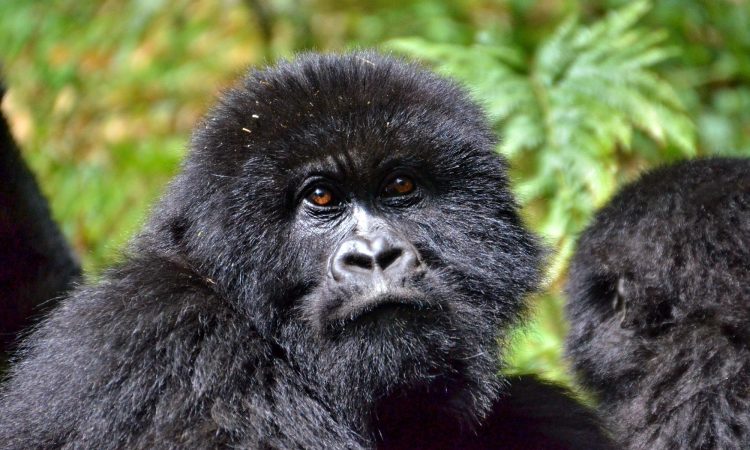
Mountain gorillas boast imposing physiques: Males stand 1.7m tall, weigh 150-220kg; females 1.5m, 90-100kg. Silverback dominance defines leaders—blackened back hair signals maturity, with canines for display.
Thick fur adaptation (up to 4cm) insulates against 0-20°C montane chills, black pelage camouflaging in shadows. Broad chests house powerful arms spanning 2.3m, propelling 4-legged locomotion.
Distinct features include prominent brow ridges, large nostrils, and herbivore dentition—evolutionary marvels for Africa’s gentle giants.
Mountain Gorillas Behavior and Social Structure
Gorilla families comprise 5-30 members led by a silverback, who arbitrates disputes and defends against rivals. Females nurture infants (3-4kg birth weight) for 3 years; multi-male troops offer backups.
Communication blends 20+ vocalizations (grunts, hoots), chest-beats, and pheromones—subtle gestures convey 90% intent.
Daily life cycles naps, feeding, play; silverbacks charge intruders, embodying protective patriarchy in harmonious mountain gorilla society.
Diet of Mountain Gorillas
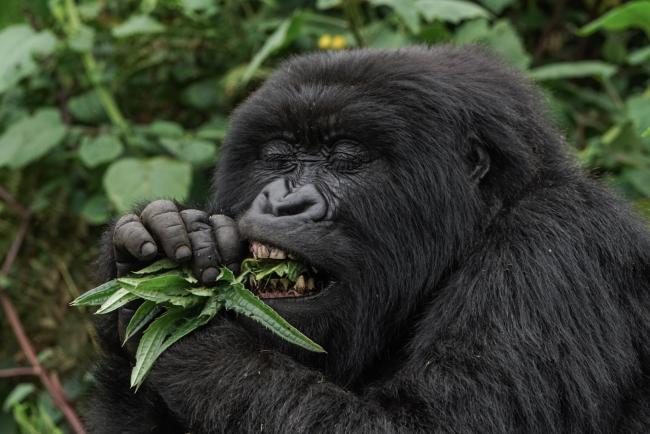
Strictly herbivorous, mountain gorillas consume 18-34kg daily foliage—bamboo shoots (40%), wild celery, thistles, bark. Daily feeding habits span 50% of waking hours, dawn-dusk foraging climbing 30m trees.
Seasonal shifts favor fruits in wet months; fermentation chambers digest cellulose efficiently.
This folivore diet demands vast ranges (15-20km²/troop), tying conservation to habitat integrity.
Mountain Gorilla Habitat and Ecosystem
- Mountain gorilla habitat features afromontane forests: bamboo zones (2,200-2,800m), subalpine meadows (3,000-4,300m).
- Altitude range shields from lowlanders, fostering endemism.
- Biodiversity importance supports 120+ mammals, 300 birds—elephants engineer clearings, birds control insects.
Protecting these ecosystems via gorilla tourism preserves keystone species.
Mountain Gorilla Trekking in Africa
Transitioning from wonder to action, gorilla trekking offers ethical access to mountain gorillas, blending adventure with impact.
What Is Gorilla Trekking?
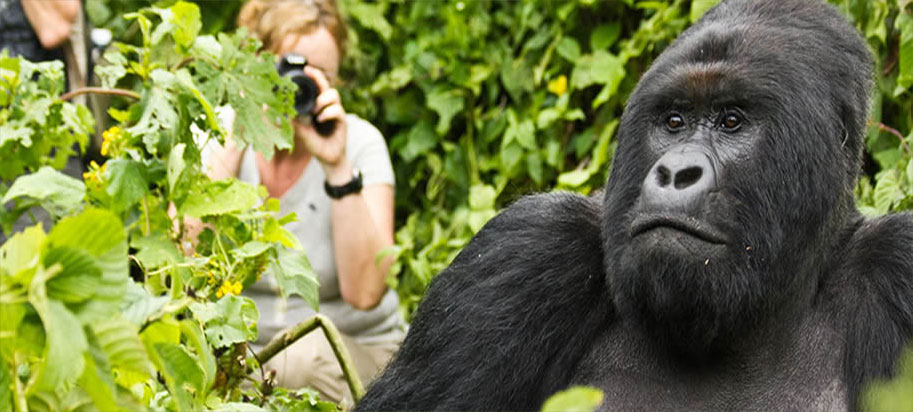
Gorilla trekking entails guided hikes to habituated families, lasting 2-6 hours through forests for a magical one-hour observation. Professional rangers ensure safety, revealing behaviors up close.
Where to See Mountain Gorillas
Prime spots: Bwindi Impenetrable National Park (17 families), Volcanoes National Park (10 groups)—best places for gorilla trekking.
Cost of Gorilla Trekking
Uganda permit: $800/person. Rwanda permit: $1,500/person—includes briefing, guide.
Best Time to See Mountain Gorillas
Dry seasons (Jun-Sep, Dec-Feb) offer optimal trekking conditions: less mud, clearer views. Rainy periods (Mar-May, Oct-Nov) lushen trails but challenge footing.
Challenges of Gorilla Trekking
Physical difficulty demands fitness—steep inclines, roots test endurance. Weather conditions swing 5-25°C; terrain includes vines, streams. Porters ease loads.
Why Uganda Is the Best Place for Gorilla Trekking
Uganda leads with 23 habituated families, affordable permits ($800 vs. Rwanda’s $1,500), and diverse safari options (chimps, Big Five). Bwindi’s accessibility trumps Virungas.
Safari Experience: What to Expect
Early morning briefing at 7 AM assigns groups (8 max). Trekking duration: 2-6 hours. One hour with gorillas: Pure awe—photograph silently.
Accommodation Options Near Gorilla Parks
-
Budget: ~$100/night (e.g., Buhoma Community).
-
Mid-range: $300-500 (e.g., Gorilla Forest Camp).
-
Luxury lodges: $800+ (e.g., Sanctuary Gorilla Forest—volcano views).
Packing List for Gorilla Trekking
-
Waterproof hiking boots, gaiters.
-
Rain jacket, gloves, hat.
-
Insect repellent, binoculars, no-flash camera.
Travel Tips for Gorilla Safaris
-
Book permits early (6 months ahead).
-
Choose the right sector (e.g., Ruhija for quiet).
-
Hire a porter ($15/day).
Economic Impact of Gorilla Tourism
Gorilla tourism generates $100M+ yearly, with community benefits (schools, clinics), job creation (1,000+ rangers), and conservation funding (70% permits to parks).
Frequently Asked Questions
How many mountain gorillas are left?
Over 1,000.
Is gorilla trekking safe?
Yes, with rules; 99% success.
Which country is best for gorilla trekking?
Uganda for value.
How difficult is gorilla trekking?
Moderate-strenuous.
What’s the gorilla permit cost?
Uganda: $800, Rwanda $1,500.
Best time for gorilla safaris?
Dry seasons.
Age limit for trekking?
15+.
Can kids go gorilla trekking?
No, 15+ only.
How long is a trek?
2-6 hours +1hr viewing.
Do I need travel insurance?
Essential.
What to wear gorilla trekking?
Long sleeves, boots.
Conclusion: Why Mountain Gorillas Are Worth Protecting
Mountain gorillas embody nature’s fragility and resilience, their soulful eyes urging protection amid threats. By trekking ethically, you fuel conservation—every permit saves habitats. Book your Uganda gorilla safari today for a life-altering quest that safeguards these gentle giants forever.