What Do Mountain Gorilla Eat?
What Do Mountain Gorillas Eat? Discover Their Daily Diet and Feeding Habits 2026 Ultimate Guide
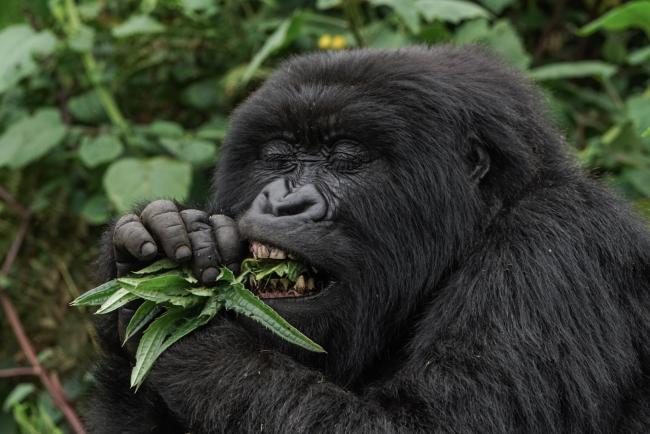
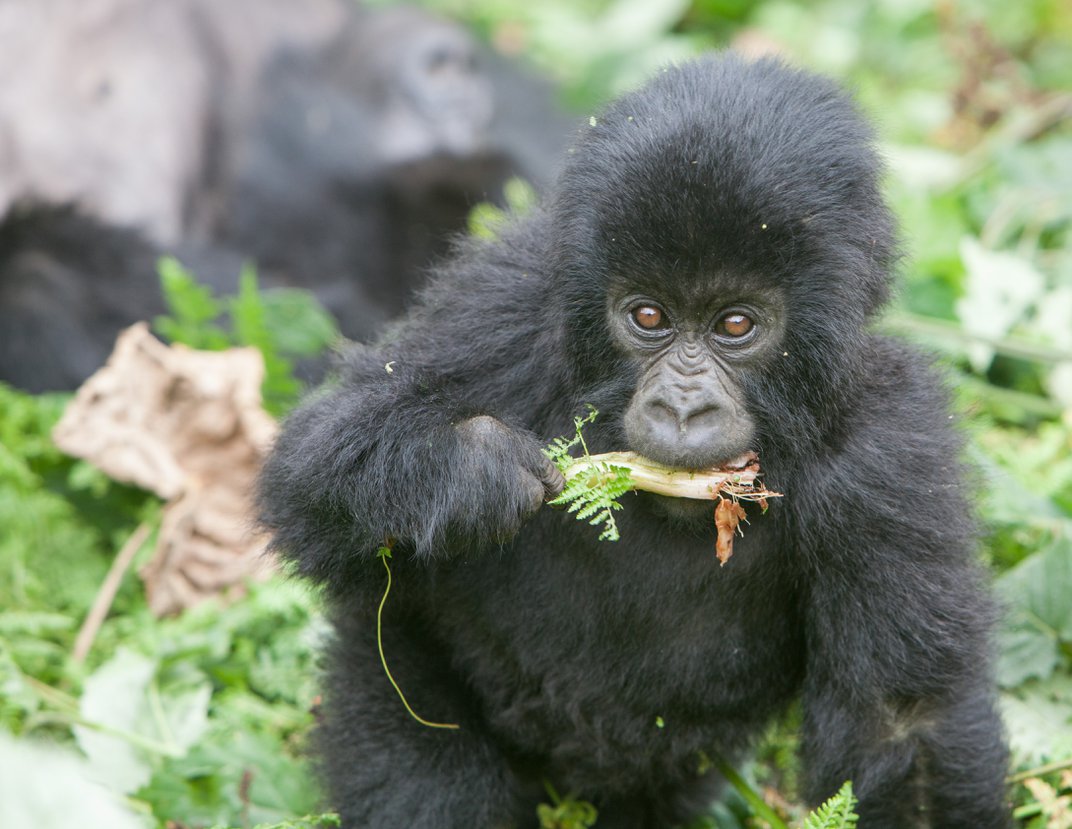
Mountain gorillas eat a diet of leaves, stems, bamboo shoots, wild celery, fruits, and tree bark. An adult gorilla can consume up to 30 kilograms of vegetation daily.
Their plant-rich diet provides essential nutrients and hydration, allowing them to thrive in dense forest ecosystems. Occasionally, they may ingest insects like ants, but plants make up over 95% of their diet.
Ever wondered what fuels the world’s largest primates? Mountain gorillas, majestic inhabitants of the Bwindi Impenetrable Forest in Uganda and the Virunga Mountains spanning Rwanda, Uganda, and the DRC, thrive on a strictly herbivorous diet dominated by foliage.
Approximately 86% of their intake consists of leaves, shoots, and stems, providing the high-fiber bulk needed to sustain their massive 400+ pound frames.
This mountain gorilla diet isn’t just survival food—it’s a fascinating window into their daily lives, making it a highlight for gorilla trekking enthusiasts.
As you plan your Uganda gorilla trekking or Rwanda gorilla safari, understanding what do mountain gorillas eat reveals why their high-altitude habitats demand such specialized foraging habits.
From wild celery to seasonal fruits, their menu ties directly to conservation efforts and eco-tourism, drawing thousands of visitors annually to witness these gentle giants munching mid-trek.
Dive into this comprehensive guide to uncover the mountain gorilla food sources, nutritional secrets, and how their eating patterns enhance your unforgettable wildlife adventure in East Africa.
Core Diet Breakdown
The mountain gorilla diet is a masterclass in herbivory, finely tuned to their misty montane forest homes at elevations of 2,200–4,300 meters.
At its core, 86% comprises leaves, shoots, and stems from over 100 plant species, with staples like wild celery (Thysanolaena latifolia), stinging nettles (Urtica spp.), thistles (Carduus spp.), and bamboo shoots (Yushania alpina).
These high-fiber choices aid digestion in their enormous guts, fermenting plant matter via symbiotic bacteria for energy extraction—much like a natural biogas plant.
Gorillas spend 6-8 hours daily processing up to 30-60kg of this greenery, stripping leaves efficiently with dexterous lips and teeth.
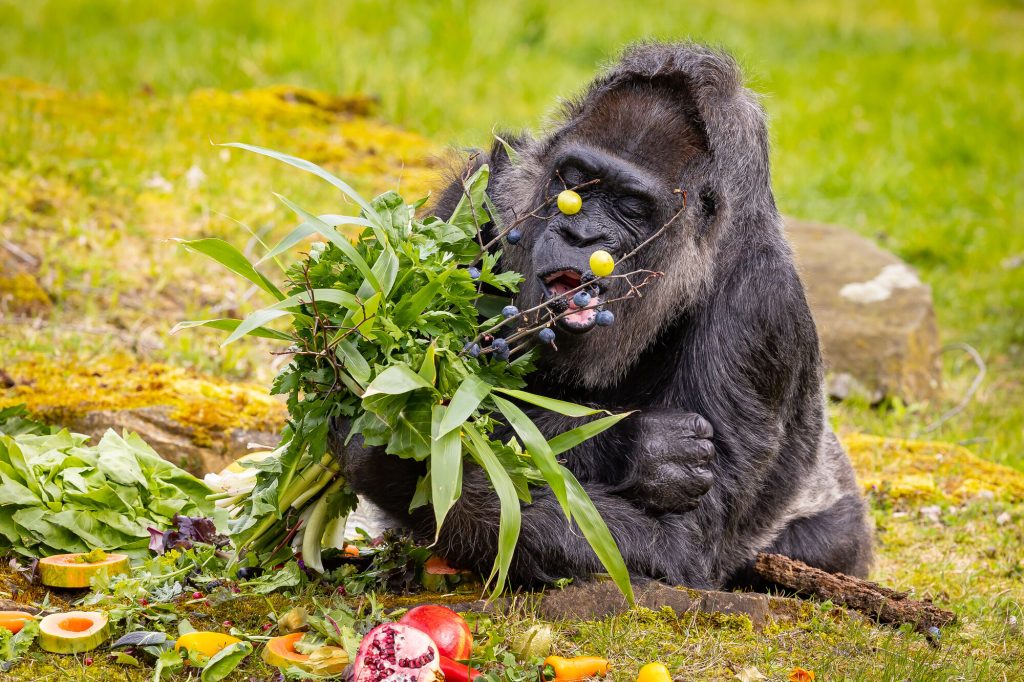
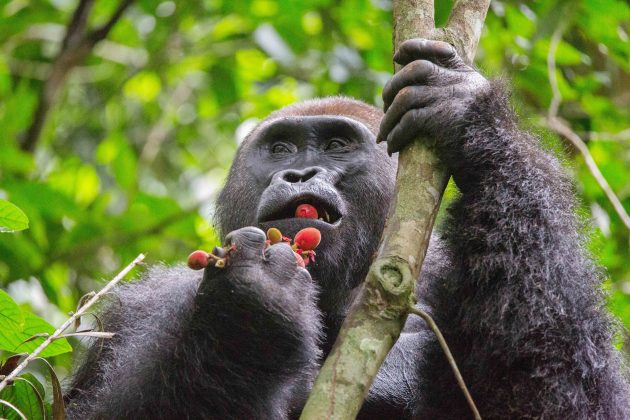
Fruits make up 2-25% of their diet, varying by season and availability in the highlands; favorites include wild figs (Ficus spp.), berries (Rubus spp.), and hackberries, delivering vitamins and quick sugars for energy bursts during foraging.
Though less abundant than in lowland forests due to cooler climates, these treats are hotly contested in troops, fostering social bonds.
Roots, pith, and bark account for 7-10%, serving as dry-season backups—think succulent tubers, soft tree cores, and peeled bark from plants like Peucedanum linderi. These provide minerals like calcium when foliage dips.
Finally, insects (1-2%) offer a protein boost: silverbacks smash open termite mounds or grub-hunt ants, a rare omnivorous flex in their otherwise plant-based menu.
Key components at a glance:
This breakdown underscores why mountain gorilla foraging is so energy-intensive, directly influencing habituation success for trekkers.
Daily Intake & Foraging
Silverback mountain gorillas devour 30-60kg daily—equivalent to 1/15th their body weight—while females manage 18kg, scaling with troop roles.
This voracious appetite drives daily foraging journeys of 3-6km through dense Bwindi or Virunga undergrowth, starting at dawn.
The silverback leads, selecting nutrient-rich patches based on experience, while mothers carry infants who nibble pre-chewed bits.
Gorilla troops (5-30 members) forage communally, with juveniles play-wrestling amid meals, reinforcing hierarchy. They process food via “cud-like” regurgitation, maximizing nutrient yield from fibrous shoots.
In Bwindi Impenetrable National Park, troops favor bamboo groves; in Volcanoes National Park, Rwanda, it’s nettle thickets. This routine not only sustains them but offers trekkers prime viewing: watch a family munch peacefully, a serene safari highlight.
-
Foraging timeline: 6-8 hours, peaking midday.
-
Distance: 3-6km, avoiding human trails.
-
Group dynamics: Silverback dictates paths for safety and abundance.
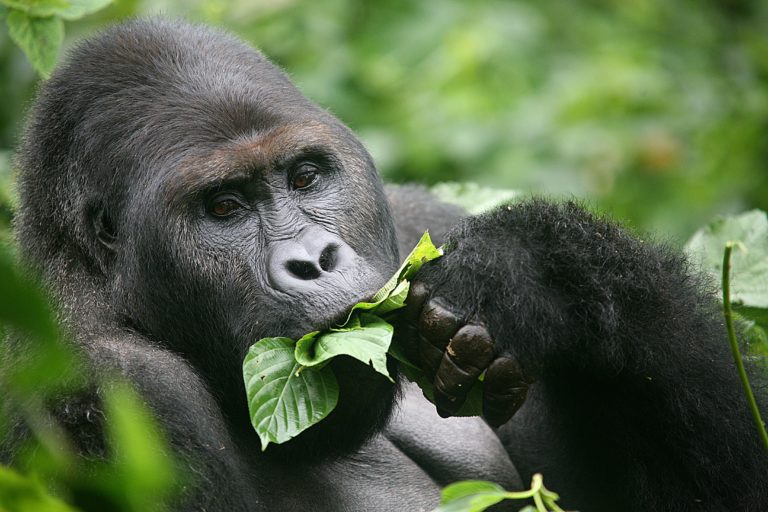
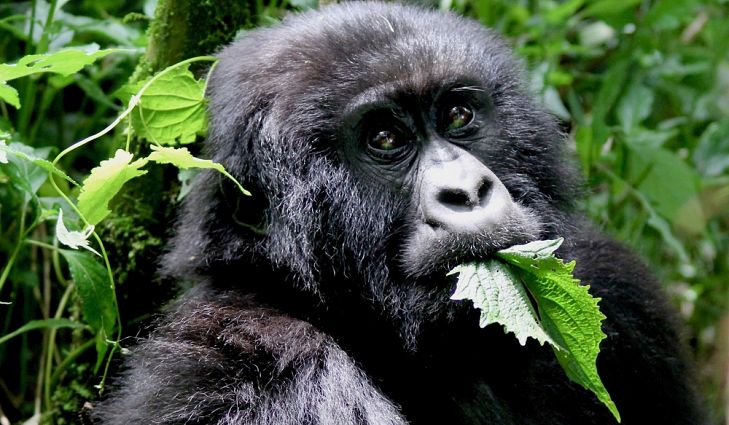
Gorillas strip bamboo shoots during a forest forage, showcasing their efficient feeding technique.
Such habits make gorilla trekking in Uganda ideal for witnessing authentic mountain gorilla eating behaviors.
Book your trek now for an immersive experience.
Seasonal Variations
Mountain gorilla diet shifts with seasons, adapting to high-altitude whims.
In the wet season (March-May, September-November), abundant fruits and tender leaves dominate, boosting intake to 60kg+ amid lush growth—figs and berries spike to 25%. Bwindi troops revel in this bounty, enhancing infant growth.
Conversely, dry seasons (June-August, December-February) slash fruit to 2%, pivoting to roots, bark, and mature stems for sustenance.
Habitat impacts amplify this: higher Virunga elevations (above 3,000m) yield fewer fruits year-round, favoring fibrous thistles and bamboo. Climate change exacerbates scarcity, pressuring conservation.
Key shifts:
-
Wet: Fruit-heavy (vitamins surge), easy foraging.
-
Dry: Roots/bark focus (mineral-rich resilience).
-
Altitude effect: Less fruit at peaks, more foliage.
These adaptations highlight mountain gorilla foraging resilience, a must-know for Rwanda gorilla safaris timed to peak abundance.
Nutritional Role
The mountain gorilla diet masterfully balances high-fiber (50%+ dry matter) for slow digestion—fermenting up to 48 hours in their 30-foot gut—with moderate protein (10-18%) from leaves/insects for muscle maintenance.
Low-fat (<2%) suits their sedentary lifestyle, preventing overload despite size.
Vitamins (A, C from fruits) combat oxidative stress; minerals like potassium from stems aid hydration, while soil/ash eating (geophagy) neutralizes toxins and supplements sodium—crucial in mineral-poor highlands.
This regimen supports silverback dominance and female fertility, with nursing moms upping protein.
Benefits unpacked:
-
Fiber: Gut health, steady energy.
-
Protein: Muscle repair via leaves/insects.
-
Geophagy: Detox, electrolyte balance.
Tailored for montane life, it exemplifies evolutionary genius—perfect trivia for your Uganda wildlife tour.
Comparison to Other Primates
Unlike fruit-heavy lowland gorillas (up to 70% fruits in equatorial forests), mountain gorillas prioritize foliage due to highland scarcity, honing fiber digestion.
Chimpanzees, omnivorous kin, hunt meat (6%) and favor ripe fruits (50%+), contrasting the gorillas’ herbivory.
Orangutans mirror fruit reliance but add bark; baboons are opportunistic omnivores. This highland adaptation—folivore specialization—enables thriving at altitude, underscoring unique Bwindi/Virunga ecology.
Quick contrasts:
-
Mountain vs. Lowland Gorillas: Foliage (86%) vs. fruit (70%).
-
Vs. Chimps: Herbivore vs. hunter-gatherer.
Key to gorilla trekking allure, book Rwanda safaris to see this in action.
Trekking Insights
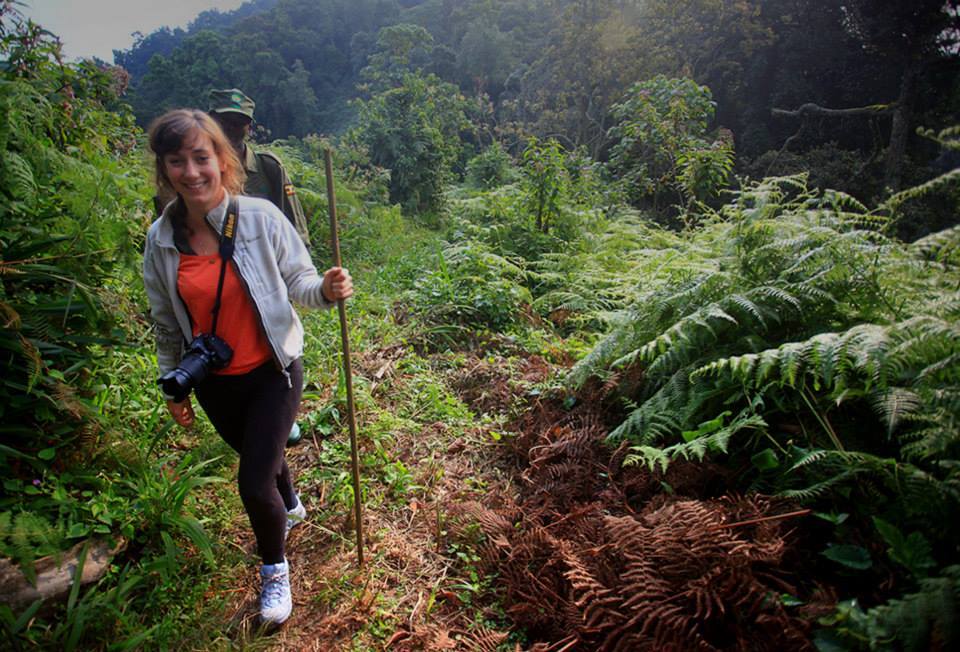
During habituation treks, spot mountain gorillas eating mid-encounter: a silverback stripping bamboo or mothers feeding infants, lasting 1-4 hours. Uganda‘s Bwindi offers intimate views; Rwanda‘s Volcanoes emphasize group foraging.
Tips for gorilla safaris:
-
Trek March-May for fruit feasts.
-
Bring binoculars for canopy munching.
-
Respect 7m distance during feeds.
Book gorilla trekking now—transform knowledge into adventure.
Conservation Impact
Mountain gorilla diet mirrors habitat health; logging fragments foraging zones, poaching disrupts troops. Only 1,000 remain—your eco-tourism trek funds protection.
Book now to sustain their menu.
Frequently Asked Questions
Do gorillas eat meat?
No, strictly herbivores.
How much daily?
Up to 60kg for silverbacks.
Best trek time?
Wet season for abundant feeds.
Conclusion
In summary, understanding what do mountain gorillas eat—from 86% foliage like leaves, shoots, stems, and bamboo to seasonal fruits, roots, and rare insects—reveals the incredible adaptations fueling these gentle giants in Bwindi and Virunga.
Their high-fiber, nutrient-packed diet not only sustains their massive frames through daily 30-60kg foraging but also highlights the fragile balance of their highland habitats, making gorilla trekking an essential adventure for wildlife lovers.
Ready to witness mountain gorillas munching up close? Book your gorilla trekking safari with Adventure Uganda Safaris today for unforgettable Uganda and Rwanda encounters—secure your spot now and support conservation while creating lifelong memories! Contact us at Adventure Uganda Safaris for tailored itineraries.