
Lowland Gorillas: Habitat, Behavior & Survival Guide 2026
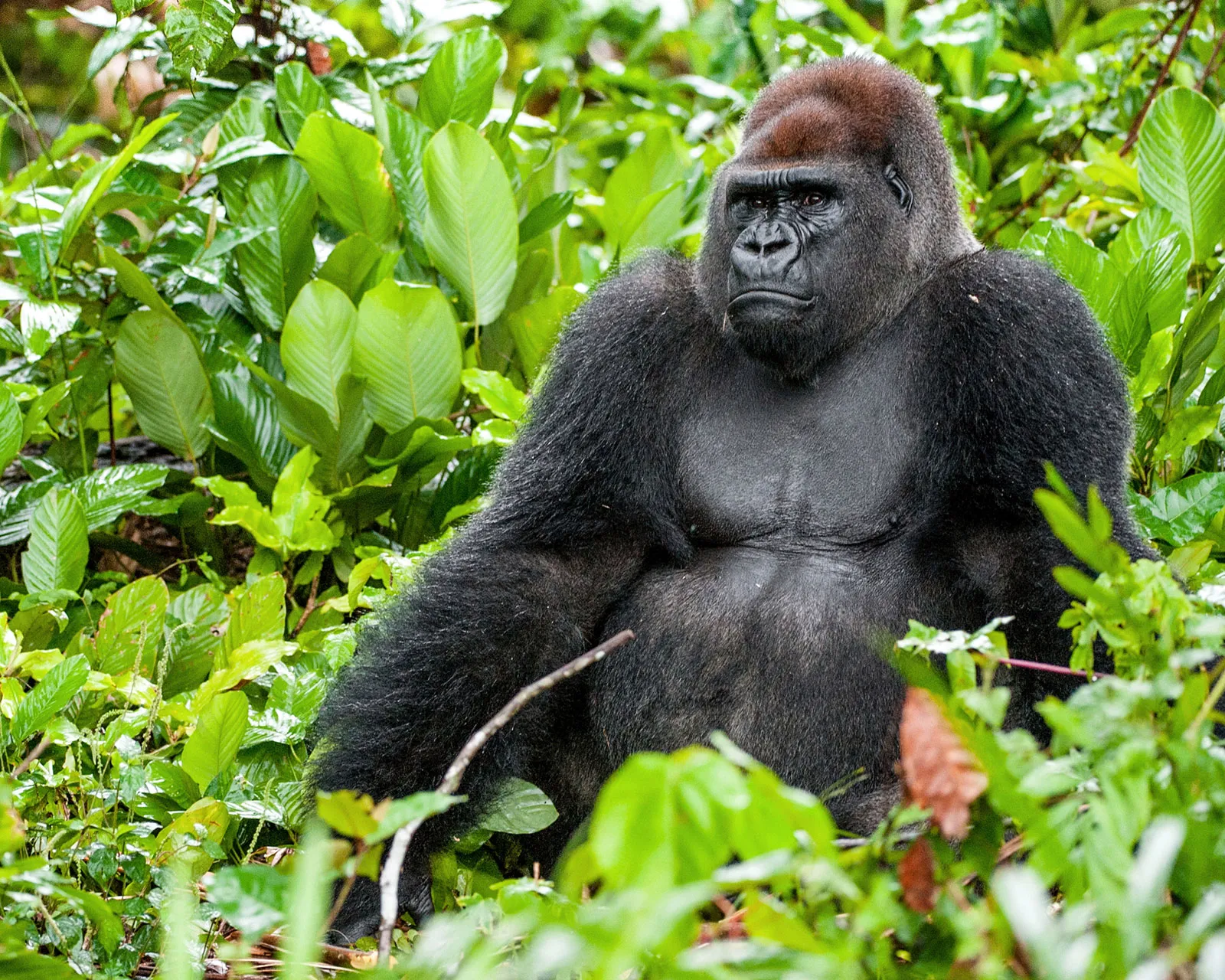
Lowland gorillas, often overshadowed by their mountain cousins, represent the backbone of Central Africa’s rainforest ecosystems.
These majestic primates, split into western lowland gorillas and eastern lowland gorillas (also known as Grauer’s gorillas), play a pivotal role in seed dispersal, forest regeneration, and biodiversity maintenance.
Why are lowland gorillas endangered? Their survival hangs in the balance amid rampant habitat loss and poaching, yet they remain vital for maintaining the health of some of the world’s oldest rainforests.
In this comprehensive lowland gorilla guide, we explore their habitat, behavior, diet, conservation status, and trekking opportunities, while highlighting gorilla trekking alternatives in safer East African destinations like Uganda and Rwanda.
Whether you’re planning a gorilla safari or simply curious about lowland gorilla facts, this article uncovers their world and why protecting them matters for Africa’s ecosystems—and your next adventure.
With populations plummeting due to ebola outbreaks, illegal wildlife trade, and deforestation, understanding lowland gorillas’ habitat and behavior is key to fostering conservation and sustainable tourism that boosts local economies.
What Are Lowland Gorillas?
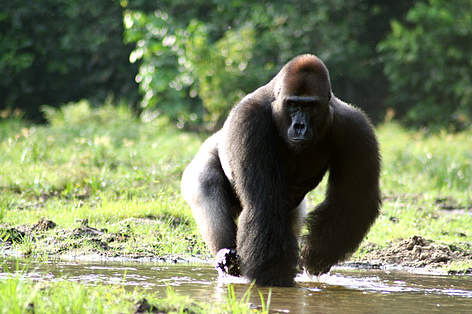
Lowland gorillas (Gorilla gorilla) belong to the genus Gorilla within the family Hominidae, distinguishing them from mountain gorillas (Gorilla beringei beringei) by their adaptation to lowland environments rather than high-altitude forests.
Classified as a distinct species, they encompass two subspecies: the western lowland gorilla (Gorilla gorilla gorilla), the most abundant gorilla type, and the eastern lowland gorilla (Gorilla beringei graueri), which faces steeper declines.
Physically, lowland gorillas exhibit shorter hair suited to humid lowlands, broader noses for rainforest humidity, and robust builds averaging 300-430 pounds for males, with females slightly smaller at 200-250 pounds.
Their dark coats provide camouflage in dense foliage, and prominent brow ridges signal maturity, especially in silverbacks whose graying backs denote leadership.
These primates thrive at elevations below 1,500 meters, contrasting sharply with mountain gorillas who prefer volcanic slopes above 2,000 meters.
Lowland gorilla characteristics include remarkable agility for their size, enabling them to navigate swampy terrains and climb fruit trees effortlessly.
Intelligence shines through in their problem-solving, such as using sticks to gauge water depth or fish for termites—a rare tool-use behavior among great apes.
Ecologically, lowland gorillas are ecosystem engineers; by consuming vast quantities of vegetation, they prevent overgrowth, promote nutrient cycling, and disperse seeds across vast areas, ensuring forest diversity.
Unfortunately, their IUCN Red List status as critically endangered underscores the urgency: habitat fragmentation and disease have slashed numbers by over 60% in recent decades.
This section sets the stage for deeper dives into their types, habitat, and survival challenges, empowering readers to appreciate why lowland gorilla conservation is non-negotiable for Africa’s rainforests.
Types of Lowland Gorillas
1. Western Lowland Gorillas
Western lowland gorillas, the most numerous of all gorillas with an estimated wild population exceeding 100,000 (though declining), dominate Central and West Africa’s landscapes.
Ranging across seven countries including Cameroon, Gabon, Republic of Congo, and parts of Nigeria, they inhabit lowland rainforests and secondary forests up to 30% of the Congo Basin.
Smaller and lighter-coated than their eastern kin—males reach 350-400 pounds with reddish-brown fur—western lowland gorillas adapt masterfully to swampy marshes and clearings.
Their habitat preference for flooded forests makes them elusive, yet they form the largest troops of up to 30 individuals, showcasing complex social bonds that intrigue researchers and tourists alike.
2. Eastern Lowland Gorillas (Grauer’s Gorilla)
In contrast, eastern lowland gorillas or Grauer’s gorillas are the world’s largest primates, with silverbacks tipping 430-500 pounds and jet-black coats.
Confined primarily to the Democratic Republic of Congo (DRC), especially around Kahuzi-Biéga National Park, their numbers have crashed from 17,000 in 1996 to under 6,000 today due to civil unrest and mining.
Larger-bodied and more arboreal, they venture higher into montane forests than western counterparts, blending lowland gorilla traits with highland resilience.
More endangered than western lowland gorillas, their critically endangered status stems from intensified poaching and habitat destruction, making them a focal point for urgent conservation.
Comparing the two subspecies reveals western lowland gorillas as widespread survivors and eastern lowland gorillas as fragile giants—both essential for gorilla conservation efforts across Africa.

Habitat and Distribution
Lowland gorillas’ habitat centers on the Congo Basin’s vast rainforests, swamps, and lowland forests, spanning Cameroon, Gabon, Republic of Congo, DRC, Central African Republic, Equatorial Guinea, and Nigeria.
Western lowland gorillas favor marshy clearings and secondary growth forests rich in herbs, while eastern ones occupy transitional zones up to 3,000 meters in DRC’s eastern highlands.
These biodiverse havens—home to over 10,000 plant species—provide year-round food, but logging roads fragment them, isolating troops and curbing gene flow.
Visualize their range via a mental map: a green swath from the Atlantic coast inland, shrinking under agriculture and mining pressures.
Key strongholds include Odzala-Kokoua National Park in Republic of Congo for western populations and Kahuzi-Biéga for eastern ones, where dense canopies shield families from predators like leopards.
Climate-driven shifts exacerbate habitat destruction, pushing gorillas into human-dominated areas and sparking conflicts. Protected areas cover only 15% of their range, highlighting the need for corridors.
For travelers eyeing gorilla trekking in Congo, these habitats promise raw wilderness, but accessibility lags behind East Africa’s polished trails—making this knowledge crucial for informed lowland gorilla tourism.
Behavior and Social Structure
Lowland gorilla behavior revolves around tight-knit family groups of 5-30 members, led by a dominant silverback who enforces order through charges, roars, and chest-beats.
Females nurture infants for 3-4 years, teaching foraging skills, while juveniles play-fight to hone agility.
Communication blends over 20 vocalizations—like grunts for contentment and screams for alarm—with gestures such as arm swings or ground slaps, fostering cohesion across 1-2 square kilometers daily ranges.
Their intelligence and tool use rival chimpanzees: western lowland gorillas fashion leaf sponges for drinking and probe for ants, while eastern ones strip bark for medicine.
Diurnal foragers resting midday in nests of bent foliage, they exhibit low aggression toward humans unless provoked, debunking “dangerous” myths.
‘Silverbacks mediate disputes, ensuring group stability vital for survival amid threats.
Observing this social structure during rare treks reveals profound familial bonds, underscoring why conserving these behaviors sustains entire ecosystems.
Diet of Lowland Gorillas
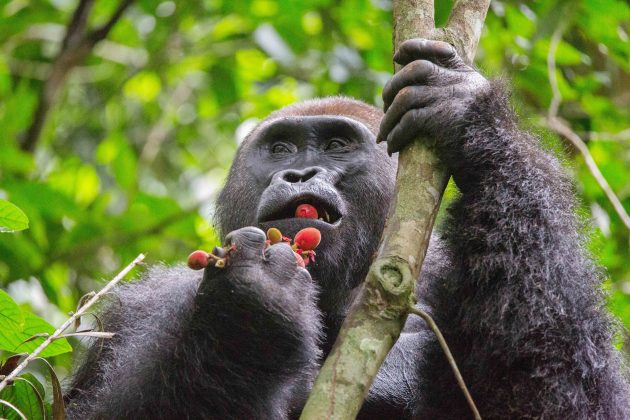
Primarily herbivorous, lowland gorillas’ diet hinges on fruits (up to 25 species daily for western groups), supplemented by fibrous leaves, shoots, pith, and bark—consuming 40-50 pounds per day.
Insects like termites and ants add protein, dug out with precise finger dexterity. Seasonal habits shift dramatically: fruit-scarce dry periods force fallback to tough stems, while abundant wet seasons fuel larger troops.
Western lowland gorillas, in fruit-rich swamps, devour wild mangoes and figs as seed dispersers, germinating forests miles away. Eastern ones favor high-fiber herbs in disturbed areas.
This varied feeding behavior maintains gut health via specialized microbes, but habitat loss starves options, amplifying malnutrition risks. Understanding their menu highlights conservation’s dietary stakes.
Population and Conservation Status
Lowland gorilla population estimates paint a dire picture: western lowland gorillas at 95,000-100,000 (down 50% since 2000), eastern lowland gorillas at 3,000-6,000.
IUCN Red List deems both critically endangered, with population decline trends accelerating 60-80% from ebola, poaching, and logging.
Pre-2006, numbers held steady; post-ebola, rebounds are tentative via vaccines.
-
Western: Stable in Gabon/Congo parks, but bushmeat trade erodes edges.
-
Eastern: DRC conflicts halved Grauer’s in a decade.
Surveys like the 2015 census underscore urgency, tying status to habitat integrity.
Why Are Lowland Gorillas Endangered?
Why are lowland gorillas endangered boils down to interlocking crises devastating their world.
- Poaching for bushmeat and trophies claims thousands yearly, fueled by poverty and weak enforcement—snare traps maim one gorilla per 10 caught.
- Habitat destruction via logging, palm oil plantations, and mining clears 1 million hectares annually in the Congo Basin, fragmenting forests and exposing troops to humans.
- Ebola outbreaks wiped 90% of some populations since 2000, as gorillas lack immunity; a single outbreak kills thousands via carcass contact.
- Illegal wildlife trade traffics infants for zoos, decimating families—eastern lowland gorillas suffer most from DRC instability.
Climate change worsens droughts, slashing fruit yields and sparking crop raids that provoke retaliation. Cumulative effects: genetic bottlenecks from small, isolated groups heighten disease vulnerability. Key stats:
-
2000-2016: 77% western decline [context].
-
Grauer’s: 50%+ loss to conflict.
Reversing this demands holistic action, blending patrols with eco-tourism revenue.
Conservation Efforts and Protection
Robust conservation efforts rally NGOs like WWF, WCS, and local governments against the tide.
National parks anchor defense: Odzala-Kokoua (Republic of Congo) safeguards 8,000+ western gorillas via anti-poaching patrols, while Kahuzi-Biéga (DRC) protects Grauer’s through ranger outposts despite rebel threats.
Community conservation empowers locals with beekeeping alternatives to poaching, generating $2 million yearly in some areas.
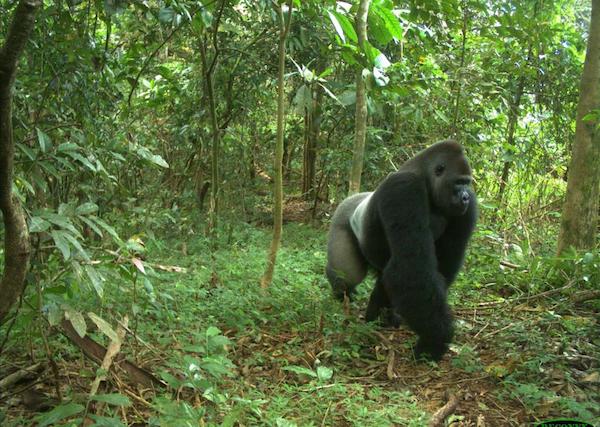
Veterinary teams vaccinate against ebola, and camera traps monitor trends. Reintroduction pilots and corridor projects reconnect fragments.
Successes include 10% rebounds in protected zones, proving protection strategies work when funded—often by sustainable tourism.
Can You See Lowland Gorillas?
Gorilla trekking in Congo offers rare glimpses of lowland gorillas in DRC’s lowland forests, but challenges abound. Permits from Kahuzi-Biéga cost $400/person, requiring guides amid rugged trails and instability risks.
Accessibility lags: poor roads, ebola quarantines, and militia activity deter most, with treks limited to 6-8 visitors daily. Logistics demand vaccinations, visas, and 4×4 transport—rewarded by intimate encounters in pristine habitats.
Best Gorilla Trekking Alternatives
Skip Congo’s risks with premier gorilla trekking alternatives in East Africa.
Uganda’s Bwindi Impenetrable Forest hosts habituated mountain gorillas amid lush trails, with 90-minute encounters yielding unforgettable silverback stares—permits at $800.
Rwanda’s Volcanoes National Park boasts family groups amid volcanoes, blending hikes with golden monkey add-ons for $1,500 packages.
These safer, world-class sites fund conservation while delivering thrills. Contact Us — for custom itineraries from Kampala with luxury lodges, transfers, and expert guides.
Book today for 2026 slots and support wildlife conservation directly!
Lowland Gorillas vs Mountain Gorillas
This comparison table spotlights lowland vs mountain gorillas, guiding travelers to viable safaris.
Interesting Facts About Lowland Gorillas
-
Most widespread gorilla type, spanning 11 countries.
-
Highly intelligent: Use tools, recognize researchers years later.
-
Vital seed dispersers, planting forests via scat.
Frequently Asked Questions
What is a lowland gorilla?
Primates adapted to Central African lowlands, split into western and eastern subspecies.
Where do lowland gorillas live?
Congo Basin rainforests in Cameroon, Gabon, Congo, DRC.
Are lowland gorillas dangerous?
Rarely; they flee humans unless protecting young.
Can tourists see lowland gorillas?
Yes, limited trekking in DRC parks, but East Africa alternatives preferred.
What do they eat?
Fruits, leaves, stems, insects—up to 50 lbs daily.
Conclusion
Lowland gorillas embody Africa’s wild heart, their habitat, behavior, and role as ecosystem stewards demanding action against poaching, ebola, and destruction.
From western lowland gorillas in Gabon swamps to imperiled eastern lowland gorillas in DRC, conservation hinges on global support. Ignite your passion—Contact us today.
Trek Uganda or Rwanda, contribute to survival, and create memories that last. Book now: Secure your spot and be the change!