Facts About Lions
Amazing Facts About Lions -Behaviors, Gestation, Habitat & Status
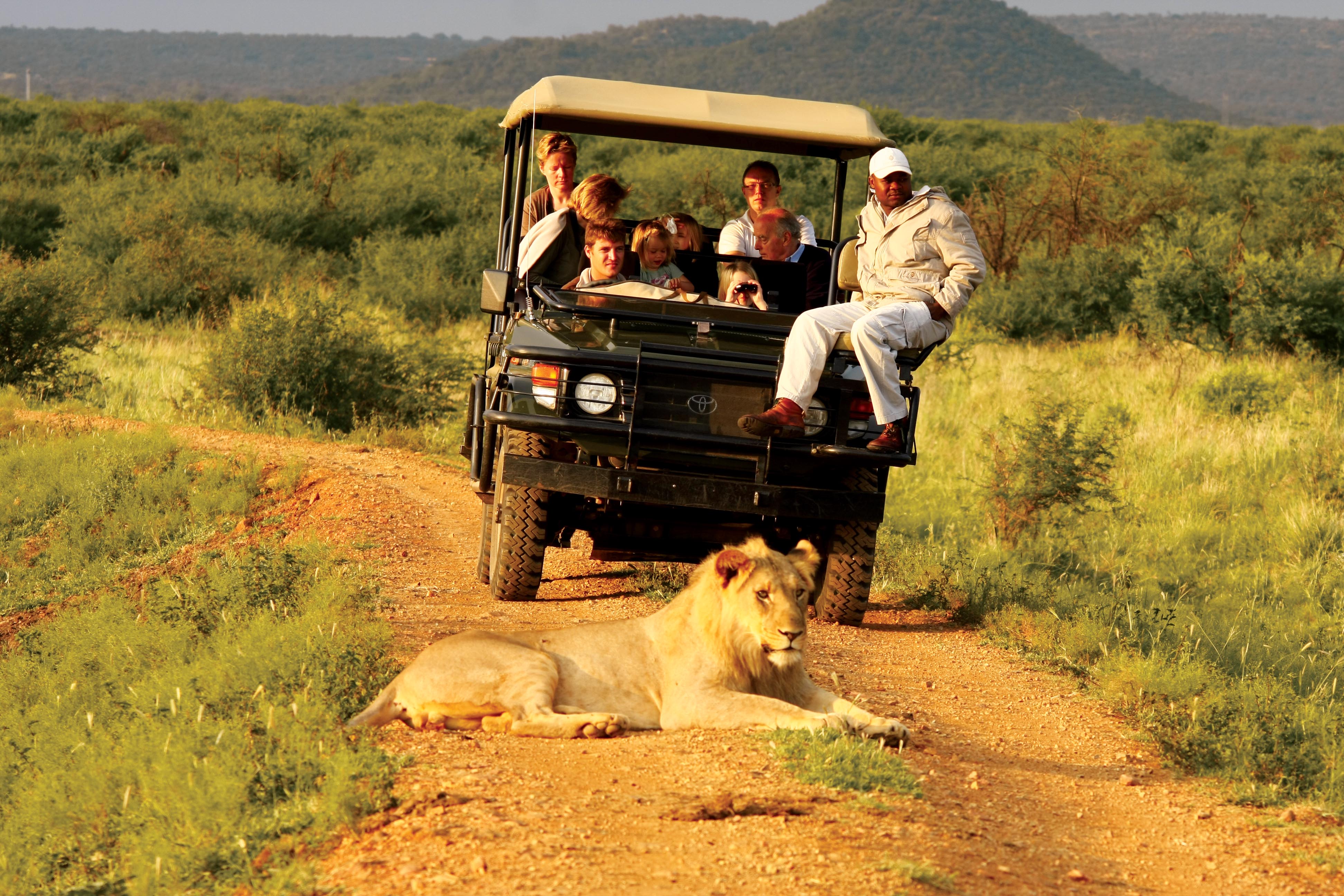
Lions are the world’s second largest in the cat family. When it comes to Uganda safaris, lions are among the top wildlife visitors expect to see in the wild. A glimpse at the African lions in their natural habitat is a dream come true for any nature enthusiast on a safari in Uganda. As you plan to go for Uganda wildlife safari, here are some of the astonishing facts about lions. Knowing the different facts about lions is essential as it enriches you with information about these lovely creatures.
 Quick facts about lions in the wild
- Scientific Name: Panthera leo
- Order: Carnivora
- Class: Mammalia
- Family: Feldidae
- Conservation Status: Vulnerable species
Where do lions live?
Almost all the wild lions survive in Africa while the small portion thrives elsewhere. There are 2 recognized subspecies of lions in the wild that is the African lion (Panthera leo leo) and the Asiatic lion (Panthera leo persica).
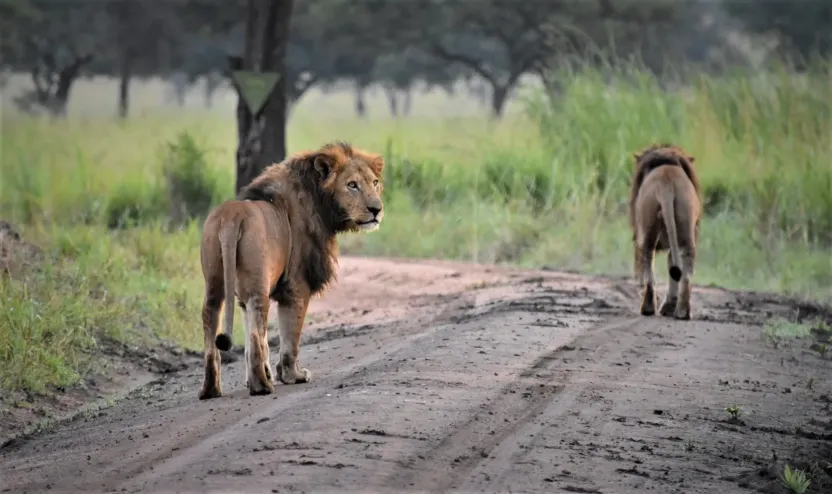
On Uganda safaris, lions can be encountered in the savanna wildlife parks. The top parks to find lions in the wild include Queen Elizabeth National Park, Kidepo Valley National Park, Lake Mburo National Park, and Murchison Falls National Park. Lions in these premier Uganda wildlife safaris parks can be explored excellently on a guided game drive.
Lions in Rwanda exist in only Akagera National Park –the only park where all the Big 5 game are confined. Akagera National Park is the biggest park in Rwanda with 1122 sq. km land area coverage and is lying in the Eastern Province.
Weight of lions
Lions weigh differently from males to females. The male lions weigh about 190 kg on average while the weight of females is around 126 kg. This weight is essential for the survival of lions. It is this weight that empowers them to take on the large prey in the wild and also defend their pride.
Lions at young age
At the young age, lions grow rosettes and spots on their sandy coats. As time goes on, they disappear as they age.
Life expectancy of lions
Lions can live in the wild for 10 to 14 years. They can be found living in the pride. Each pride can comprise 30 lions less or more. The pride size can be determined by the availability of food and water. They are part of the Big cat family list.
In the family, the females are the main hunters. And as they are out searching for what to eat, the males can be guarding the territory of the pride and the young ones. They mark their territory by scent using their wee to create a border.
Conservation status in Africa
The African lion population continues declining according the IUCN data base making them a few threatened species in the wild. Over the past 10 years, lion population recorded a decline of about 30%. The major threats to lion survival in the wild include retaliatory/pre-emptive killings as a way to protect humans and livestock, decline/decrease in the habitats resulting from expansion of human settlements, need for land for farming and other purposes.
Sound of lions (facts about lions)
Lions roar and when they do, they can be heard as far as 8 km.
Lions run for short distances of only 50 mph and leap for 36 feet.
They have exceptional sense of smell.
Lions are often referred to as the Kings of the Jungle and roam around the grasslands and plains.
What do lions eat?
Lions hunt for their food and feed from their kill. After having some rest, they rest and begin hunting again. Lions hunt for medium sized mammals like antelopes and zebras. They are carnivores in nature depending on the meat.
Lions prefer hunting at night when their eyes have adapted to the dark. At night they have higher advantage over their prey. They also prefer hunting during storms. The noise, rain or wind make it hard for the prey to recognize or hear them thus increasing their chances of getting a successful hunt. When hunting, the lionesses have their roles to play. Some take the role of centre while others play the role of wing. The wings chase the prey towards the centres.
Lionesses share child-rearing duties
The lionesses take shared responsibilities to raise a child/cub. While lions do not have specific breeding season, the lionesses can synchronize their birth periods and raise their cubs together what is referred to as a crèche.
Facts about lions: How long do lions sleep for
Lions can sleep for 16 to 20 hours every day. They rest in the shades. They often avoid heat stress by engaging themselves most of the night or resting on top of kopjes/up trees to take advantage of cool breeze. They can be spotted lying on their backs exposing their thin-skinned stomachs.
How many cubs do lions give birth to?
A lioness can give birth to at least 1 to 4 lion cubs. They have a gestation period of 3.5 months and cubs often nurse for 6 months. The cubs can begin eating meat at 3 months.
The best time to see lions in Uganda
Planning to see lions in Uganda and wondering when to visit/travel? Lions on Uganda safaris can be best encountered during the peak dry season; June to September; December to February. But it is possible to travel for lion safaris even during the wet months; March, April, May, October, and November.
How to see lions in the wild – Facts about lions
Plan and book a safari to Uganda to embark on a journey to explore in depth about lions, their behaviors, gestation period, lifestyles, where they stay and enjoy photography experience with them.
Top Tour Packages to Book
3 Days Queen Elizabeth Wildlife Safari