Mountain Gorilla Food Chain
Mountain Gorilla Food Chain Explained: Diet, Habitat, & Ecosystem 2026 Guide
Mountain Gorilla Food Chain: Imagine a mist‑wrapped morning in Bwindi Impenetrable Forest or the Virunga Volcanoes, where a family of mountain gorillas moves quietly through the undergrowth.
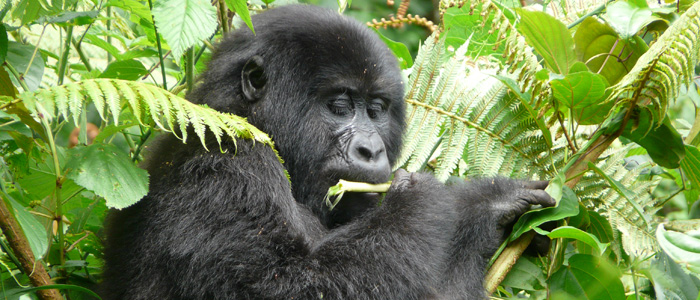
One silverback sits calmly, stripping leaves from a thistle, while infants tug at bamboo shoots and mothers peel bark with careful precision.
In this tranquil scene, something much bigger is at work: the mountain gorilla food chain, a hidden network that connects every plant, insect, predator, and human in the ecosystem.
In the mountain gorilla food chain, gorillas are mainly herbivores consuming plants, while only a few predators—like leopards and large birds—ever threaten them.
This chain spans two iconic landscapes: the Virunga Massif (spanning Uganda, Rwanda, and the Democratic Republic of Congo) and Bwindi Impenetrable National Park in southwestern Uganda.
In both regions, the gorilla’s diet shapes the forest, and the forest, in turn, shapes where gorillas can be found on a gorilla trekking safari.
This guide explains what mountain gorillas eat, their place in the food web, the predators and threats they face, and how this entire ecosystem shapes your gorilla trekking experience in Uganda, Rwanda, and the DRC.
By the end, you’ll see gorilla trekking not just as a wildlife adventure, but as a window into one of the world’s most delicate food chains in the wild.
What Is the Mountain Gorilla Food Chain?
To understand the mountain gorilla food chain, it helps to distinguish between a food chain and a food web. A food chain is a simple, straight‑line relationship: one thing eats another.
In contrast, a food web is a complex network of many overlapping chains, showing how energy flows through plants, herbivores, carnivores, and decomposers.
In the Virunga and Bwindi ecosystems, the mountain gorilla sits at the center of a dense food web that supports countless other species.
Within this system, mountain gorillas are primary consumers of plants in the basic food chain—meaning they eat producers directly.
In more detailed diagrams, they can also be viewed as secondary‑level consumers because they sometimes eat insects or their larvae while foraging.
A simple version of the mountain gorilla food chain looks like this:
-
Producer: bamboo, thistles, wild celery, and other forest plants.
-
Primary consumer: insects (for example, grubs) that eat those plants.
-
Secondary consumer: mountain gorilla feeding on plants and occasionally insects.
-
Tertiary consumer: rare predators like leopards that may prey on weak or young gorillas.
What Do Mountain Gorillas Eat?
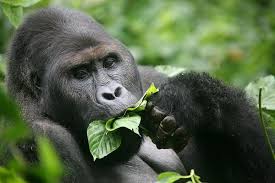
The diet of mountain gorillas is one of the most carefully studied aspects of their ecology, and it’s crucial for understanding their place in the food chain. Mountain gorillas are herbivores, meaning they rely almost entirely on plants for energy.
An adult gorilla may consume 15–30 kg of vegetation per day, depending on age, group size, and season. This massive intake drives their daily movements and determines where rangers and guides will find them on a gorilla trekking safari.
Their plant‑based diet includes:
-
Leaves, stems, and shoots of a wide variety of forest herbs.
-
Bark and roots scraped from certain trees and woody plants.
-
Occasional fruits, which they swallow whole and later defecate as seeds.
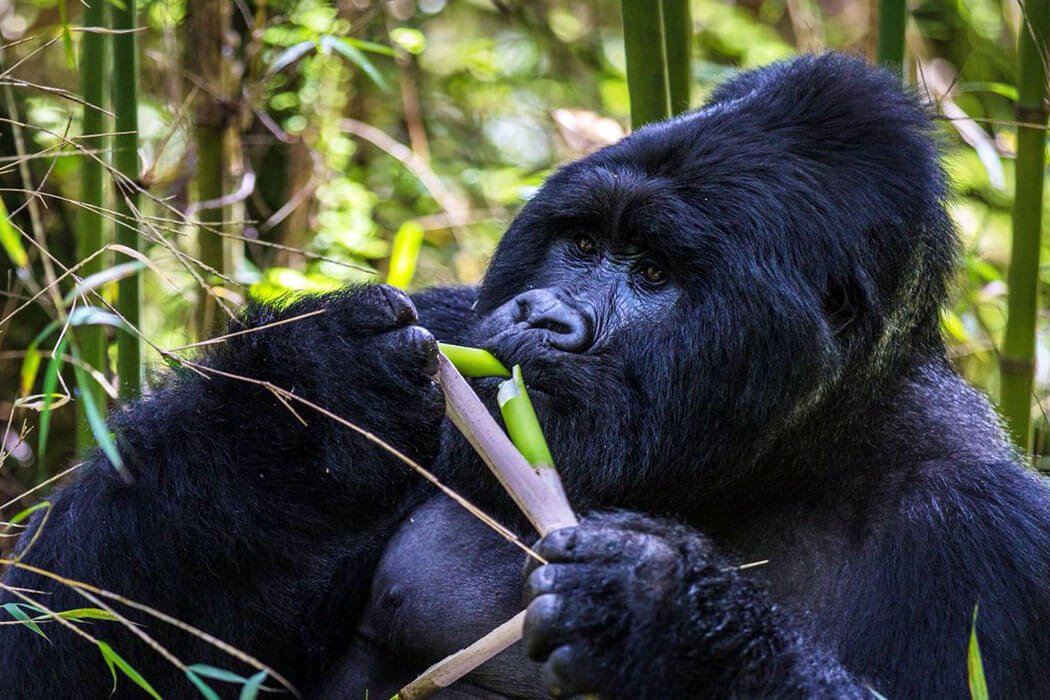
In the Virunga Volcanoes, bamboo becomes a major seasonal staple during its growth phases. When bamboo shoots emerge, gorilla groups often migrate toward bamboo zones, making it an excellent time to observe natural feeding behavior.
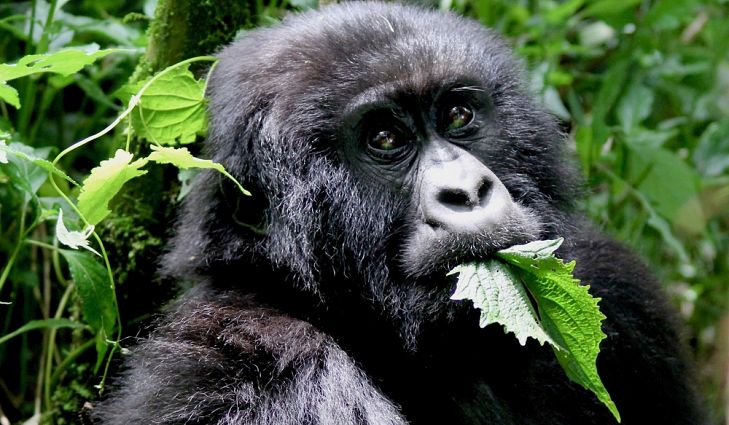
In Bwindi Impenetrable Forest, the Bwindi mountain gorilla diet shifts more toward thistles, wild celery, nettles, and secondary forest plants, shaped by the park’s dense, multi‑layered canopy.
Seasonal variation further complicates the picture. During dry seasons, gorillas may range farther to find preferred plants, while in rainy months they can feed closer to their core areas.
Rangers use this Virunga gorilla foraging pattern to predict where groups are likely to be, improving your chances of a successful gorilla trek.
Role of Gorillas in the Food Chain
Far more than just consumers, mountain gorillas act as ecosystem engineers within the mountain gorilla food chain. Their feeding behavior reshapes the forest, influencing plant growth, seed distribution, and light penetration.
This role is why gorilla trekking safaris in Bwindi and Virunga are not only about viewing animals, but about witnessing a living, breathing ecosystem in motion.
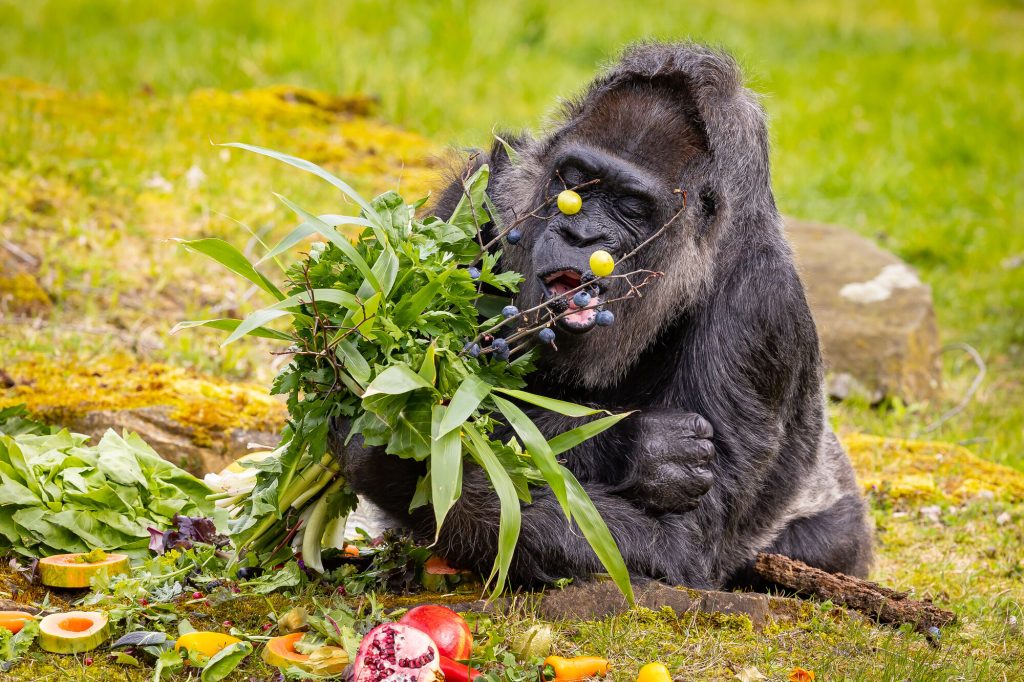
One of the gorilla’s most important ecological functions is seed dispersal. As gorillas wander through the forest, they swallow fruits whole and later defecate the seeds in new locations.
This process helps:
-
Regenerate forest plants.
-
Maintain plant diversity across different altitudes and slopes.
However, the relationship is not purely beneficial. This is the seed predation vs. dispersal balance: some seeds are destroyed in the gorilla’s digestive tract, while others pass through intact and sprout.
Which ones survive depends on plant species and how thoroughly the gorilla chews them.
Their heavy feeding also physically alters the vegetation structure. Gorillas may strip large stands of thistles or bamboo, creating small clearings that allow sunlight to reach the forest floor.
This, in turn, encourages the growth of new plants and attracts insects and small animals, reinforcing the entire food web around mountain gorillas.
When you see a gorilla bending a thistle stem or tearing into bamboo, you’re not just watching a meal—you’re watching a key force in the Virunga and Bwindi food chain.
Predators and Threats to the Food Chain
One of the most common questions about the mountain gorilla food chain is: “Are gorillas prey?” The short answer is yes—but only rarely, and usually for the most vulnerable individuals.
Natural predators do exist, but they are far less dangerous than human‑driven threats.
The main natural predators of mountain gorillas include:
-
Leopards, which may attack weak or isolated gorillas, especially at night.
-
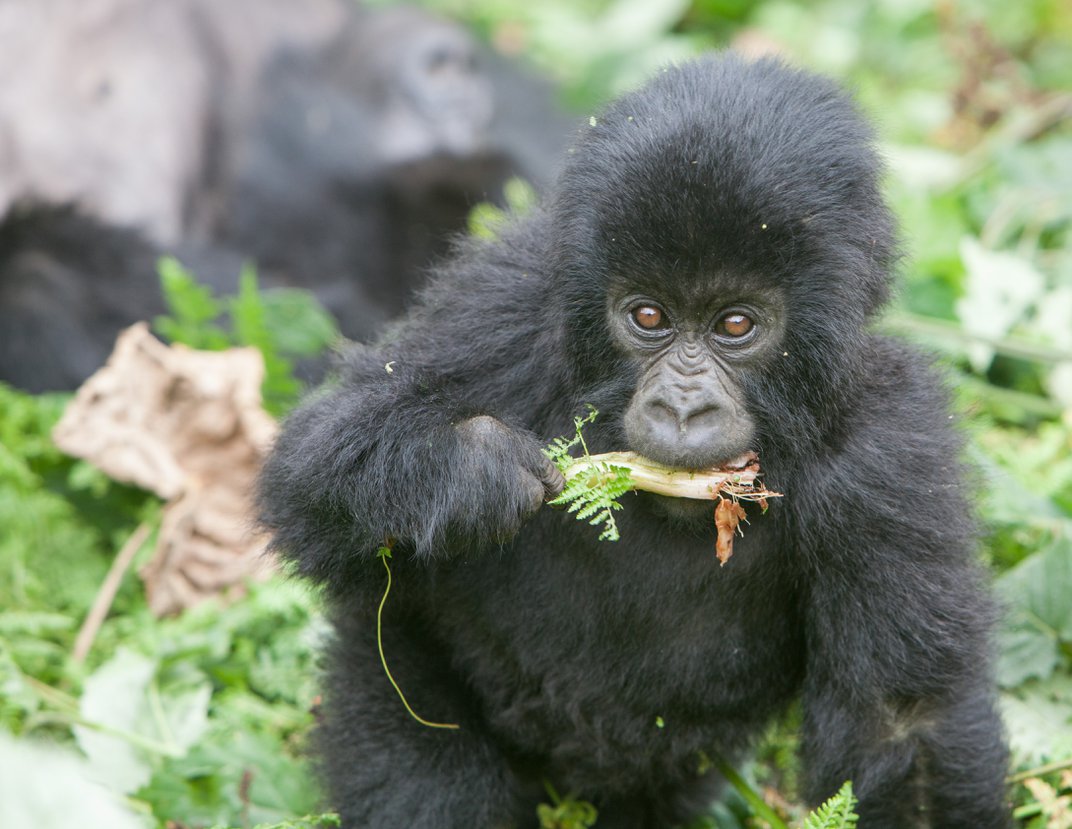
Large snakes and birds of prey, which pose a threat mainly to infants and very young gorillas.
Despite these dangers, humans are the biggest threat, not natural predators. Poaching, habitat encroachment, and disease squeeze the entire mountain gorilla food chain from above and below.
Poachers may set snares for other animals, but gorillas can be caught in them, leading to injury or death.
When gorilla populations decline, the ripple through the food chain is significant:
-
Fewer gorillas mean less seed dispersal and less pruning of vegetation, which can slow forest regeneration.
-
Plant communities may shift, altering the abundance of insects and small mammals that depend on specific plants.
This emphasizes why conservation‑focused gorilla trekking—where permits feed park management and anti‑poaching patrols—is so important.
Responsible tourism helps protect the predators, plants, and prey that make up the mountain gorilla food chain in the Virunga Volcanoes and Bwindi Impenetrable Forest.
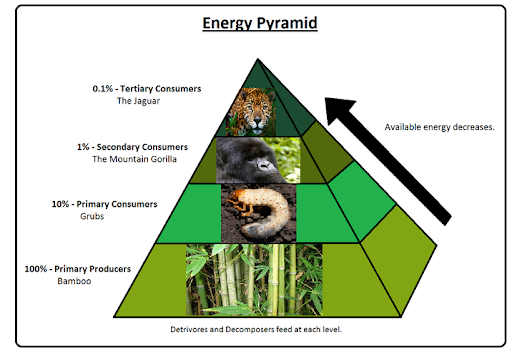
Energy Pyramid and Food Web Around Gorillas
To visualize the mountain gorilla food chain, it helps to picture a simple energy pyramid. At the base of the pyramid are the producers, which convert sunlight into energy through photosynthesis. In the Virunga and Bwindi highlands, these include bamboo, trees, ferns, and forest herbs.
Above them sit the primary consumers: mostly insects, grubs, and some rodents that feed directly on plants. These organisms are rarely visible but are essential links in the food web.
Next come the secondary consumers, where mountain gorillas live alongside some birds and small carnivores that eat insects or other animals. Gorillas sit here because they consume plants directly, but in some chains they may also eat insects opportunistically.
At the top of the pyramid are the tertiary consumers, such as leopards and other large carnivores, which may prey on gorillas or their young.
How Habitat Loss Disturbs the Food Chain
Habitat loss is one of the most disruptive forces on the mountain gorilla food chain. As human populations grow around protected areas, farming, logging, and infrastructure projects push into the forest, reducing plant diversity and the quantity of food available to gorillas.
The consequences for the food chain are clear:
-
With fewer plants, gorillas must travel farther to meet their daily 15–30 kg of vegetation requirement, increasing their exposure to humans and potential conflict.
-
Reduced plant variety can weaken gorilla nutrition, making them more vulnerable to disease and lowering birth rates.
Disease from humans is another invisible threat. Respiratory viruses, transferred by ill tourists or locals, can spread through a group and reduce gorilla numbers.
Fewer gorillas mean less seed dispersal and less structural change in the forest, weakening the entire food web.
This is where protected parks and regulated tourism come in.
Bwindi Impenetrable National Park, Mgahinga Gorilla National Park, Volcanoes National Park in Rwanda, and Virunga National Park in the DRC rely on gorilla permits, anti‑poaching patrols, and community programs to shrink the impact of habitat loss.
When you choose a conservation‑focused operator for your gorilla trekking safari, you help fund the rangers and scientists preserving the mountain gorilla food chain.
How Understanding the Food Chain Improves Gorilla Trekking
Understanding the mountain gorilla food chain doesn’t just make you a better traveler—it makes your gorilla trekking safari more likely to succeed.
Rangers and guides use knowledge of gorilla diet and foraging patterns to predict where groups are feeding each day.
For example:
-
Groups may cluster near bamboo zones when shoots are fresh, especially in the Virunga Volcanoes.
-
During other seasons, they may favor areas rich in thistles, wild celery, and nettles, which are common in Bwindi.
Seasonal changes mean certain times of year are better for seeing gorillas in specific sectors. If you want to increase your chances of seeing them feeding in bamboo, visiting in dry‑season months can be a smart move.
This kind of detail is exactly what your readers will want when planning a Uganda gorilla trek, a Rwanda Volcanoes NP visit, or a DRC Virunga safari.
By linking food chain knowledge to trekking success, you subtly position your brand as an expert‑led, science‑informed operator.
Readers who trust your ecological insight are more likely to book a guided mountain gorilla trek and ask your team for the best timing, routes, and conservation‑friendly practices.
Mountain Gorilla Food Chain Overview
Here’s a concise mountain gorilla food chain overview for quick reference
Frequently Asked Question
What do mountain gorillas mostly eat?
Plants, especially leaves, stems, and bamboo.
Do mountain gorillas have predators?
Rarely; the main threats are leopards and humans.
Conclusion
By understanding the mountain gorilla food chain, you can appreciate just how fragile and beautiful this ecosystem is—and how every gorilla trekking safari supports its survival.
Gorillas are not just charismatic icons; they are keystone herbivores that shape forests, disperse seeds, and influence the entire food web in the Virunga Volcanoes and Bwindi Impenetrable Forest.
Now is the time to turn this knowledge into experience. Plan a gorilla trekking safari in Uganda (Bwindi or Mgahinga), Rwanda (Volcanoes National Park), or the DRC (Virunga National Park) with a conservation‑focused operator that reinvests in anti‑poaching, research, and community projects.
Whether you want to see gorillas feeding in bamboo or watch a family group stripping leaves and stems in the misty highlands, a guided trek will bring the food chain to life before your eyes.
Book a guided gorilla trek and see their feeding behavior in the wild with us. Once you stand inches from a silverback tearing into a thistle or watching infants play near a stream, you’ll see why protecting the mountain gorilla food chain matters—for gorillas, for forests, and for future travelers.