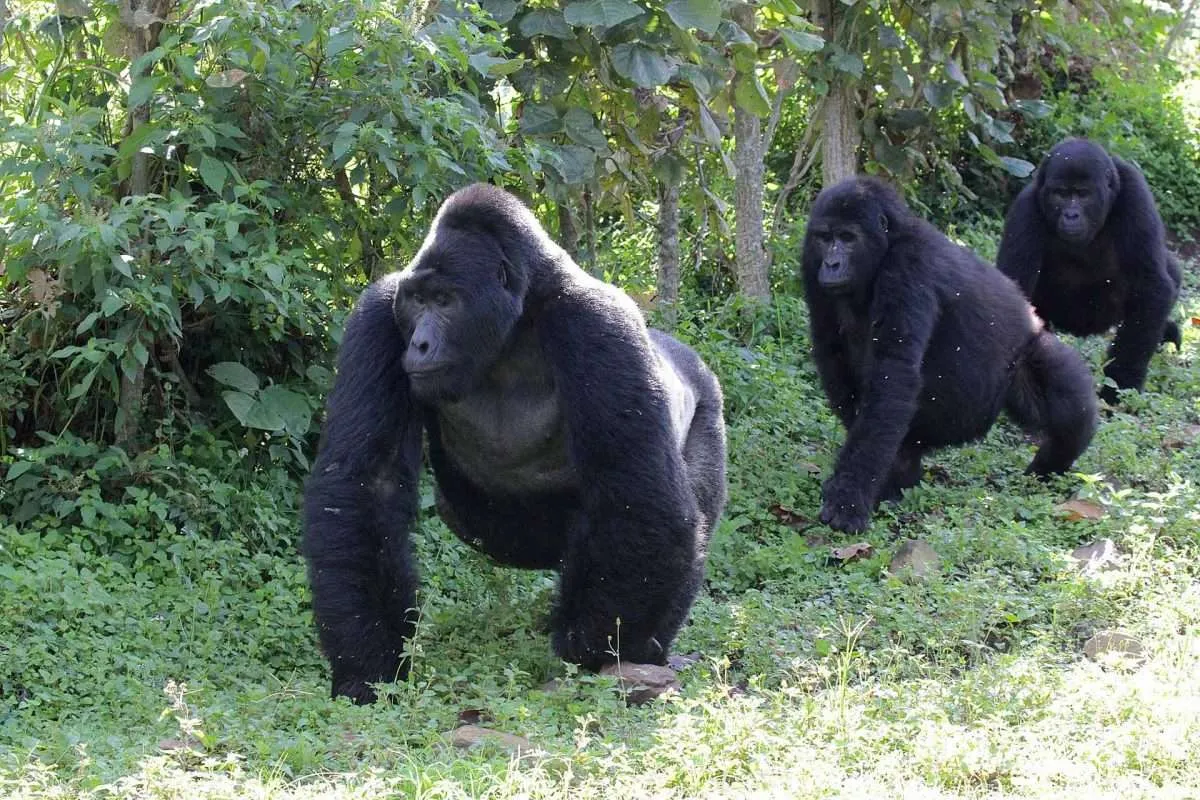
Is a Mountain Gorilla more of a human being?
Is a Mountain Gorilla More Like a Human Being? 2026 Guide
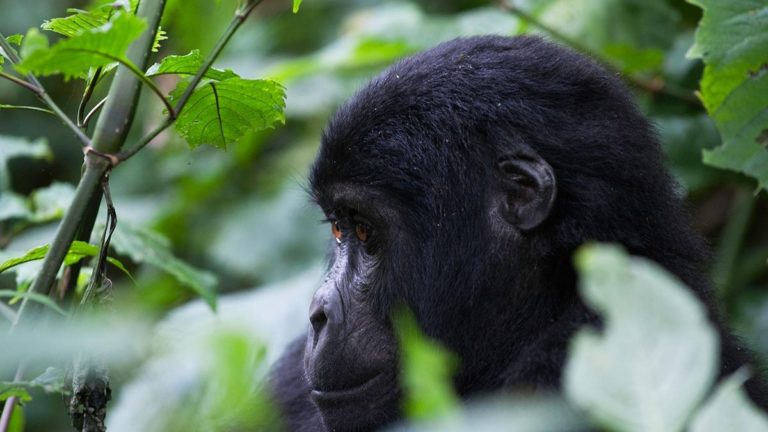
A mountain gorilla is not a human being, but it is one of our closest living relatives. Humans and gorillas share a common evolutionary ancestry, many genes, similar body structures, and some recognizable social behaviors.
However, mountain gorillas belong to a different species, Gorilla beringei beringei, while humans belong to Homo sapiens.
The striking similarities between people and mountain gorillas are one reason why gorilla trekking in Uganda is such a powerful wildlife experience.
Watching a gorilla family communicate, care for infants, form relationships, and protect one another can feel surprisingly familiar.
Yet responsible tourism begins with understanding the important differences between human beings and wild gorillas.
This guide explains the science behind their relationship, their behavior, where to see them, and how to plan a responsible Bwindi gorilla safari with Adventure Uganda Safaris.
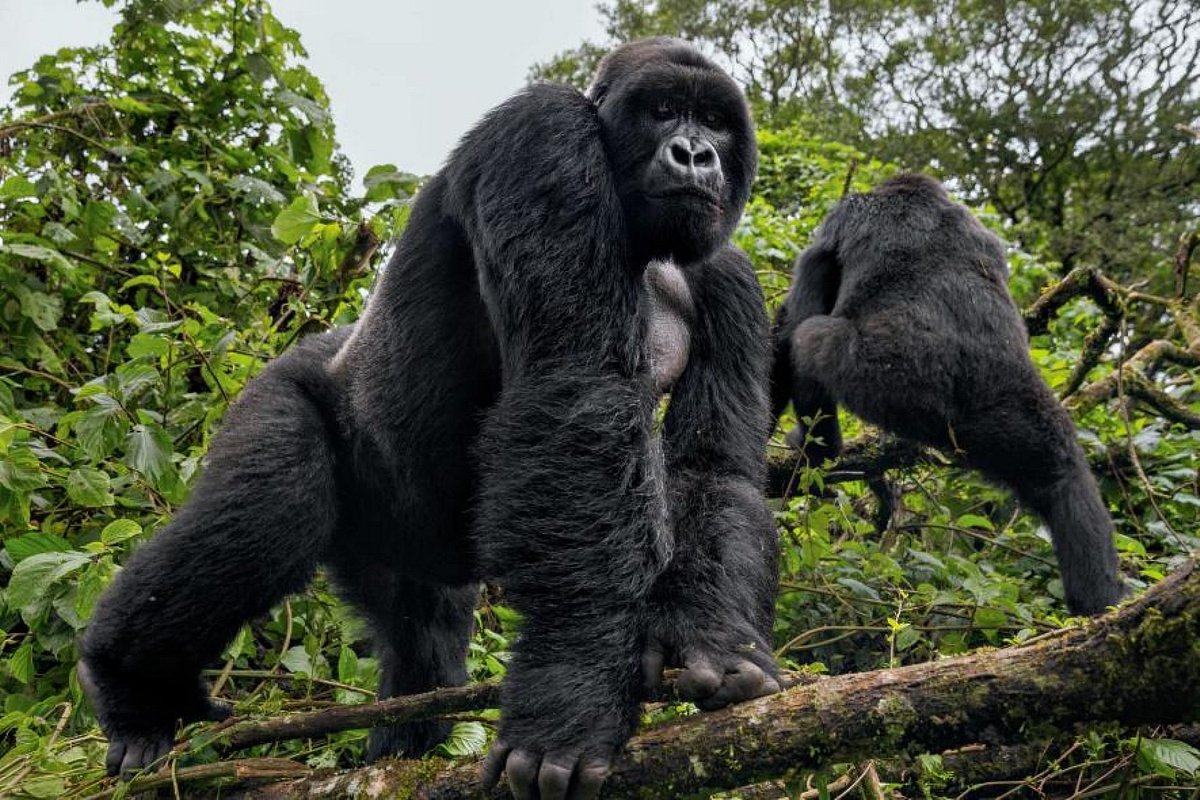
Quick Answer: Are Mountain Gorillas Human?
No. A mountain gorilla is not a human being, and humans did not evolve from gorillas.
Instead, humans and gorillas share an ancient common ancestor. Over millions of years, the two lineages evolved separately, developing different physical characteristics, behaviors, and ecological adaptations.
Scientific comparisons show that humans and gorillas are genetically very similar, although the exact percentage depends on how scientists measure and compare genomes.
The Smithsonian Institution’s Human Origins Program estimates the DNA difference between humans and gorillas at approximately 1.6% in the comparison it presents.
It also emphasizes that humans, chimpanzees, bonobos, and gorillas are African great apes with a shared evolutionary history.
Therefore, the most accurate statement is:
Mountain gorillas are not human, but they are closely related African great apes with whom humans share a distant common ancestor.
This distinction matters. Their human-like qualities should inspire respect and conservation—not encourage people to treat them like domesticated people or pets.
What Does Gorilla DNA Tell Us?
Humans and gorillas share ancestry
Humans and gorillas are both great apes. Other great apes include chimpanzees, bonobos, and orangutans.
Great apes differ from monkeys in several ways, including larger brains, more complex social behavior, and the absence of an external tail.
Humans did not descend from any gorilla living today. Instead, humans and gorillas inherited some characteristics from earlier ancestral populations. Those ancestral populations no longer exist in their original form.
The human lineage and the gorilla lineage gradually separated and evolved independently.
This is why humans developed upright walking and highly complex language, while gorillas evolved powerful bodies, climbing abilities, specialized diets, and social systems adapted to dense African forests.
How similar is gorilla DNA to human DNA?
You may see websites claiming that gorillas share 98% or 98.3% of their DNA with humans.
Such figures can be useful as broad educational estimates, but they should not be presented without explanation.
Genetic similarity depends on:
-
Which sections of the genome are compared
-
Whether scientists measure DNA bases, genes, or entire genomes
-
How insertions, deletions, and duplicated sections are counted
-
Which gorilla and human genomes are used in the comparison
The Smithsonian reports an approximately 1.6% DNA difference between humans and gorillas in its educational genetics material. That figure illustrates close evolutionary relatedness, but it does not mean that a gorilla is “98.4% human”.
DNA similarity does not erase the biological difference between species. A small percentage of genetic differences can produce major differences in:
-
Anatomy
-
Brain development
-
Communication
-
Reproduction
-
Movement
-
Immune responses
-
Social organization
-
Ecological adaptation
Mountain gorillas share a large proportion of their genetic heritage with humans, but they remain a distinct species with their own evolutionary history.
Similarities Between Humans and Mountain Gorillas
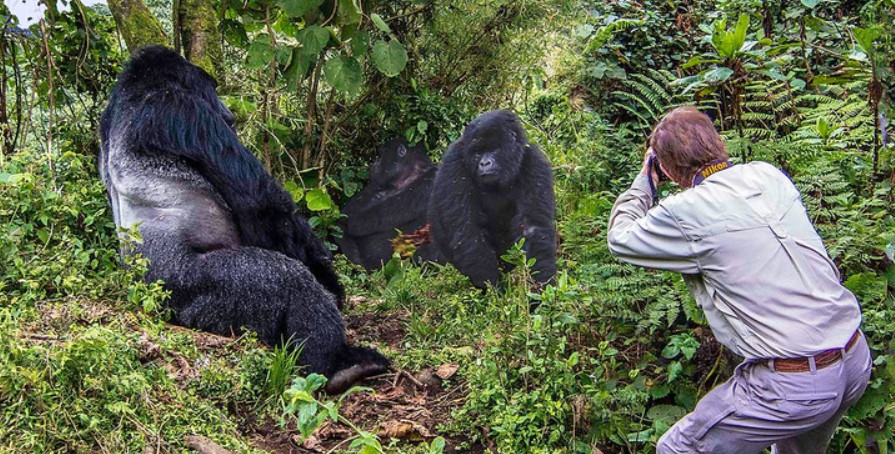
A visit to Bwindi Impenetrable National Park can reveal several behaviors that feel familiar to human observers.
1. Strong family relationships
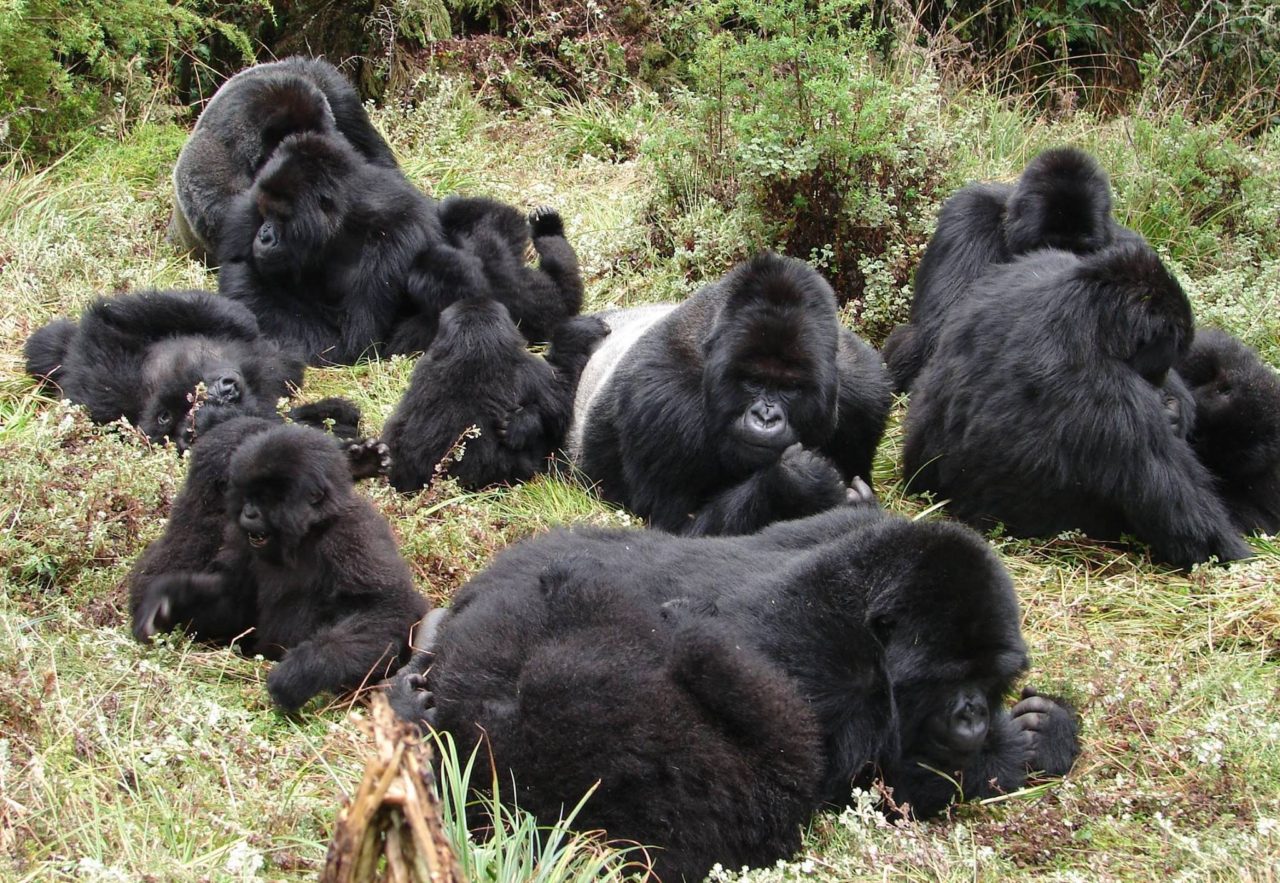
Mountain gorillas live in stable social groups called troops or families.
A typical group may include:
-
A dominant silverback
-
Several adult females
-
Infants and juveniles
-
Younger males, sometimes called blackbacks
The silverback usually provides leadership and protection. Adult females care for infants, and young gorillas spend many hours playing, climbing, wrestling, and learning from older members of the group.
These relationships resemble some aspects of human family life, especially parental care, cooperation, protection, and learning through observation.
2. Care for infants
Gorilla infants depend heavily on their mothers. Mothers carry, groom, protect, and nurse their young. Infants gradually learn how to move through the forest, identify food, interact socially, and respond to danger.
Visitors often find this one of the most emotional parts of a gorilla trekking Uganda experience.
A mother gently holding an infant can look familiar because parental care is an important part of both human and gorilla social life.
However, gorilla parenting remains adapted to gorilla biology and forest conditions. We should appreciate the similarity without assuming that gorillas think or behave exactly like humans.
3. Communication
Mountain gorillas communicate through:
-
Chest beating
-
Grunts
-
Barks
-
Hoots
-
Body posture
-
Facial expressions
-
Touch
-
Grooming
-
Movement and spacing
Chest beating is often misunderstood. It is not always a sign of anger. Gorillas may chest-beat to communicate location, display strength, attract attention, express excitement, or respond to another gorilla.
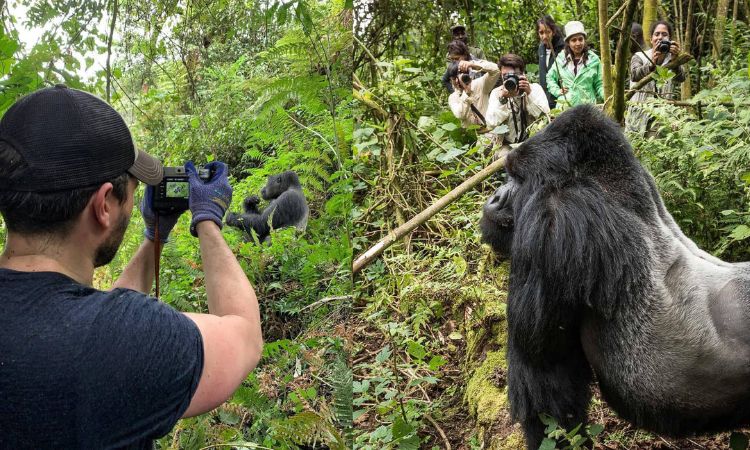
During a Bwindi gorilla trek, your ranger guide explains the sounds and gestures you may observe. Visitors should remain quiet and avoid copying gorilla calls or movements.
4. Play and learning
Young gorillas play by chasing, wrestling, climbing, rolling, and tugging at vegetation.
Play helps them develop:
-
Strength
-
Balance
-
Coordination
-
Social skills
-
Knowledge of group boundaries
-
Appropriate responses to older gorillas
Human children also learn through play, which is why young gorilla behavior can appear especially relatable.
5. Social intelligence
Gorillas remember individuals, recognize social relationships, respond to changes in group dynamics, and adjust their behavior according to context. They also learn through observation and experience.
This does not mean that gorillas possess human language, human institutions, or human forms of reasoning. It means that their intelligence is complex and well adapted to their social and ecological environment.
6. Grooming and affection
Grooming helps maintain relationships and remove dirt or parasites from the fur. It can also reduce tension and strengthen bonds between group members.
Touch, proximity, and grooming are important in many primate societies. They are among the behaviors that make a mountain gorilla family appear socially familiar to human observers.

Important Differences Between Gorillas and Humans
Although gorillas share many characteristics with humans, they are not people.
1. Gorillas are a separate species
Mountain gorillas have their own:
-
Scientific classification
-
Communication system
-
Diet
-
Reproductive biology
-
Social structure
-
Habitat requirements
-
Conservation needs
They are wild animals, not human substitutes or oversized pets.
2. Gorillas do not use human language
Gorillas communicate effectively with one another, but there is no evidence that wild mountain gorillas use human language in the same way people do.
Their communication relies mainly on vocalizations, gestures, facial expressions, physical contact, and body posture.
3. Gorillas live in a different environment
Mountain gorillas are adapted to high-altitude forests. They feed mainly on leaves, shoots, stems, bark, flowers, and other vegetation. Their bodies, teeth, digestive systems, and daily routines have evolved for this environment.
4. Human contact can be dangerous
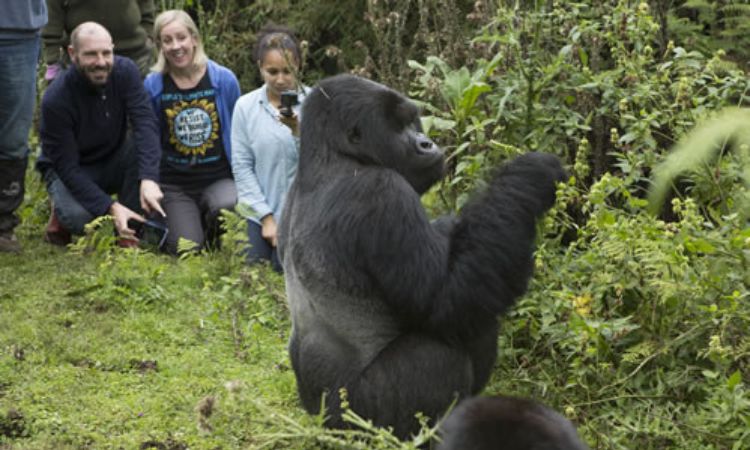
Humans can transmit respiratory infections and other illnesses to gorillas. This is one reason gorilla trekking rules are strict.
A cold or cough that is mild in a person can be serious for a gorilla population with limited exposure to human diseases.
The Uganda Wildlife Authority’s published conservation rules require visitors to avoid gorilla tracking when sick, maintain the required distance, avoid eating or drinking near gorillas, avoid flash photography, and limit visits to one hour.
The rules also limit a normal tracking group to eight visitors and set the minimum tracking age at 15.
Why Do Gorillas Resemble Humans?
The similarities between humans and mountain gorillas come from shared evolutionary ancestry.
Humans, gorillas, chimpanzees, bonobos, and orangutans all belong to the primate order. Humans and other African great apes share anatomical and genetic traits because their ancestors were related.
Shared traits include:
-
Forward-facing eyes
-
Flexible shoulders
-
Grasping hands
-
Fingernails rather than claws
-
Complex social relationships
-
Long childhood development
-
Advanced learning ability
-
Emotional expression
-
Care of offspring
The Smithsonian explains that humans and the African great apes share a common ancestor and that these relationships are supported by both physical and genetic evidence
Evolution is not a ladder with humans at the top and gorillas below. It is better understood as a branching tree. Humans and gorillas are separate branches that have changed over a very long period.
Where Can You See Mountain Gorillas?
Mountain gorillas live in the Virunga massif and the Bwindi forest region of East-Central Africa.
They are found in only three countries:
-
Uganda
-
Rwanda
-
The Democratic Republic of Congo
1. Bwindi Impenetrable National Park, Uganda
Bwindi Impenetrable National Park is one of the world’s best destinations for mountain gorilla trekking. It is located in southwestern Uganda and is known for:
-
Mountain gorilla families
-
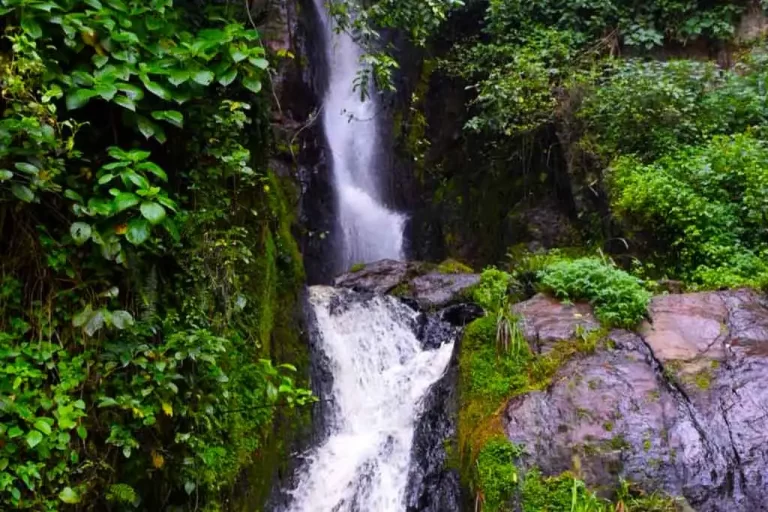
Dense rainforest
-
Bird diversity
-
Forest elephants and other wildlife
-
Community tourism
-
Scenic highland landscapes
Bwindi has four principal trekking sectors:
-
Buhoma
-
Ruhija
-
Rushaga
-
Nkuringo
Your accommodation should usually match your gorilla permit sector because the roads between sectors can be slow and mountainous.
2. Mgahinga Gorilla National Park, Uganda
Mgahinga Gorilla National Park protects part of the Virunga volcano region. It offers gorilla trekking, golden monkey tracking, volcanic scenery, and opportunities to explore the cultural heritage of the Batwa people.
3. Volcanoes National Park, Rwanda
Rwanda’s Volcanoes National Park is another important destination for mountain gorilla trekking. It is popular because of its accessibility from Kigali and its dramatic volcanic landscape.
4. Virunga National Park, Democratic Republic of Congo
The Democratic Republic of Congo has important gorilla habitat, but travel conditions and park access can change. Visitors should obtain current security and entry advice before planning a trip.
What Is Gorilla Trekking Like?
A typical gorilla trekking safari in Uganda begins early in the morning at the park headquarters.
A. Step 1: Registration and briefing
Rangers explain:
-
How to behave near gorillas
-
How to protect the forest
-
What to do if a gorilla approaches
-
How to walk in a trekking group
-
Why health precautions matter
Visitors are assigned to a habituated gorilla family.
B. Step 2: Hiking through the forest
The trek may last from a few hours to most of the day. Conditions vary according to the location of the gorillas.
Expect:
-
Steep slopes
-
Mud
-
Dense vegetation
-
High humidity
-
Uneven ground
-
Occasional rain
-
Elevations that can make hiking demanding
A gorilla trekking permit does not guarantee a short walk. Gorillas move freely through the forest, and trackers follow their recent signs.
C. Step 3: Finding the gorilla family
Trackers may look for:
-
Footprints
-
Broken vegetation
-
Feeding areas
-
Nest sites
-
Droppings
-
Vocalizations
Once the group is located, visitors spend a limited period observing the gorillas under ranger supervision.
D. Step 4: Returning from the forest
After the viewing period, the group leaves the gorillas and returns to the trailhead. Many travelers spend the afternoon resting, visiting a local community, or taking a forest or cultural walk.

Gorilla Trekking Rules for Responsible Tourism
Follow these rules to protect both visitors and gorillas:
-
Do not trek if you have a cold, flu, fever, or another infectious illness.
-
Maintain the minimum distance required by current UWA guidance.
-
Never touch or feed a gorilla.
-
Do not eat, drink, or smoke near the gorillas.
-
Avoid flash photography.
-
Speak quietly and follow the ranger’s instructions.
-
Do not use loud music or imitate gorilla sounds.
-
Remain with your assigned group.
-
Avoid littering and leave plants undisturbed.
-
Respect the one-hour viewing limit.
Distance rules can be updated by park authorities.
UWA’s published tariff material currently specifies a 10-metre minimum distance, while older documents and some travel pages refer to 7 metres. Always follow the current briefing given by your ranger on the day of trekking.
This is an important example of responsible gorilla tourism. The purpose of the rules is not to reduce your experience; it is to keep an endangered population safe.
How Gorilla Tourism Supports Conservation
Gorilla trekking creates income that helps support:
-
National park management
-
Ranger employment
-
Anti-poaching work
-
Gorilla monitoring
-
Veterinary response
-
Local employment
-
Community projects
-
Conservation education
Tourism can also give surrounding communities a financial reason to protect forests rather than convert them for other uses.
However, tourism must be managed carefully. Operators should respect park rules, pay for legitimate permits, avoid overcrowding, and work with local communities.
Choosing a responsible operator such as Adventure Uganda Safaris can help travelers organize permits, transport, accommodation, local guides, and community experiences through a structured itinerary.
Planning a Mountain Gorilla Safari in Uganda
Choose your trekking sector carefully
Bwindi’s sectors are separated by challenging roads. Select your lodge and permit sector together.
-
Buhoma: established trekking area with forest and community activities
-
Ruhija: known for scenic highlands and birding opportunities
-
Rushaga: offers several gorilla families and habituation options
-
Nkuringo: dramatic scenery and demanding terrain
Book your permit early
Gorilla permits are limited and tied to a specific date and trekking location. Book early if you plan to travel during:
-
June to September
-
December to February
-
Christmas and New Year holidays
A reputable operator can check availability and coordinate the permit with your accommodation and transport.
Prepare for the trail
Pack:
-
Waterproof hiking boots
-
Long trousers and long-sleeved clothing
-
Gardening gloves
-
Rain jacket or poncho
-
Water and energy snacks
-
Insect repellent
-
Sunscreen and hat
-
Lightweight daypack
-
Camera without flash
-
Walking stick, if desired
Hiring a porter is strongly recommended. Porters assist with bags, difficult sections, and balance, while their fees directly support people living near the forest.

Why Book With Adventure Uganda Safaris?
Adventure Uganda Safaris can help organize a complete Uganda gorilla safari, including:
-
Gorilla permit booking
-
Airport or hotel transfers
-
Private 4×4 transport
-
Accommodation near your trekking sector
-
English-speaking driver-guide
-
Bwindi and Mgahinga itineraries
-
Batwa cultural experiences
-
Chimpanzee tracking in Kibale
-
Wildlife safaris in Queen Elizabeth or Lake Mburo
-
Advice on clothing, fitness, and trekking preparation
A private itinerary can combine gorilla trekking with:
-
A Queen Elizabeth National Park safari
-
A Kazinga Channel boat cruise
-
Chimpanzee tracking in Kibale Forest
-
A visit to Lake Bunyonyi
-
A Batwa cultural experience
-
Birdwatching and forest walks
Contact Adventure Uganda Safaris for a customized route based on your dates, budget, fitness level, and interests.
Frequently Asked Questions
Is a mountain gorilla a human being?
No. A mountain gorilla is a separate species of great ape. Humans and gorillas share a common ancestor and substantial genetic similarities, but they evolved independently.
Are gorillas related to humans?
Yes. Humans and gorillas are related through a distant common ancestor. They are both African great apes, along with chimpanzees and bonobos.
Do humans share 98% of DNA with gorillas?
The commonly quoted percentage varies according to the comparison method. The Smithsonian reports an approximately 1.6% DNA difference in its gorilla comparison, but this should not be interpreted as meaning that gorillas are nearly human.
Can gorillas understand human emotions?
Gorillas can respond to social signals, facial expressions, vocal tones, and body language. They have complex social behavior, but this does not mean they interpret emotions exactly as humans do.
Are mountain gorillas dangerous?
Mountain gorillas are powerful wild animals, but habituated groups generally avoid conflict when visitors follow ranger instructions. Never approach, touch, feed, or provoke a gorilla.
How old must you be to trek gorillas in Uganda?
The standard minimum age is 15 years, according to Uganda’s gorilla trekking rules.
How long does gorilla trekking take?
The hike may take a few hours or much longer, depending on where the gorilla family has moved. The actual viewing period is limited to one hour under the current rules.
What is the best place to see mountain gorillas?
Uganda’s Bwindi Impenetrable National Park and Mgahinga Gorilla National Park, Rwanda’s Volcanoes National Park, and the Democratic Republic of Congo’s Virunga National Park are the main destinations.
Final Thoughts
A mountain gorilla is not a human being, but its close evolutionary relationship with humans helps explain the similarities we notice in its body, intelligence, communication, family life, and social behavior.
These similarities make gorilla trekking in Uganda an unforgettable experience, but they also create a responsibility: visitors must protect the animals from stress, disease, and harmful contact.
The best way to understand mountain gorillas is not to treat them as people. It is to respect them as intelligent, social, endangered wild animals with their own identity and place in the natural world.
Plan your Bwindi gorilla safari with Adventure Uganda Safaris for responsible permit assistance, comfortable transport, experienced local guides, and a tailor-made itinerary through Uganda’s forests, communities, and wildlife parks.