
Guide to Nyungwe Forest National Park
A Guide to Discovering Nyungwe Forest National Park: Activities and Wildlife Guide 2026
Nyungwe Forest National Park is Rwanda’s best destination for a real rainforest adventure, famous for chimpanzee trekking, a suspended canopy walk and miles of forest trails.
It protects one of the oldest and best-preserved montane rainforests in Africa, in the far southwest of the country.
Local communities have valued this forest for centuries, yet it is still new on the tourist map. It was gazetted as a national park in 2005, and today it ranks among Rwanda’s most exciting emerging safari destinations.
The park holds about 1,000 plant species, many mammals, over 300 bird species, waterfalls and dramatic ravines.
This guide explains what to see and do in Nyungwe, where to stay, the best time to visit and how to get there. It also shows how to combine Nyungwe with Uganda for a longer East African primate safari.

Nyungwe Forest National Park Quick Facts
Nyungwe covers about 1,000 square kilometres in southwestern Rwanda, next to the border with Burundi.
| Fact | Detail |
|---|---|
| Location | Extreme southwest of Rwanda, bordering Burundi |
| Size | About 1,000 sq km |
| Gazetted as national park | 2005 |
| Habitats | Tropical rainforest, open woodland, bamboo thicket, swamps, marshland and heath |
| Plants | About 1,000 species |
| Mammals | About 86 species (figure from park sources; check the latest count) |
| Birds | About 320 species |
| Trails | 13 hiking trails |
| Chimpanzees | 2 habituated communities |
| Canopy walk | 160 m long, 70 m above the ground |
| Drive from Kigali | 5 to 6 hours |
Wildlife and Birds of Nyungwe Forest
Nyungwe is a primate and bird paradise, and its rainforest also shelters many small mammals that are hard to see elsewhere.
Sightings are never guaranteed in dense forest, but a good guide improves your chances a great deal.
Mammals you may see
- Primates: chimpanzees, Angola colobus (often in very large groups), blue monkeys, red-tailed monkeys, vervet monkeys, grey-cheeked mangabeys, L’Hoest’s monkeys, Dent’s mona monkeys and olive baboons
- Forest animals: giant forest hogs, bush pigs, black-fronted duikers, bushbucks, tree hyraxes and forest buffaloes
- Small carnivores: genets, mongooses, golden cats, Congo clawless otters and servals, which are mostly active at night or at dawn
Birds of Nyungwe
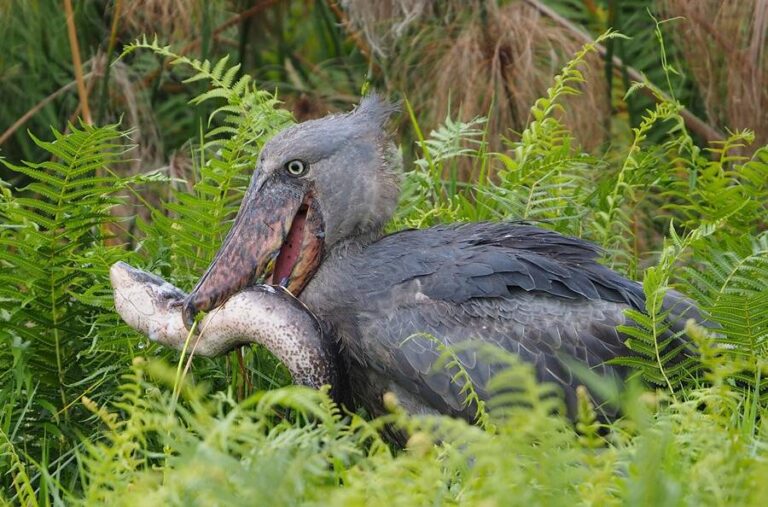
Nyungwe is a top birding destination because it holds many Albertine Rift endemics, birds found only in the mountain forests of this region.
Key species include:
- Rwenzori turaco, Rockefeller’s sunbird, Regal sunbird and Purple-breasted sunbird
- Kivu ground thrush, Grauer’s swamp warbler, Neumann’s warbler and short-tailed warbler
- Shelley’s crimsonwing, Red-throated alethe, Archer’s robin-chat and Dwarf honeyguide
- Doherty’s bush-shrike, Rwenzori batis, Albertine owlet and Rwenzori nightjar
Bring binoculars, a field guide and patience. Early mornings along the canopy walk and the forest edge give the best chances of seeing birds.
1. Chimpanzee Trekking in Nyungwe Forest
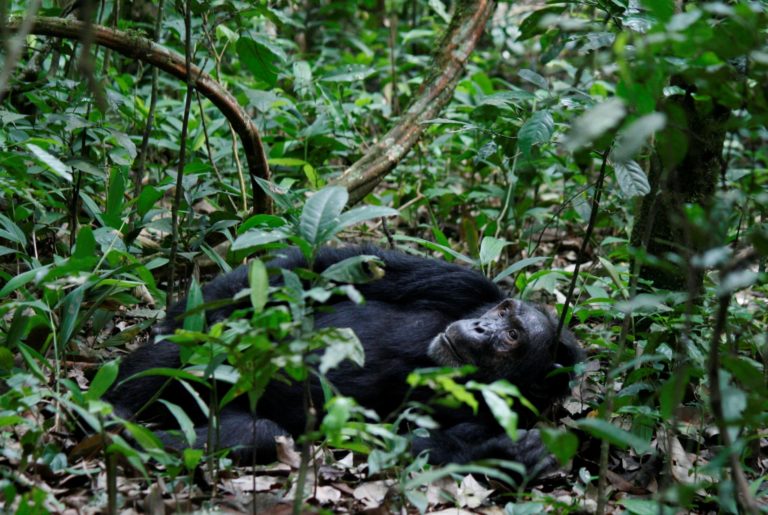
Chimpanzee trekking is the highlight of a visit to Nyungwe Forest National Park. Two habituated chimpanzee communities live here, which makes treks reliable and rewarding, and the experience lets you watch our closest relatives in their natural habitat.
How chimpanzee trekking works
- Briefing: rangers explain the rules and divide trekkers into small groups.
- Trek: you walk for about one to three hours through steep forest trails to reach the chimpanzees.
- Time with the chimpanzees: once you find them, you have one hour to observe, listen and take photographs as they feed, groom and play.
Tips for chimpanzee trekking
- Wear sturdy waterproof boots, long trousers and long sleeves.
- Carry a light rain jacket, water and snacks.
- Keep your voice low and stay at least the minimum distance from the apes.
- Book your permit early, because daily numbers are limited.
Permit prices are set by the Rwanda Development Board (RDB) and can change, so check the current fee when you book.
Uganda also offers excellent chimpanzee tracking in Kibale National Park and Budongo Forest, so many travellers combine both countries.

2. Nyungwe Canopy Walk
The Nyungwe canopy walk is one of the only canopy walkways in East and Central Africa, and it is the most photographed attraction in the park.
A suspended bridge about 160 metres long and 70 metres above the forest floor gives you a bird’s-eye view of the treetops, the valley, primates and birds.
Start early in the morning, when mist hangs over the trees and bird activity is highest. The bridge is stable and has safety rails, but it is not suitable for anyone with a serious fear of heights. Wear shoes with good grip and keep your camera strap secure.
3. Guided Forest Walks and Hiking Trails
Nyungwe has 13 well-maintained hiking trails that vary in length, difficulty and the wildlife they reveal. A guided walk is the best way to experience the forest’s plants, birds, primates and waterfalls at your own pace.
Popular trails
- Igishigishigi Trail: a short, easy walk that is good for families and first-time visitors.
- Imbaraga Trail: a moderate trail with forest views and birdlife.
- Ngabwe Trail: a rewarding walk through varied habitats.
- Buhoro Trail: a gentle trail known for primates and birds.
- Kamiranzovu Marsh Trail: a swamp walk for birders and orchid lovers.
- Bigugu Trail: a longer, harder hike to one of the park’s highest points.
- Rukuzi Trail: a quieter trail that suits travellers who prefer fewer crowds.
Choose your trail with your guide based on your fitness, time and what you want to see. Wear waterproof boots and carry rain protection, as showers are common in the rainforest at any time of year.

4. Helicopter Tours Over Nyungwe
Helicopter tours give you a dramatic aerial view of the forest canopy, ravines, waterfalls and wetlands, and they are a great way to photograph the landscape.
Flights can be arranged in the Nyungwe area, and the scenery from above shows just how large and unbroken the rainforest is. Book through a tour operator, as availability depends on the weather and the season.
5. Cultural and Tea Tours Around Nyungwe
Cultural tours near Nyungwe give you an authentic look at local traditions and daily life. Guided walks are led by local people who are proud to share their history, beliefs and customs, and your visit supports the surrounding communities.
You can also visit tea plantations on the edge of the forest, where you see how tea is grown, picked and processed and enjoy a fresh cup in the hills. Cultural and tea tours make a relaxed half-day activity after a morning of trekking.
Nyungwe and the Source of the Nile
Nyungwe’s streams feed the Nile and Congo river basins, and the forest is often linked with one of the river’s most distant sources. Ask your guide about the story behind the water that flows from these hills.
Where to Stay in Nyungwe Forest National Park
Several lodges and guesthouses sit in or near the park, so you can wake up to forest views and start your trek early.
- One&Only Nyungwe House: a luxury lodge on a tea estate bordering the forest.
- Nyungwe Top View Hill Lodge: a comfortable mid-range lodge with views over the forest and tea plantations.
- Kitabi Eco Centre: an affordable, community-linked option close to the forest.
- Gisakura Guesthouse: a simple, budget-friendly guesthouse near the park.
Best Time to Visit Nyungwe Forest
The best months for Nyungwe are June to September and December to February, when rainfall is lower and trails are drier and less slippery.
Travellers who prefer fewer crowds can visit from March to May and October to November but should expect muddy trails and rain. The park is open all year.
How to Get to Nyungwe Forest National Park
Most travellers drive from Kigali, which takes about five to six hours and rewards you with scenic views of Rwanda’s hills.
A private 4×4 with a driver-guide is the most comfortable and flexible option. Helicopter flights from Kigali can also be arranged and take around 45 minutes.
Frequently Asked Questions About Nyungwe Forest
What is Nyungwe Forest National Park famous for?
It is famous for chimpanzee trekking, the canopy walk, its hiking trails and its rich birdlife.
How long does chimpanzee trekking take in Nyungwe?
A trek takes about one to three hours to find the chimpanzees, followed by one hour with them.
How many days do I need in Nyungwe?
Two nights are ideal, giving you time for chimpanzee trekking, the canopy walk and a forest hike.
Can I combine Nyungwe with Uganda?
Yes. Many travellers combine Rwanda’s Nyungwe and Volcanoes National Park with Uganda’s Bwindi, Kibale and Queen Elizabeth for a longer East African primate safari.
When is the best time to visit Nyungwe?
June to September and December to February are the driest months.
Plan Your Nyungwe and Uganda Safari with Adventure Uganda Safaris
Ready to explore Nyungwe’s rainforest and add Uganda’s gorillas, chimpanzees and big game? Adventure Uganda Safaris plans tailor-made Rwanda and Uganda safaris, with expert guides, comfortable 4×4 vehicles and carefully chosen lodges.
We arrange permits, accommodation, border crossings and transfers, so you can focus on the wildlife.
- Custom itineraries for couples, families, groups and solo travellers
- Combined Rwanda and Uganda primate safaris
- Permit booking and honest advice on the best dates
- Experienced, licensed local guides
Contact Adventure Uganda Safaris today to request a free quote and plan your Nyungwe Forest adventure.