
Key Features of a Mountain Gorilla Explained: Complete Guide 2026
Imagine trekking through the misty Virunga Mountains, where fog clings to ancient volcanoes and the air hums with anticipation.
Suddenly, a mountain gorilla emerges from the dense foliage—a massive silverback pounds his chest, his piercing eyes locking onto yours.
This is no ordinary wildlife encounter; it’s a rendezvous with one of Earth’s most unique mountain gorilla features that make these gentle giants icons of the wild.
Scientifically known as Gorilla beringei beringei, mountain gorillas boast over 8 special features ranging from extraordinary physical adaptations to complex social behaviors, setting them apart from all other primates.
With only around 1,063 mountain gorillas remaining in the wild, their endangered status underscores the urgency of conservation.
Where responsible gorilla trekking tourism plays a pivotal role—funding rangers and habitat protection to ensure these majestic creatures thrive for generations.
This introduction isn’t just a story; it’s your gateway to understanding why mountain gorilla special features captivate adventurers worldwide, driving demand for Uganda gorilla trekking and Rwanda gorilla safaris.
At Adventure Uganda Safaris, as a safari expert in Kampala, I’ve witnessed how these traits turn treks into life-changing experiences, boosting conservation while filling booking calendars.
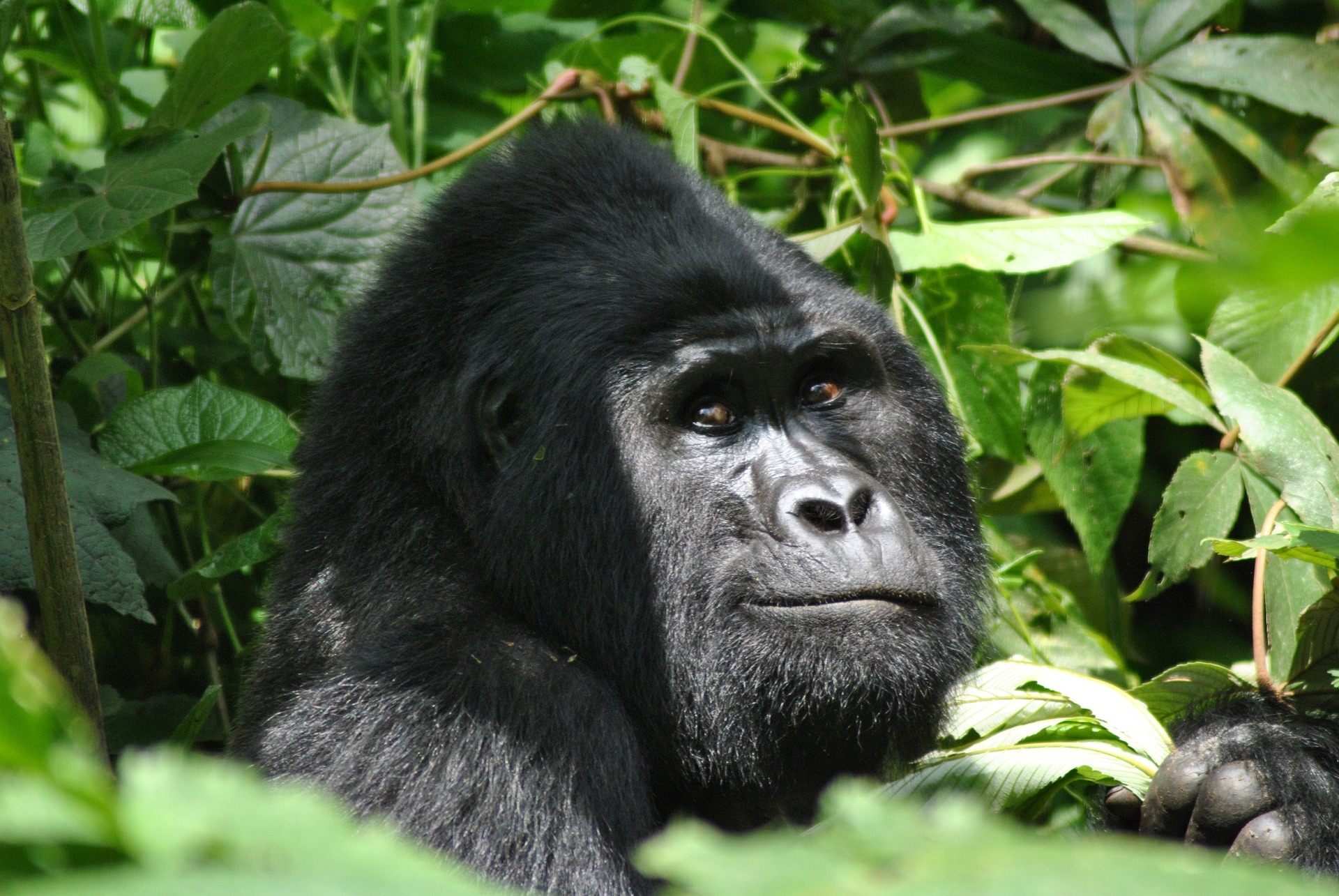
This majestic silverback exemplifies their conical skull and powerful build, perfectly adapted for high-altitude life in rugged terrains that test human limits.
Physical Adaptations
Mountain gorillas thrive in extreme high-altitude environments thanks to a suite of special physical features evolved over millennia. Their thick, longer fur stands out as a primary adaptation, insulating against sub-freezing temperatures and relentless rain at elevations from 8,000 to 13,000 feet.
Unlike lowland gorillas, this fur is noticeably darker and thicker, forming a natural raincoat that repels moisture while retaining body heat—essential in the chill of montane cloud forests, where nights drop below zero.
Males, reaching up to 400 pounds and 6 feet tall when standing, showcase a muscular build with disproportionately strong arms and shoulders, enabling them to climb steep slopes, defend their groups, and forage in dense undergrowth.
A pronounced sagittal crest—that bony ridge on top of their skull—anchors massive jaw muscles for grinding tough vegetation, a testament to their herbivorous lifestyle.
Knuckle-walking defines their locomotion, with dexterous hands featuring opposable thumbs for gripping branches and even rudimentary tool use, like modifying sticks to gauge water depth, observed in the wild.
Facial features further enhance survival:
a broad nose for humid air filtration, prominent brow ridges for shade in dappled light, and large eyes for low-light vision during dawn and dusk foraging.
These traits aren’t random; they’re precision-engineered for the Albertine Rift’s harsh conditions.
To illustrate, here’s a comparison of mountain gorilla vs. lowland gorilla key adaptations:
These mountain gorilla physical adaptations not only ensure survival but also make close encounters during Bwindi gorilla trekking unforgettable, drawing eco-tourists eager for authentic wildlife adventures.
Habitat & Distribution
Mountain gorillas are exquisitely tuned to the Albertine Rift forests, a biodiversity hotspot spanning Virunga Massif (shared by Uganda, Rwanda, and DRC) and Bwindi Impenetrable National Park in Uganda.
Nestled at elevations of 2,200-4,300 meters on volcanic giants like Mount Karisimbi, their habitat consists of dense montane cloud forests—towering bamboo thickets, hypericum trees, and moss-draped vines that trap moisture like a sponge.
This ecosystem supports their herbivorous diet as vegetation grazers, providing endless supplies of wild celery, thistles, and bamboo shoots.
The Virunga Volcanoes host about half the population, while Bwindi shelters the rest, making these parks prime for gorilla trekking Uganda permits.
Limited to just two isolated subpopulations totalling ~1,063 individuals, their mountain gorilla habitat faces fragmentation from human encroachment, yet it’s this remoteness that preserves their purity—no interbreeding with lowland cousins.
Daily, they navigate steep, muddy slopes and bamboo forests, their special features like elongated arms propelling them through terrain impassable to humans without guides.
For travelers, this translates to thrilling gorilla safaris in Rwanda or Mgahinga Gorilla Park, where misty mornings reveal families in their natural realm, fueling a surge in sustainable tourism bookings.
Social Structure & Intelligence
At the heart of mountain gorilla special features lies their complex social structure, organized into cohesive family groups of 5-30 individuals led by a dominant silverback gorilla.
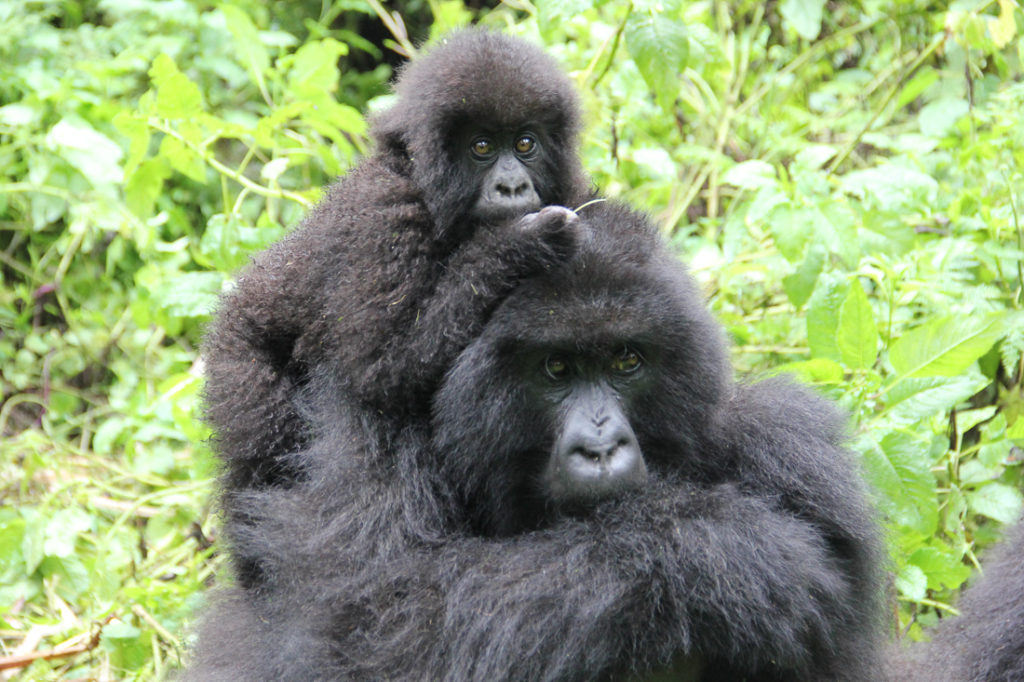
Females tip the scales at around 200 pounds, nurturing infants with unwavering care while the silverback enforces order through displays of power—chest-beating, charges, and hooting vocalizations that echo through the forest.
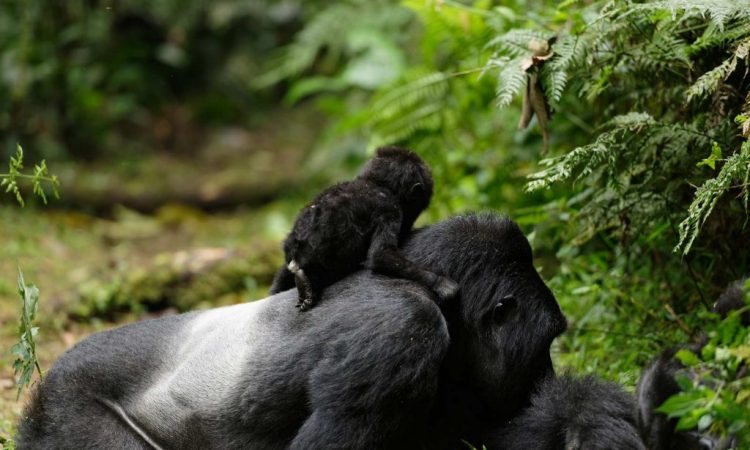
Highly social behaviors include grunts for contentment, hoots for alerts, elaborate grooming rituals to bond, and playful wrestling among juveniles, fostering unbreakable family ties essential in perilous habitats.
Mountain gorilla intelligence shines through cooperation: subordinates defer to the silverback, who arbitrates disputes and protects against predators like leopards.
They’ve demonstrated tool use—using branches as walking sticks or leaf sponges for drinking—and even medicinal plant knowledge, self-medicating with bitter herbs.
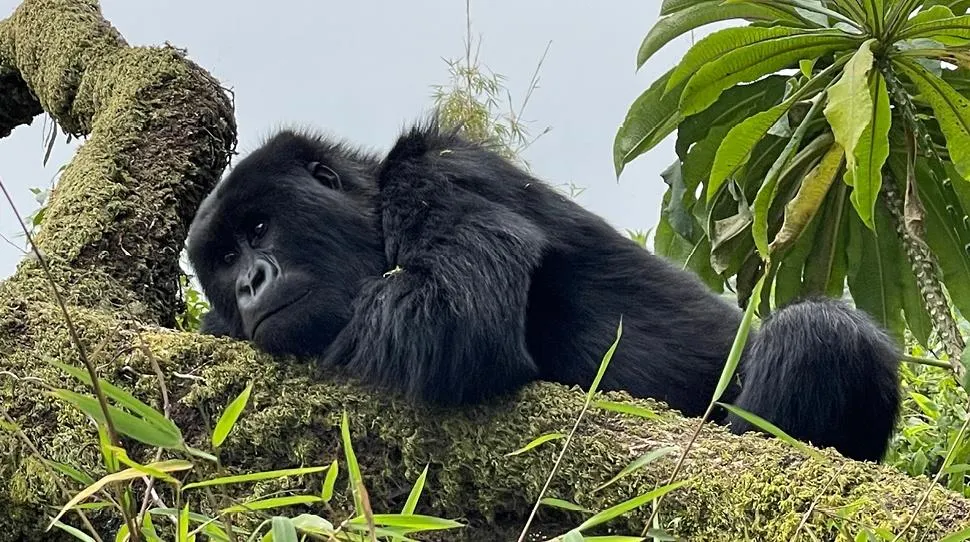
Their daily routine is rhythmic poetry: morning foraging for breakfast leaves, midday naps in sunlit clearings, afternoon travels, and nightly nest-building from bent foliage, with each member crafting a fresh bed before dusk.
Gorilla families showcase tight bonds, vital for survival in harsh terrain where unity means life or death.
These dynamics make mountain gorilla trekking a window into primate society, where observers witness empathy and hierarchy firsthand—perfect hooks for your East Africa safari itineraries that convert awe into confirmed bookings.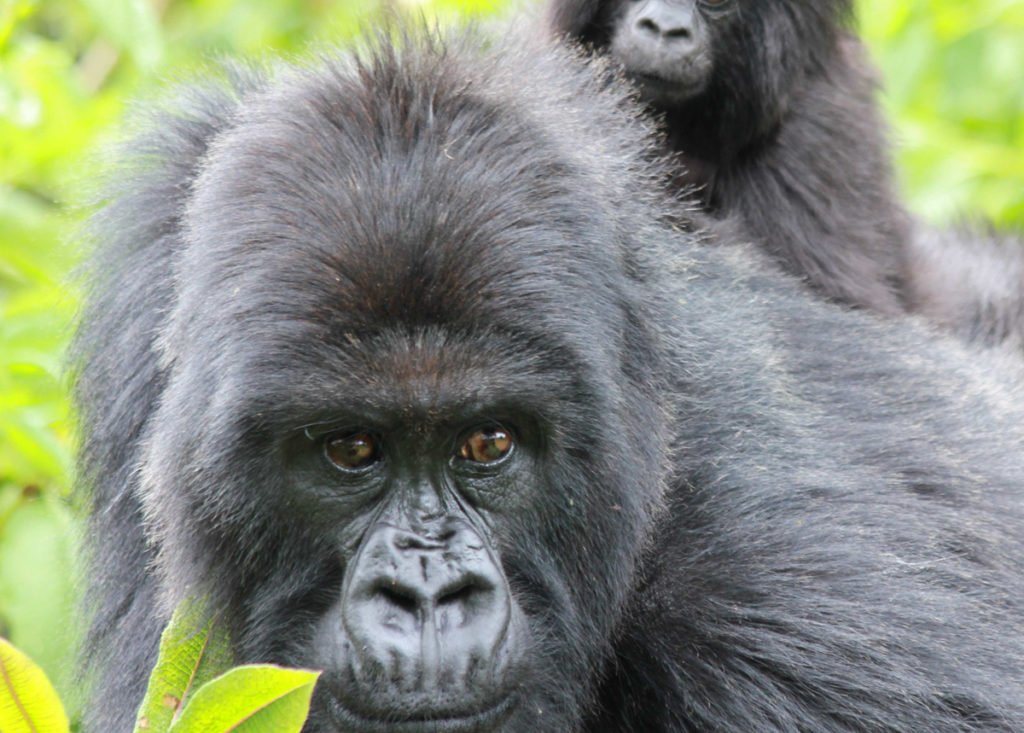
Diet & Daily Life
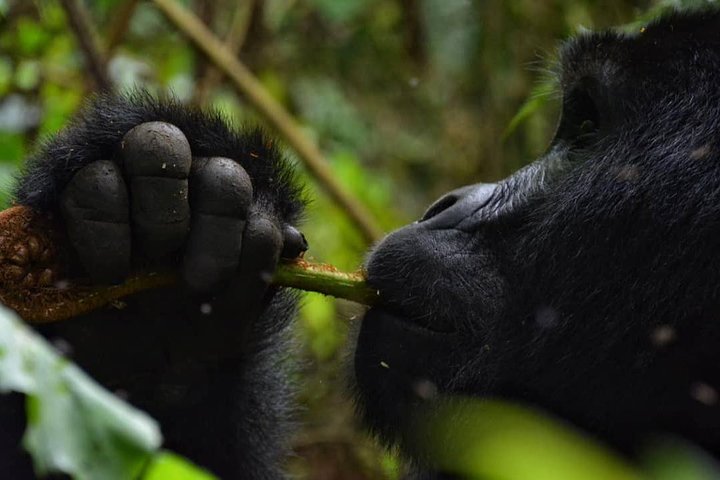
Primarily folivores, mountain gorillas devour up to 50+ pounds of vegetation daily, favoring nutrient-rich leaves, stems, pith, and bark from over 100 plant species.
Their massive gut ferments this fibrous feast, extracting maximum energy, while selective foraging—targeting high-protein shoots—sustains their bulk.
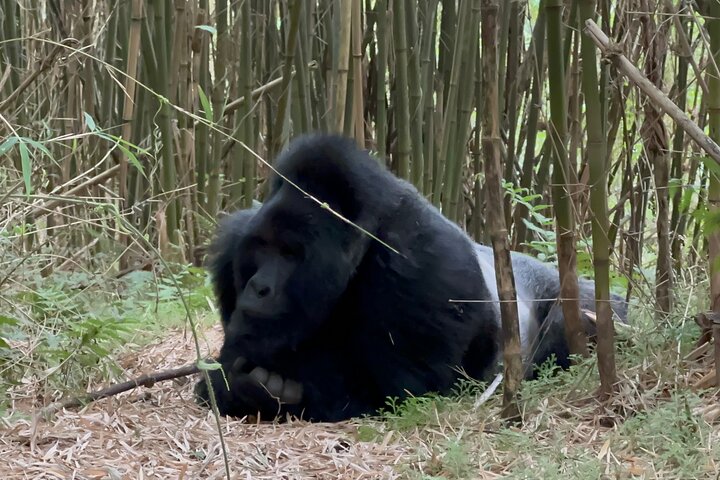
They spend 6-8 hours foraging, methodically stripping bamboo or climbing for tender tops, a process showcasing dexterous hands and knuckle-walking prowess. Water comes from dew-laden plants or streams, minimizing exposure.
Daily life revolves around energy conservation: dawn rises trigger breakfast quests, followed by restful siestas where social interactions peak.
As evening falls, they construct new nests nightly—adults bending saplings into platforms and mothers cradling infants close—before slumbering 10-12 hours.
Seasonal shifts influence menus; dry spells prompt fallback to bark, highlighting adaptive mountain gorilla behaviours.
This routine not only sustains but also structures their world, offering trekkers rhythmic glimpses during 1-hour habituated visits that spark wanderlust for gorilla trekking tours.
Conservation Status
Classified as Endangered by the IUCN, mountain gorillas teeter on the brink despite triumphs—from 680 individuals in 1989 to ~1,063 by 2019.
Primary threats include habitat loss from agriculture and charcoal burning; poaching for bushmeat or trophies (though rare now); and disease transmission from humans—Ebola, pneumonia, and even COVID risks.
The two subpopulations (Virunga ~480 and Bwindi ~580) remain vulnerable to isolation, but heroes like the International Gorilla Conservation Programme and park authorities have turned the tide.
Tourism’s role is transformative: $800 gorilla permits in Uganda fund 100% of anti-poaching patrols, community projects, and habitat restoration in Bwindi and Mgahinga Gorilla National Park.
Habituation programs allow safe 1-hour encounters, generating millions that benefit locals and gorillas alike. Success stories abound—cross-border peace parks protect the Virungas—proving eco-tourism saves species.
Ready to contribute? Book your Bwindi gorilla trek with us—secure permits for habituated families and join the conservation force today!
Gorilla Trekking Experience
Why trek mountain gorillas? It’s the ultimate thrill: 1-hour magical encounters with families displaying every special feature up close, from silverback charges to infant acrobatics.
Preparation demands fitness for 2-7 hour hikes through slippery slopes—pack rain gear, sturdy boots, and porter support.
Permits cost $800 in Uganda, $1,500 in Rwanda; book 3-6 months ahead via the Uganda Wildlife Authority or operators like ours for Bwindi (home to half the population) or Volcanoes National Park.
Best parks shine: Bwindi Impenetrable Forest offers denser forests and higher success rates; Virunga delivers dramatic volcanic backdrops.
Tips for success: Start early (7 AM briefs), maintain 7-meter distance, no flash photography. Post-trek debriefs amplify memories, converting visitors into advocates.
Boost your adventure—book now for personalized gorilla trekking safaris in Uganda or Rwanda. Spots fill fast; secure yours and witness mountain gorilla wonders firsthand!