Wildebeest Migration in Kenya and Tanzania
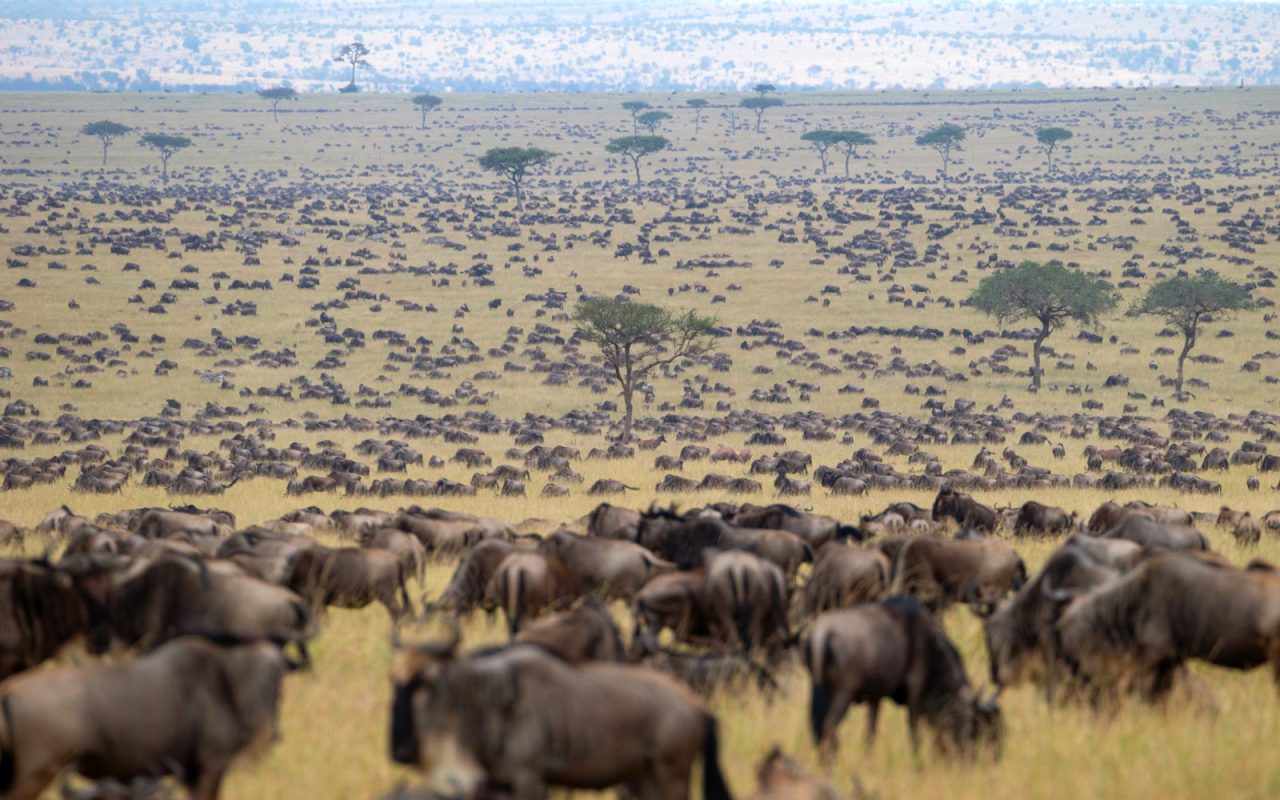
Experience the magical wildebeest migration in Kenya and Tanzania with Maranatha Tours and Travel. Each year, the Kenyan and Tanzanian plains come alive with one of nature’s most breathtaking spectacles – the Great Migration. The Great Migration is a spectacular annual wildlife movement involving millions of wildebeest, gazelles, and other grazers. These mammals embark on a journey involving crossing the Serengeti-Maasai Mara ecosystems. The movement is primarily aimed at searching for new grazing areas and water sources. The Great Migration usually follows a seasonal pattern and this is influenced by rainfall and the availability of resources. This makes the entire wildebeest migration such a dynamic and awe-inspiring spectacle.
During the Wildebeest Migration, millions of wildebeests, zebras, and many other grazers move from Tanzania to Kenya. Each season brings its challenges and amazing moments worth appreciating, revealing the intricate dance between predators and their prey. In this ultimate guide, we provide a deep insight into a season-by-season wildebeest migration in Kenya and Tanzania.
A season-by-season guide to Kenya and Tanzania’s wildebeest migration journey provides a breakdown on the Great Migration not only by seasons but also every month. This comprehensive guide offers deep insight into the annual Migration, the best time to witness this remarkable wildlife event.
More Insights into the Wildebeest Migration in Kenya & Tanzania
Millions of wildebeest accompanied by zebras embark on a journey estimated to run about 800 to 1000 km. The migration takes a clockwise circuit while these mammals search for pasture and drinking water. The migration journey is joined by hundreds of thousands of Thomson’s gazelles and elands.
Amazingly, lots of the predators can be spotted while they hunt for wildebeest and other grazers. The prominent predators to encounter include leopards, lions, wild dogs, cheetahs, and spotted hyenas. The wildebeest migration is influenced by seasonality, and here is a monthly breakdown to guide you when planning for your vacation.
Seasonal Movement in January
January is the first month of the year, and this is when the wildebeest start assembling in the Southern plains of the Serengeti. It is around this month that the Serengeti contains abundant mineral-rich short grasses. These are ideal for pregnant wildebeest due to give birth.
Migration Season in February
February marks the start of birthing season for wildebeest, and visitors can encounter lots of newborn calves. When newly born, the wildebeest calves can walk about 3 to 7 minutes. But there exist several leopards, lions, jackals, hyenas, cheetahs, and other predators. The predators can easily be spotted around the southeast Ndutu, where large herds of wildebeest congregate while taking care of their newborns, also find what to feed.
Large herds of wildebeest concentrate along Lake Ndutu and Masek as well as the Ngorongoro Highlands.
Seasonal Migration in March
March marks the end of calving season for wildebeest. A huge concentration of wildebeest is confine around the Ndutu and Kusini region. Most wildlife even move as far as the Maswa to the south and the Namiri Plains in the East.
Seasonal Wildebeest Migration in April
 Large groups of wildebeest begin departing from Ndutu, and they move to the Moru area to enjoy the fresher grass in the Central Serengeti Plains. The movement is kept at a slow pace considering the presence of the young calves. Around April, some rains are recorded in the evening, and the Ndutu, Naabi, and Kusini plains become slippery.
Seasonal Migration in May
May is when there is abundant nutritious grass and water, essential factors that attract most wildebeests to the North through the Moru Kopjes and Western corridor. They feed on taller grass, and by this time round, the calves would have grown up and become stronger. May also marks the start of the mating season among wildebeests also referred to as the rut. The rut season begins towards the end of May.
Seasonal Movement in June
Visiting Kenya and Tanzania to witness the Migration is perfectly done around June. This is dry month and little rains is recorded in the north, with large herds taking the western corridor. They reach the Mbalageti River while the struggling ones still keep around the southernmost side of Simiti and Nyamuma Hills. June marks the peak rutting season till July.
Seasonal Migration in July;
A huge concentration of wildebeest is confined in the Grumeti Reserve located in the western part of the Serengeti. They move to the north and cross the fast-flowing Mara and Sand Rivers. The river crossing is an amazing moment to witness wildebeests struggle to find themselves to the other side of the ecosystem. They struggle crossing a river mostly infested by Nile crocodiles, and upon crossing, they find predators, especially the Big cats, hyenas, that also attack them.
August
The Mara River crossing comes to an end around August. It is around August when the majority of the wildebeest have crossed from the Serengeti to the Mara Reserve in Kenya.
September
September is characterized by hot and dry weather conditions, but with some rain showers recorded in the North. Most wildlife begin to search for more nutritious grazing areas, and this marks the start of movement in both directions between Kenya and Tanzania. As the month ends, most wildebeests move to the south.
October
Short rains begin around late October with huge concentrations of wildebeest spotted in the western Loliondo and Lobo area. They also proceed to the eastern side of the Serengeti and you can also observe the last crossing event in the Mara back to Tanzania.
November wildebeest migration
November is when the migration heads to the Central Serengeti. The wildebeests can be spotted in small families grazing through the Lobo. There is scarce rainfall, and the grass isn’t as nutritious around November.
December Migration
Due to the short rains, wildebeest migrate to the eastern and southern parts of the Serengeti National Park in Tanzania. Around December, the herds are dispersed between Lobo to the North and to the south in Ndutu. Short grasses are available for calving wildebeest to feed on, and the migration cycle begins once again.
Where to go to for Wildebeest Migration in Kenya and Tanzania
Masai Mara National Reserve (Kenya) and Serengeti National Park (Tanzania) are the two places in East Africa where you can have a successful wildebeest migration experience. The Maasai Mara lies in the Narok County, Southwestern end of Kenya, and covers 1510 sq. km. The Serengeti National Park is in the Northern circuit of Tanzania and is the country’s most explored destination thanks to its enriching Migration experiences and Big 5 game safaris. To experience the best of the wildebeest migration in Kenya and Tanzania, consider booking your tour with Maranatha Tours and Travel.