
How Many Mountain Gorillas Are Left in the World? The Ultimate 2026 Conservation Success Story
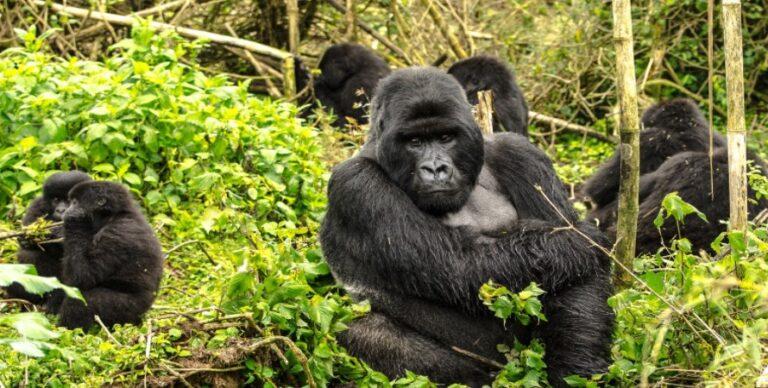
How Many Mountain Gorillas Are Left in the World in 2026? The answer to one of the most critical wildlife conservation questions is both hopeful and remarkable: there are now over 1,064 mountain gorillas left in the wild as of 2026.
This represents one of the most exceptional gorilla conservation success stories in modern history.
With the mountain gorilla population increasing from just 250 individuals in the mid-1980s to over 480 in 2010 and now surpassing 1,064 mountain gorillas globally.
According to the latest IUCN Red List, mountain gorillas have been downgraded from critically endangered to endangered.
Marking a historic achievement for gorilla tourism and conservation efforts across Uganda, Rwanda, and the Democratic Republic of Congo.
This incredible rebound is not accidental—it’s the result of decades of hard work by three governments, wildlife authorities, and conservation organizations.
Park rangers and local communities who have dedicated their lives to protecting these majestic giants. Any success after hard work deserves celebration, and the mountain gorillas deserve this moment of triumph.
Mountain Gorilla Population Breakdown: Where Do They Live?
The global mountain gorilla population of 1,064 individuals is distributed across two primary habitats in the Virunga Massif region:
This census combines data from the Virunga Massif census (2015–2016) and the Bwindi Impenetrable National Park population survey.
Coordinated by park services from three countries (Uganda, Rwanda, and the DRC) alongside NGOs and the Max Planck Institute for Evolutionary Anthropology in Leipzig, Germany.
Key takeaway: No mountain gorillas exist in captivity—all 1,004+ individuals live freely in their natural habitats, making this one of the most unique large mammal conservation achievements worldwide.
Why Are Mountain Gorillas Still Endangered Despite Population Increase?
Even with the mountain gorilla population doubling over the past three decades, these giant apes remain classified as endangered on the IUCN Red List due to persistent threats:
Major Threats to Mountain Gorillas in 2026
-
Climate change: Rising temperatures altering forest vegetation and food sources
-
Infrastructure development: Road construction and mining encroaching on gorilla habitats
-
On-going conflicts and civil unrest: Political instability in DRC affecting park security
-
Disease transmission: Humans transmitting respiratory illnesses to gorillas (50% DNA similarity)
-
Poaching with wire snares: Snares set for antelopes, buffaloes, and elephants accidentally killing gorillas
-
Habitat destruction: Deforestation for agriculture and charcoal production
During recent field surveys, conservation teams destroyed over 380 wire snares, but tragically, one deadly snare was discovered with a dead mountain gorilla—highlighting the ever-present danger these apes face.
How Researchers Count Mountain Gorillas in Their Natural Habitat
You might wonder, how do researchers count mountain gorillas without disturbing them?
The answer involves two groundbreaking scientific methods:
1. Nest Transect Method
Researchers walk along pre-determined straight lines (transects) through the jungle, recording gorilla nests found along the path.
Mountain gorillas build new nests nightly for sleeping, so nest density directly correlates with population size.
-
Field teams walked over 2,000 kilometers (1,243 miles)
-
Covered 440 square kilometers of Virunga Volcanoes
-
Swept intensively searching for trails and nest sites
2. Genetic Analysis from Fecal Samples
DNA extracted from gorilla faecal samples allows researchers to identify individual gorillas without direct observation.
-
18 months of genetic analysis completed
-
Approximately 1,100 fecal samples analyzed
-
Confirmed minimum of 186 unhabituated gorillas (not frequently visited by humans)
-
70% comprised 418 habituated mountain gorillas (used for tourism and research)
This combination of in-depth fieldwork (2015–2016) and genetic DNA analysis produced the most accurate mountain gorilla census ever recorded.
Mountain Gorilla Conservation Success: What Changed?
The mountain gorilla population increase from 250 (mid-1980s) → 480 (2010) → 604 in Virunga Volcanoes (2016) → 1,064 total (2026) is the result of multiple coordinated conservation efforts:
Key Players in Gorilla Conservation
Conservation Strategies That Worked
-
Park guards and armed rangers: 170 rangers lost their lives protecting wildlife in Virunga National Park over 20 years—showing the extreme commitment required
-
Veterinary work: Mountain Gorilla Veterinary Project provides medical care for injured gorillas
-
Gorilla tourism: Sustainable tourism generates revenue for conservation and community projects
-
Community support projects: Local communities benefit from tourism, reducing poaching incentives
-
Anti-poaching patrols: 380 snares destroyed during field surveys
Gorilla Tourism: The Economic Engine Behind Conservation
Gorilla tourism has become the financial backbone of mountain gorilla conservation.
When travelers pay for gorilla permits, that revenue directly funds:
-
Park ranger salaries and equipment
-
Anti-poaching patrols
-
Veterinary care for injured gorillas
-
Community development projects (schools, clinics, water systems)
-
Habitat restoration programs
Gorilla Permit Costs by Country (2026)
Uganda offers the most affordable gorilla trekking, making it the budget-friendly gorilla safari destination while still supporting conservation efforts.
The 1979 David Attenborough Gorilla Encounter: A Turning Point
Sir David Frederick Attenborough’s 1979 magical encounter with mountain gorillas remains one of the most popular television moments in wildlife documentation.
Attenborough, Ambassador for World Wildlife Fund (WWF) United Kingdom, noted:
“When I first visited the mountain gorillas, the situation was dire with the number of these magical animals dreadfully small. Thus, it is incredibly encouraging to see how the efforts of many groups—NGOs, communities, and governments—have paid off. However, the threats to these great apes have not disappeared completely, and thus, the challenge must be to ensure that the achievements are sustained long into the future.”
This statement perfectly captures the mountain gorilla conservation paradox: success achieved, but threats still present.
The Cost of Protecting Mountain Gorillas: Loss of Ranger Lives
Protecting mountain gorillas comes with a devastating price: loss of human lives.
-
April 2018: Over 5 park rangers and a driver were ambushed in DRC’s Virunga National Park, leading to the park’s temporary closure
-
Past 20 years: Over 170 rangers lost their lives trying to protect wildlife in Virunga National Park—the worst loss in the park’s history
These sacrifices highlight the extreme risks park staff face on-ground, making their conservation efforts even more heroic.
Mountain Gorilla Social Structure: Groups vs. Solitary Males
The 2016 Virunga Volcanoes census revealed detailed social structure data:
-
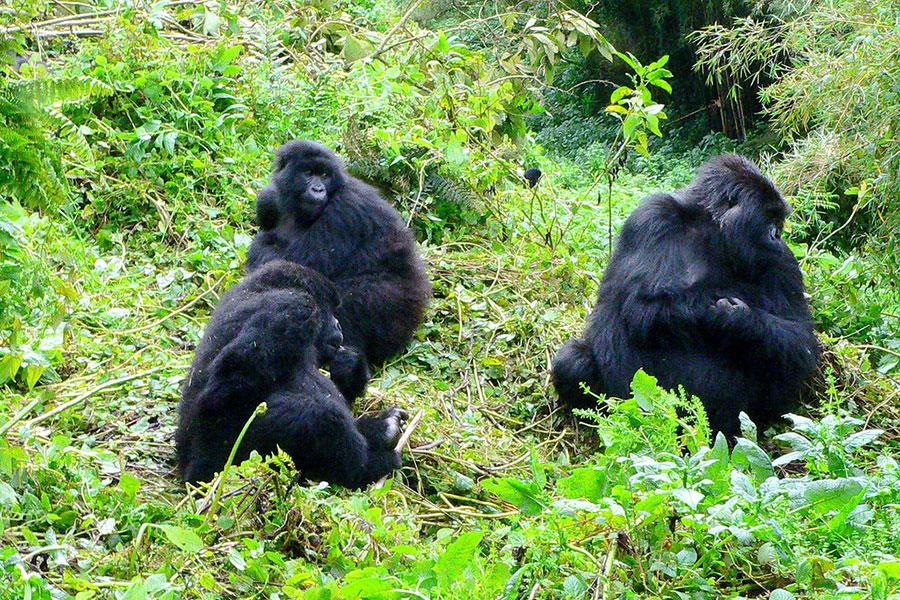
604 mountain gorillas lived in:
-
14 solitary males (independent, no group)
-
41 social groups (families with multiple gorillas)
-
This contrasts sharply with:
-
250 gorillas in the mid-1980s (mostly solitary males, fragmented groups)
-
480 gorillas in 2010 (increasing group sizes, more stable families)
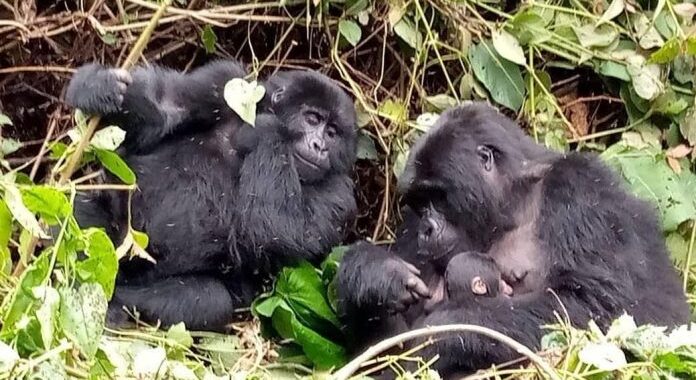
The shift toward larger social groups indicates healthier reproduction rates and better survival of young gorillas.
What You Can Do to Help Mountain Gorilla Conservation
As a traveler or wildlife enthusiast, you can contribute to mountain gorilla conservation:
-
Book a gorilla trekking safari: Your gorilla permit directly funds conservation
-
Choose responsible tour operators: Companies like Adventure Uganda Safaris support local communities
-
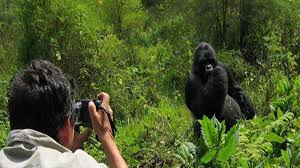
Follow gorilla tourism guidelines: Maintain 7-meter distance, no flash photography, stay healthy before trekking
-
Donate to conservation organizations: Support MGCF, Digit Fund, or IGCP
-
Spread awareness: Share the 1,064 mountain gorillas success story to inspire conservation support
Conclusion: Mountain Gorillas Are Increasing—But Vigilance Is Essential
In conclusion, mountain gorillas are one of the most treasured and recognizable wildlife species on the planet, presently categorized as endangered (on the IUCN Red List) but showing remarkable population growth.
The current census confirms over 1,064 mountain gorillas in the wild—604 in Virunga Volcanoes and 400 in the Bwindi Impenetrable Forest—with none in captivity.
This represents one of the most exceptional conservation success stories in wildlife history, proving that continuous efforts by governments, NGOs, park rangers, and communities can reverse extinction trends.
However, as Sir David Attenborough emphasized, threats haven’t disappeared completely. Climate change, poaching, disease, and habitat destruction remain serious challenges.
The challenge now is to sustain these achievements long into the future through continued gorilla tourism, anti-poaching patrols, community support, and global conservation awareness.
Celebrate the 1,004 mountain gorillas—but remember: their survival depends on our ongoing commitment to protect them.