Batwa Cultural Trail
Batwa Cultural Trail
An out-of-this-World experience around Mgahinga Gorilla National Park provides visitors with the once-in-a-lifetime opportunity of engaging with the aboriginal people that once lived in the jungles. Originally living among the gigantic trees, verdant vegetation, incredible wildlife species, water streams and spectacularly evolving ecosystem, these people add spices to your gorilla trekking adventure.
Known as the “people of the forest”, the Batwa were living mutually and harmoniously in the jungles of Mgahinga and Bwindi, while loving and respecting the natural environment. However following the gazetting of these forests into National Parks in 1991, these people were forced out of what they called home and now live as squatters. Therefore, the Batwa Cultural Experience is led by experienced local guides (the Batwa) who take visitors through the mysterious and complex forest, uncovering the value of different plant species. Ancestrally, the forest was their pharmacy where different trees and plants were used for treating different ailments. As visitors delve deeper into the forest, the edible berries, leaves and roots will be unveiled in addition to materials that were used for constructing their small grass-thatches huts.
The activity came into existence on 7th June 2011 and its proceeds are used in development of their communities and paying different people that offer knowledge, contributing to the success of the activity. From the guides to dancers, the trail is a form of employment and improving their livelihood since they can no longer depend on the forest for shelter, food and medicine.
Highlights of the Batwa Cultural Trail
Travellers that book for the Batwa Cultural Trail are guaranteed of a number of activities that include;
- Visits to the traditional medicine man who will offer insight knowledge on the different local plants in Mgahinga Gorilla National Park and how they were used to treat different sickness. The Forest was literally their pharmacy and you will discover that up to date, some Batwa don’t go to Hospitals but instead use these same plants.
- Marvel at how the Batwa make fire by rubbing sticks and this was one of the survival skills in the jungles of Mgahinga and Bwindi. You can even light your cigarette with this fire.
- Hunting demonstrations where the Batwa show visitors how bows and arrows where used on hunting for finding food (they were known as hunter-gatherer people). You will also be provided the chance to try out the skill.
- Demonstrations on how to make bamboo cups are also provided during the Batwa Cultural trail and this will definitely take your breath away.
- Visit to a Batwa homestead to see how the local women gather food (vegetables) to prepare a decent meal (with your help of course) and you will even partake of the prepared meal.
- Honey harvesting is also part of the Batwa Cultural Trail.
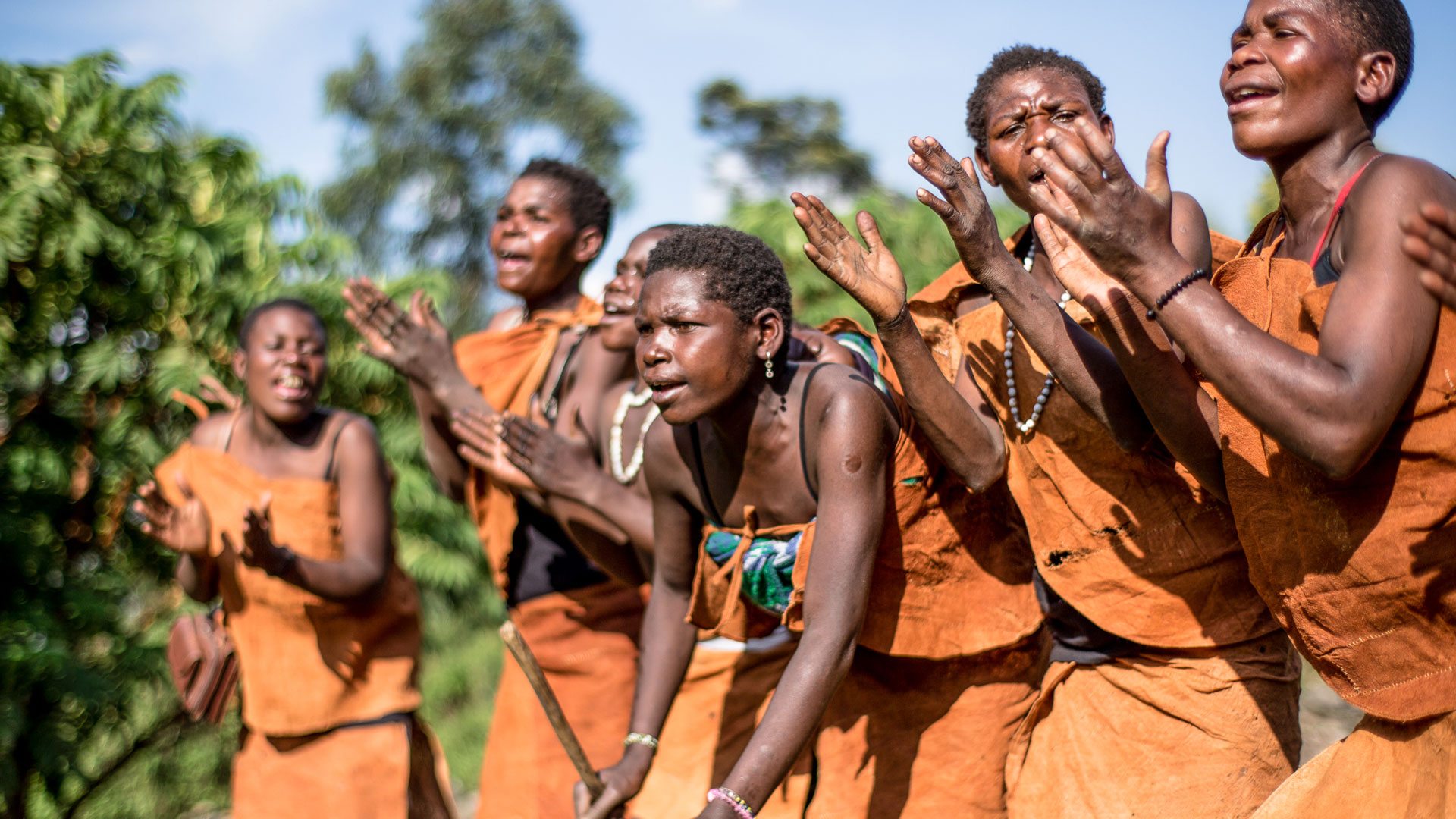
- The Climax visit to the magical and sacred Garama cave-once King’s Palace, Court of Law, hiding place during conflicts/wars and food store. Here the local Batwa women perform sorrowful songs which when translated will melt your heart as they narrate how they lived and loved their home (jungles)
Best time to explore the Batwa Cultural Trail
The Batwa Cultural Trail can be explored all year round. However given the fact that this experience involves walking through the forest, most visitors prefer the dry season-June to September then December to February when temperatures are warmer, rains are minimal thus making it more comfortable to walk.
Packing list for the Batwa Cultural Trail

When planning to explore the Batwa Cultural Trail, one thing you should keep in mind is that the activity is largely jungle-based and therefore long sleeved shirts, breathable safari pants, a sun hat, good camera, insect repellant, sunglasses, rain jacket for the unexpected rains, comfortable hiking shoes, toiletries (face creams, hair combs, hand sanitizer, toothbrush, lotion, toothpaste and deodorant), backpack and binoculars (likely to come across a number of bird species) are recommended.
Places to stay before/after enjoying the Batwa Cultural Trail
Whether you are exploring the Batwa Cultural Trail independently or as part of your Gorilla or Volcano climbing safari, places of lodging are Amajambere Iwacu Community Camp, the stupendous Mount Gahinga Lodge, Kisoro Tourist Hotel, Mgahinga Gorilla Triangle Lodge, Mount Muhabura Climbers Rest Camp, Traveler’s Rest Hotel, Mucha Hotel, Heritage Guesthouse Kisoro and many others.