
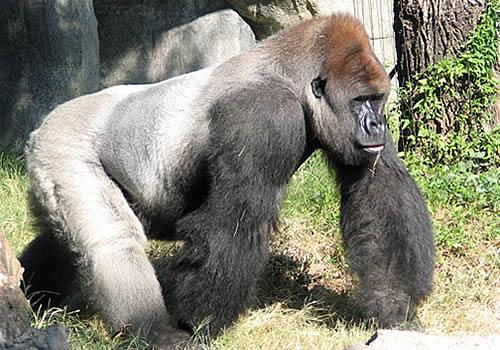
Lowland Gorilla Population: Facts, Threats, and Conservation, 2026 Guide with Adventure Uganda Safaris
The lowland gorilla population is one of the most important wildlife conservation topics in Africa today because these great apes play a key role in rainforest ecosystems and face serious survival threats.
In this guide, you will learn what lowland gorillas are, how many remain, why they are endangered, and how travelers can experience responsible gorilla encounters through Adventure Uganda Safaris.
Why lowland gorillas matter
Lowland gorillas are essential to the health of tropical forests because they help shape vegetation patterns, spread seeds, and support biodiversity across dense rainforest habitats.
Their population decline is a major conservation concern because when gorillas disappear, entire forest ecosystems lose one of their most influential species.
For travelers, learning about the western lowland gorilla population is also a gateway to understanding responsible wildlife tourism.
With the right operator, such as Adventure Uganda Safaris, visitors can support conservation while enjoying ethical primate safari experiences in Africa.
What are lowland gorillas?
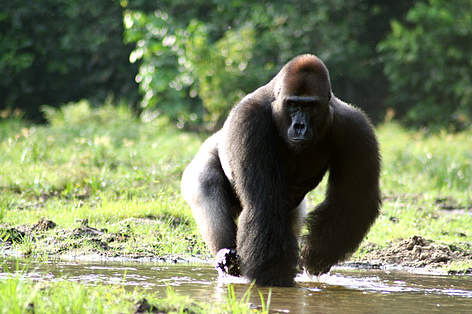
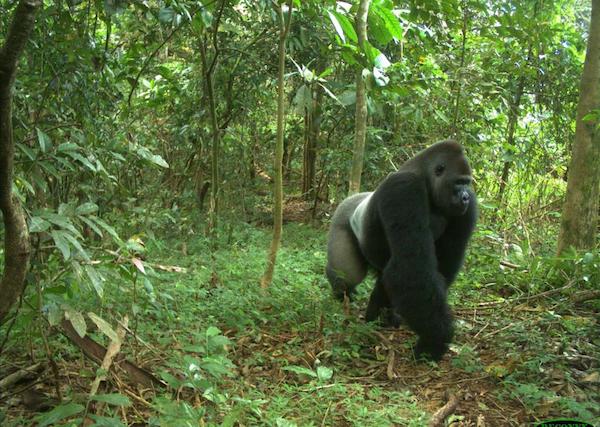
Lowland gorillas are one of the two main gorilla species and are part of the great ape family. They live in low-elevation tropical forests, swamps, and dense rainforest areas, where they feed on fruits, leaves, shoots, bark, and other vegetation.
The most widely known type is the western lowland gorilla, which is the smallest of the gorilla subspecies but still extremely powerful and intelligent.
These animals are highly social, living in family groups led by a dominant silverback male who protects the troop and guides movement through the forest.
Lowland gorilla population status
The western lowland gorilla population is listed as critically endangered, and current estimates suggest that around 360,000 remain in the wild.
However, this number is under pressure because the species is still declining by roughly 3% each year, which is alarming for long-term survival.
Population counting is difficult because lowland gorillas live in remote, thick forest habitats that are hard for researchers to access.
As a result, exact numbers can vary by study, but the overall trend is clear: the species is under severe threat and needs urgent conservation action.
Main threats to survival
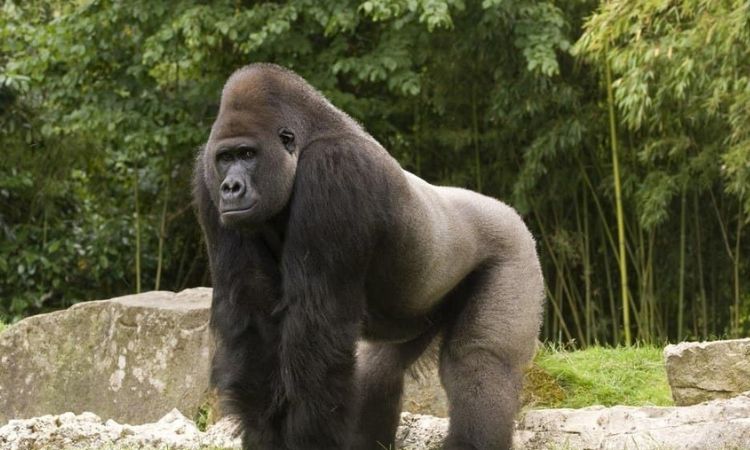
The decline of the lowland gorilla population is caused by several interconnected threats. These pressures do not act alone; instead, they combine and make survival harder for gorilla families across Central Africa.
Here are the biggest threats:
-
Poaching: Gorillas are hunted illegally for bushmeat and sometimes for the wildlife trade.
-
Habitat loss: Logging, agriculture, mining, and road construction continue to reduce forest cover.
-
Bushmeat trade: Commercial hunting increases pressure on gorillas and other forest species.
-
Disease: Gorillas are vulnerable to human-transmitted illnesses because they share close genetic similarities with people.
-
Ebola risk: Outbreaks of Ebola have caused serious population losses in some regions.
These threats show why conservation must go beyond simple protection and include community support, land management, law enforcement, and responsible tourism.
Where lowland gorillas live
The western lowland gorilla lives across the rainforests of Central Africa, where dense vegetation and swampy forests provide food and shelter.
Their natural range includes protected forest regions in countries such as the Republic of the Congo, Gabon, Cameroon, the Central African Republic, Equatorial Guinea, and parts of the Democratic Republic of Congo.
Because their habitat is remote and often difficult to reach, gorilla viewing depends heavily on conservation management and protected areas.
This is why sustainable tourism and park protection are so important: they help keep gorilla habitats intact while creating economic value for local communities.
Conservation efforts
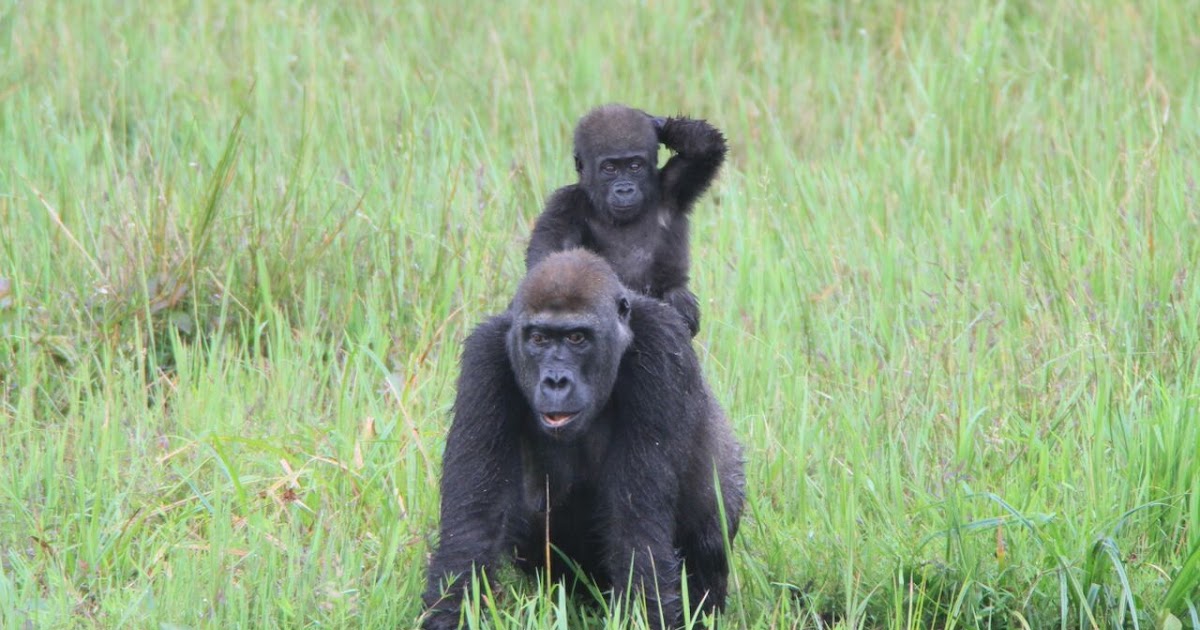
Conservation efforts are critical if we want to stabilize the lowland gorilla population and protect these animals for the future.
The good news is that several strategies are helping to slow the decline and improve survival in some regions.
Key conservation actions include:
-
Protected areas, which secure gorilla habitat from logging and farming.
-
Anti-poaching patrols, which reduce illegal hunting and wildlife crime.
-
Community engagement, which gives local people a reason to protect forests.
-
Habitat protection, which maintains the natural ecosystems gorillas need to survive.
-
Responsible tourism, which can generate revenue for conservation and nearby communities.
When tourism is managed properly, it becomes part of the solution rather than part of the problem. Visitors who book through ethical operators help create demand for conservation-based travel and support forest protection initiatives.
Can tourists see lowland gorillas?
Yes, tourists can see lowland gorillas, but gorilla tourism must be done responsibly and through licensed, experienced operators.
Ethical tourism protects the animals, follows park rules, and ensures that visitation does not disturb gorilla families or spread disease.
This is where Adventure Uganda Safaris can make a difference. The company organises gorilla trekking, chimpanzee tracking, and wildlife tours in destinations such as Uganda, Rwanda, Kenya, and Congo, helping travellers enjoy primate experiences while supporting responsible tourism practices.
If you are interested in gorilla-focused travel, choosing a knowledgeable tour operator matters because gorilla permits, park logistics, transportation, and accommodation all need careful planning.
A trusted company helps you travel smoothly while keeping conservation and safety at the center of the experience.
Why book with Adventure Uganda Safaris
Choosing Adventure Uganda Safaris gives you both convenience and confidence when planning a gorilla safari.
The company is a strong option for travelers who want expert guidance, flexible safari planning, and a trip designed around primate experiences.
Reasons to book include:
-
Expert planning for gorilla trekking and safari logistics.
-
Permit assistance to help secure the right gorilla or chimpanzee permit.
-
Custom safari packages tailored to your travel dates and budget.
-
Local knowledge that improves your travel experience and destination choices.
-
Primate-focused itineraries that combine gorillas, chimpanzees, and wildlife viewing.
If your goal is to see gorillas responsibly while supporting conservation and local communities, Adenture Uganda Safaris is a smart choice.
Plan your gorilla safari with Adventure Uganda Safaris today.
FAQs
How many lowland gorillas are left?
Current estimates suggest around 360,000 western lowland gorillas remain in the wild, but the population is still declining. Exact counts are difficult because they live in remote forest areas.
Why are lowland gorillas endangered?
They are endangered because of poaching, habitat loss, bushmeat hunting, disease, and threats such as Ebola. Human activity has reduced their safe forest habitat across Central Africa.
Where can I see lowland gorillas?
Lowland gorillas can be seen in parts of Central Africa where protected forests and national parks support responsible tourism. Availability depends on conservation status, park access, and permit systems.
Is gorilla trekking safe?
Yes, gorilla trekking is generally safe when done with licensed guides and park rules are followed. Tour operators help visitors stay informed, prepared, and respectful of wildlife boundaries.
How does tourism help gorilla conservation?
Tourism helps conservation by generating park revenue, funding protection efforts, and supporting local jobs. Responsible tourism also creates incentives for communities to protect gorilla habitats.
Why choose Adventure Uganda Safaris?
Adventure Uganda Safaris offers expert safari planning, permit support, and primate-focused itineraries. It is a practical choice for travellers who want a well-organized and responsible gorilla experience.