Wildebeest Migration in Kenya and Tanzania
The Ultimate Guide to the Wildebeest Migration in Kenya and Tanzania: A Season-by-Season Adventure with Maranatha Tours and Travel
Experience the magical wildebeest migration in Kenya and Tanzania with Adventure Uganda Safaris, your trusted partner for unforgettable East African safaris.
Each year, the vast plains of Kenya and Tanzania come alive with one of nature’s most breathtaking spectacles—the Great Migration.
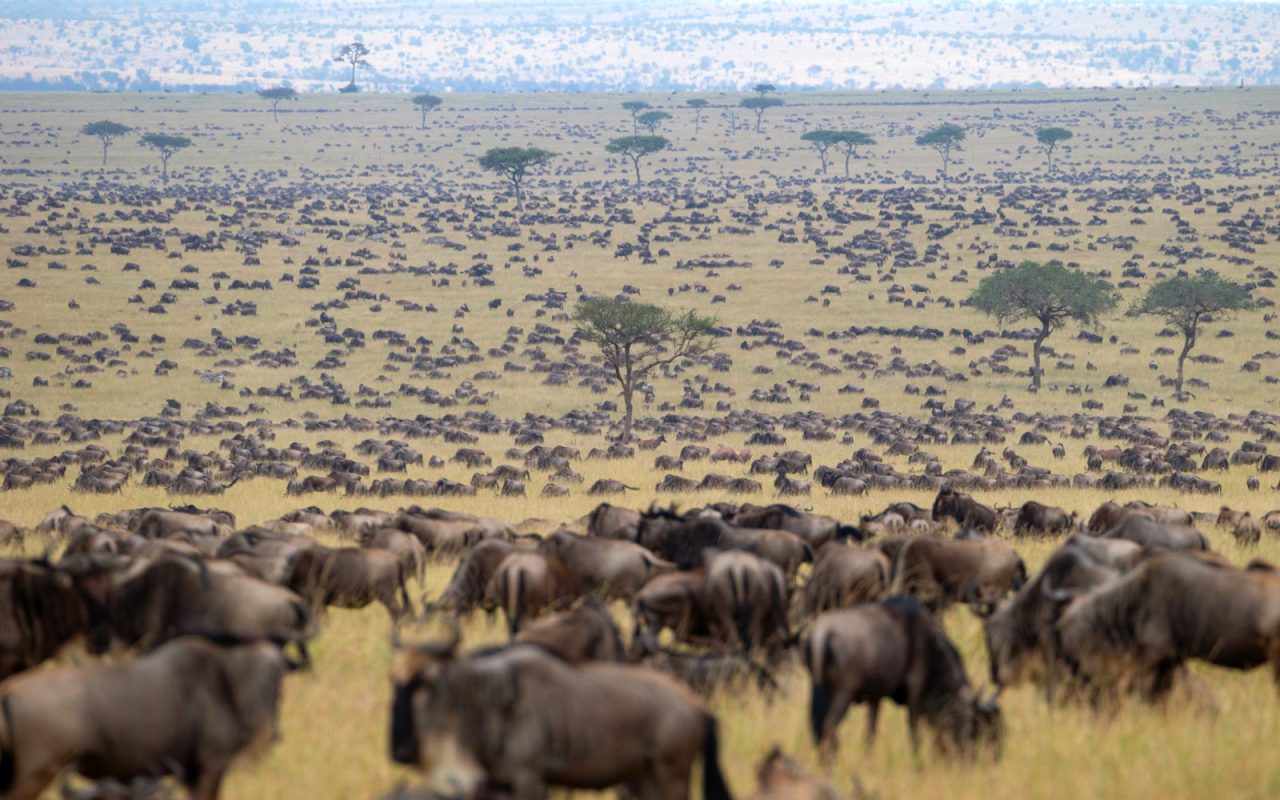
This annual wonder involves over 1.5 million wildebeest, hundreds of thousands of zebras, and countless Thomson’s gazelles embarking on a perilous 800–1,000 km journey across the Serengeti-Maasai Mara ecosystem.
Driven by the quest for fresh grazing and water, the migration follows a seasonal pattern shaped by rainfall and resource availability, creating a dynamic, ever-changing wildlife spectacle that draws travelers from around the globe.
During the wildebeest migration, millions of grazing mammals move in a clockwise circuit from Tanzania’s Serengeti National Park to Kenya’s Maasai Mara National Reserve and back again.
This journey is not just about the herds—it’s a dramatic stage where predators like lions, leopards, cheetahs, wild dogs, and spotted hyenas hunt, and where Nile crocodiles lie in wait at river crossings.
In this ultimate guide, we provide a month-by-month breakdown of the Great Migration, reveal the best time to witness this event, and explain exactly how to plan your wildebeest migration safari with Adventure Uganda Safaris.
More Insights into the Wildebeest Migration in Kenya & Tanzania
The Great Migration is the largest terrestrial mammal migration on Earth.
Over 1.5 million wildebeest, accompanied by 300,000+ zebras and hundreds of thousands of Thomson’s gazelles and elands, traverse the Serengeti-Maasai Mara ecosystem in search of nutritious pasture and drinking water.
This clockwise circuit spans roughly 800–1,000 kilometers and is driven entirely by rainfall patterns and grass quality.
The migration is also a predator’s paradise. During this time, you’re more likely to spot lions, leopards, cheetahs, African wild dogs, and spotted hyenas hunting than at any other time of year.
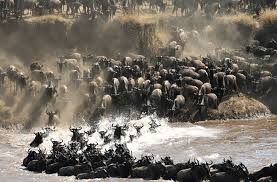
The river crossings—especially at the Mara River and Grumeti River—are among the most dramatic wildlife moments you’ll ever witness, as herds battle Nile crocodiles, drowning, and predators to reach fresh grazing on the other side.
The wildebeest migration is highly seasonal, and timing is everything. Below is a detailed month-by-month guide to help you plan the perfect wildebeest migration safari in Kenya and Tanzania.
Seasonal Movement in January: The Calving Prelude
January marks the beginning of the migration cycle as herds gather in the Southern Serengeti and Ndutu region of Tanzania.
This area is rich in mineral-heavy short grasses, ideal for pregnant wildebeest preparing to give birth.
The Southern Plains become a nursery ground, setting the stage for one of nature’s most incredible events: the calving season.
Wildlife density is high, and predator activity increases as lions, leopards, and hyenas zero in on vulnerable newborns. January is also excellent for birdwatching, as migratory birds arrive and the landscape is lush and green.
Migration Season in February: The Great Calving
February is the heart of calving season. Over 8,000 wildebeest calves are born daily, and within minutes of birth, calves can stand and walk.
This creates a feeding frenzy for predators. The southeast Ndutu area, Lake Ndutu, Masek, and the Ngorongoro Highlands are packed with large herds protecting their young.
This is one of the best times for predator sightings, as lions, cheetahs, jackals, and hyenas take advantage of the abundance of vulnerable calves.
If you want to witness newborn wildlife and intense predator action, February is unmatched.
Seasonal Migration in March: The Herds Begin to Move
By March, the calving season winds down, and herds start moving northward. Most wildebeest remain concentrated in the Ndutu and Kusini regions, but some begin venturing toward Maswa in the south and the Namiri Plains in the east.
Grass is still plentiful, and the herds are more spread out. This is a less crowded time to visit, offering a more exclusive safari experience with fewer tourists and excellent wildlife viewing.
Seasonal Wildebeest Migration in April: The Journey North
In April, large groups begin departing from Ndutu, slowly moving toward the Moru area and the Central Serengeti Plains in search of fresher grass.
The pace is slower due to the presence of young calves, and evening rains can make the Ndutu, Naabi, and Kusini plains slippery.
April falls within the long rains, so some roads may be challenging, but the landscape is green and vibrant, and birdlife is at its peak. This is a shoulder season with lower prices and fewer crowds.
Seasonal Migration in May: The Rut Begins
May brings abundant nutritious grass and water, drawing herds north through the Moru Kopjes and Western Corridor. By this time, calves are stronger, and the herds feed on taller grass.
Late May also marks the start of the rutting (mating) season, known as the rut, when males compete for females in dramatic displays.
The Western Corridor becomes a hotspot, with the Grumeti River setting the stage for upcoming river crossings. May is a great time for photographers seeking dramatic landscapes and wildlife in motion.
Seasonal Movement in June: Dry Season Begins
June is the start of the dry season, and it’s one of the best months to visit for wildebeest migration. The northern Serengeti is dry, and herds concentrate in the Western Corridor, reaching the Mbalageti River. Stragglers remain in the Simiti and Nyamuma Hills in the south.
June marks the peak rutting season, which continues through July. Wildlife is easier to spot as vegetation thins, and predator activity is high. This is a prime month for a Maasai Mara safari or Serengeti migration safari.
Seasonal Migration in July: The Iconic River Crossings
July is the month of dramatic river crossings. Huge herds concentrate in the Grumeti Reserve (western Serengeti) before moving north to cross the fast-flowing Mara and Sand Rivers.
This is one of the most thrilling wildlife events on Earth, as wildebeest struggle against Nile crocodiles, drowning, and Big Cat attacks.
The Mara River crossings are unpredictable but spectacular, and this is when the Maasai Mara starts filling with herds. If you want to witness river crossings, July and August are the best months.
August: The Migration Enters Kenya
By August, the Mara River crossing is in full swing, and the majority of herds have moved from the Serengeti into the Maasai Mara Reserve in Kenya. Predator density is at its peak, and lion prides, cheetahs, and hyenas are regularly seen hunting.
The Maasai Mara becomes the epicenter of the Great Migration, and this is when safari bookings peak.
Book early with Adventure Uganda Safaris to secure the best lodges and camps.
September: Dry Heat and Two-Way Movement
September is hot and dry, with occasional rain showers in the north. Wildlife begins searching for more nutritious grazing, and movement starts in both directions between Kenya and Tanzania. By the end of September, most herds begin moving southward back toward the Serengeti.
This is still an excellent month for wildlife viewing, with thinner vegetation and concentrated water sources making animals easier to spot.
October: The Last Crossings and Return to Tanzania
Short rains begin in late October, and huge concentrations of wildebeest are spotted in the western Loliondo and Lobo areas. Herds proceed to the eastern Serengeti, and you may observe the last river crossings in the Mara back into Tanzania.
October is a transition month, offering fewer crowds, lower prices, and good wildlife viewing as herds prepare to return to the Southern Plains.
November Wildebeest Migration: Return to Central Serengeti
In November, the migration heads to the Central Serengeti. Wildebeest are spotted in smaller family groups grazing through Lobo. Rainfall is scarce, and grass is less nutritious, but this is a quiet, peaceful time for safaris.
This is a shoulder season with fewer tourists, making it ideal for travelers seeking exclusivity and lower costs.
December Migration: The Cycle Begins Again
December brings short rains, and herds migrate to the eastern and southern Serengeti in Tanzania.
Herds are dispersed from Lobo in the north to Ndutu in the south. Short grasses return, providing ideal calving conditions, and the migration cycle begins again.
December is a popular month for holiday safaris, and the Southern Plains become packed with wildlife once more.
Where to Go for Wildebeest Migration in Kenya and Tanzania
The two primary destinations for the wildebeest migration are:
The Maasai Mara lies in Narok County, southwestern Kenya, while the Serengeti is in Tanzania’s Northern Circuit.
Both parks are connected, and herds move between them throughout the year.
To experience the best of the wildebeest migration in Kenya and Tanzania, book your tour with Adventure Uganda Safaris.
We offer custom migration safaris, expert guides, comfortable 4×4 vehicles, and 24/7 support to ensure your safari is unforgettable.
Best Time to See the Wildebeest Migration
Plan Your Wildebeest Migration Safari with Adventure Uganda Safaris
Planning your wildebeest migration safari is easy with Adventure Uganda Safaris.
We specialize in custom East African safaris, migration packages, gorilla trekking, and Big Five game drives.
Our licensed guides, comfortable vehicles, and 24/7 support ensure a smooth, safe, and unforgettable experience.
Contact Adventure Uganda Safaris today to book your wildebeest migration safari and witness one of nature’s most awe-inspiring spectacles.