
Virunga National Park Congo: Location, Facts, Tours & Ultimate Travel Guide(2026)
Virunga National Park in the Democratic Republic of Congo (DRC) stands as Africa’s most biodiverse protected area, a UNESCO World Heritage Site boasting unparalleled habitats from snow-capped Rwenzori peaks to lava plains and swamps.
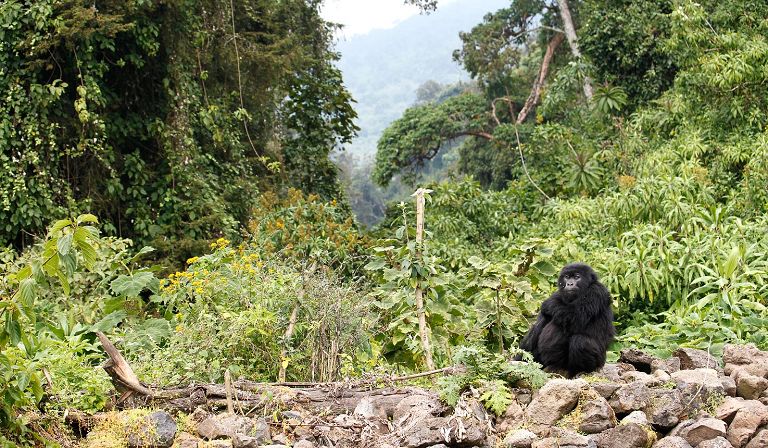
Home to over 1,000 mountain gorillas—about one-third of the global population—this Congo safari destination draws nature lovers for authentic wilderness adventures like gorilla trekking in Virunga.
Spanning 7,900 square km along the Albertine Rift, Virunga Park offers Congo gorilla tours amid active volcanoes, 706 bird species, and 218 mammals.
Whether planning Virunga safaris 2026 or seeking mountain gorilla facts, this comprehensive guide covers everything to rank your trip planning high
. Discover why Virunga National Park Congo is a must-visit for budget gorilla trekking at just $400 per permit.
 It is one African safari destination that any nature lover should consider a must-visit to enjoy authentic wilderness experiences.
Location, Size, History & Establishment of Virunga National Park
Virunga National Park nestles on the eastern edge of DRC, guarding the Congo Basin’s extremity within the Albertine Rift Valley.
Covering 790,000 hectares (7,900 sq km)—roughly three times Luxembourg’s size—it stretches from Lake Edward’s lowlands (680m elevation) to Mount Stanley’s 5,109m snowfields.
Diverse ecosystems include montane forests, savannas, marshes, lava fields, and afro-alpine zones, making it Africa’s oldest national park (gazetted 1925 as Albert National Park).
Founded primarily to protect endangered mountain gorillas, Virunga borders Uganda’s Bwindi Impenetrable National Park, Mgahinga Gorilla National Park, Queen Elizabeth, and Rwanda’s Volcanoes National Park.
Designated UNESCO site in 1979 for its “outstanding biological diversity,” it faced delisting threats from conflicts but rebounded via conservation. In 2026, Virunga thrives with ranger patrols funding community development. Key facts:
-
Size: 7,900 sq km, diverse altitudes (680m-5,109m).
-
Established: 1925; UNESCO 1979.
-
Neighbors: Uganda/Rwanda parks for cross-border gorilla safaris.
This prime location fuels Congo wildlife safaris, blending adventure with conservation impact.
Virunga was officially gazetted as a National Park in 1925 which makes it one of Africa’s oldest Parks. It was originally founded as Albert National Park and the primary reason for its establishment was to provide refuge to the rare mountain gorillas, unique species that also survive in some parts of Uganda and Rwanda.
Virunga National Park prides itself of diverse habitats and ecosystems including the tropical rainforest, block mountain, Virunga volcanoes, swamps, woodland, open grasslands and wetland vegetation, Albertine rift, craters lakes.
Bordering Virunga Park are some of the Ugandan National Parks like Queen Elizabeth National Park, Bwindi Impenetrable National Park, Rwenzori Mountains and Semuliki National Park, Mgahinga Gorilla National Park.
In Rwanda, Virunga Park lies adjacent to Volcanoes National Park, an important home to both the endangered mountain gorillas and golden monkeys.
Why Virunga National Park Ranks as Africa’s Biodiversity Hotspot
Virunga National Park Congo surpasses any African park in habitat variety: swamps, steppes, Rwenzori Mountains, volcanoes (Nyiragongo, Nyamuragira), lowland/montane forests, and glaciers.
It shelters 2,077 plant species (264 trees, 230 grasses), Albertine Rift endemics, and unique afro-alpine flora. Fauna dazzles with 218 mammal species (22 primates), 706 birds, 109 reptiles, and 65 amphibians.
Mountain gorillas define its fame, with ~350 in habituated families amid global 1,063 total. Other stars: okapi, forest elephants, hippos (thousands in rivers), lions, leopards.
Birding in Virunga spots endemics like Rwenzori turaco, Kivu ground thrush. Reptiles include Nile crocodiles; amphibians thrive in wetlands. In 2026, post-conflict revival boosts populations—eco-tourism revenue ($ millions annually) sustains it all.
Mountain Gorillas in Virunga: Facts, Trekking & Families
Mountain gorillas in Virunga National Park inhabit misty slopes above 1,800m, thicker-furred for cold. Virunga hosts 8 habituated families (Humba, Bageni, Mapuwa, Kabirizi, Munyaga, Rugendo, Nyakamwe, Lulengo), trekked by max 8 visitors daily.
Permits: $400 USD (budget-friendly vs. Uganda/Rwanda’s $800+). Trekking involves briefing, ranger guide, 1-7 hour hike.
Gorilla facts:
-
Population: ~350 (1/3 global); 6 newborns in 2022.
-
Families: 8 habituated; research ongoing.
-
Threats: Poaching, habitat loss—mitigated by patrols.
Congo gorilla trekking funds 70% of park ops, employing locals. 2026 updates: Expanded trails for safer access.
Amazing Tourist Attractions to explore in Virunga National Park:
Virunga National Park features a range of exceptional tourist attractions including wildlife, active volcanoes, birds, and others.
Here are some of the amazing tourist attractions to explore on Congo safari in Virunga Park;
1. Wildlife
 Virunga Park is known for its abundant faunal and floral species. The park is home to over 2077 plant life and 264 of which comprise of tree species, 230 grasses, shrubs and Albertine rift endemic species.
It also protects swamp and wetland vegetation, woodland, grasslands, montane forests, heath and alpine vegetation especially in its highland areas. It is a must-visit destination for you to explore unique vegetation that make it such a lush protected area.
2. Birds
Over 706 species of birds survive within the Virunga National Park and include several endemic species. The bird species to identify on birding excursion in Virunga include the red-faced woodland warblers, mountain masked apalis, Rwenzori turacos, Rwenzori double-collared sunbird,
Archer’s ground robin, red-throated alethe, Kivu ground thrush, Shelley’s crimson wings, blue headed sunbird, handsome spur fowl, dusky crimson wing, thick billed canary, Northern grey headed sparrow, cinnamon breasted bunting, brown thrush babblers, flappet lark, blue crested flycatchers,
Yellow crested helmet shrike, wahlberg’s honeybird, temminck’s courser, narrow tailed starling, purple indigobird, African paradise flycatcher, brown throated wattle eye, lanner falcon, blue cheeked bee-eaters, mosque swallows, moustached grass warblers, mountain wagtail, snowy-crowned robin chat,
Eastern mountain greenbul, stout cisticolars, willow warblers, bracken warblers, fawn breasted waxbills, and spectacled weaver bird, Mozambique nightjars,
3. Mammals
Over 218 species of mammals live in Virunga National Park, 22 of which are primates.
 The park’s diverse mammal species include the endangered mountain gorillas, red-tailed monkeys, Hamlyn’s monkeys, De Brazza’s monkeys, olive baboons, red colobus monkeys, blue monkeys, red river hogs, warthogs, bongos, okapis, lions, hippos, buffaloes, elephants, giant forest hogs, Kobs, topis, aardvark, yellow backed duikers, blue duikers, bushbucks, bay duikers and others.
In addition to mammals, Virunga Park also inhabits over 109 reptiles including the Nile crocodiles, and 65 species of amphibians.
montagu’s harriers, red knobbed coot, and white fronted plover, etc.
Top things to do in Virunga National Park
1. Gorilla trekking
Gorilla trekking is amazingly the key highlight of any Virunga National Park safari. The Park is known to offer unforgettable mountain gorilla trekking experiences. It is one of the 4 Parks on planet earth where the unique mountain gorillas only live.
The Park protects about a third of the world’s 1063 mountain gorillas with over 8 habituated gorilla families all available for tourists to explore.
The gorilla families in Virunga include Humba, Bageni, Mapuwa, Kabirizi, Munyaga, Rugendo, Nyakamwe, and Lulengo gorilla family groups. On a single day, each of these habituated gorilla families can be trekked by a maximum of 8 visitors.
 The actual gorilla trek includes an early morning briefing about guidelines to be followed while on gorilla trekking, allocation of gorilla groups and park ranger guides, etc.
Note, Virunga National Park is interestingly, a budget-friendly destination. A single gorilla permit for gorilla trekking in Virunga can be booked at USD 400 per person, which you can book through the local tour operator.
2. Chimpanzee habituation/trekking
Chimpanzee safaris should be a must do for anyone planning to embark on Congo safaris to Virunga Safari Park. Embark on a walk through the rainforest in search for chimpanzee communities in Virunga.
Most of the chimps in this Park are for research and you can go for normal trek or full day walk during chimpanzee habituation exercise with the team of park trackers/scientists.
3. Hike the powerful volcanoes
One of the world’s most powerful volcano –Mount Nyiragongo lies right within Virunga National Park. It is the most explored volcano in the Virunga region and you need at least 3-4 days to have your complete hiking adventure. Other volcanoes worth exploring in Virunga Park include Mount Nyamuragira and Mikeno.
4. Birding
Virunga Park is a significant birding destination in Africa, home to over 706 species of birds. The park has diverse habitats offering refuge to diverse bird species right from open grassland, rainforests, swamps, marshes, rift valleys and others.
 A birding tour in Virunga Park allows you look out for birds such as African fish eagles, Madagascar bee-eaters, grey throated barbets, Rwenzori turacos, narrow tailed starling, to mention but a few.
5. Nature walks
A guided walk in and around Virunga is a perfect opportunity for you to unearth its hidden treasures. Different trails lead you to enriching habitats in Virunga National Park and higher chances are you will come across colorful butterflies, flora and some primates.
Best time to visit Virunga National Park;
Virunga National Park is a tropical rainforest, an area known to experience rains at any time of the day/year. To experience the best of Virunga, the dry season is the most preferred time and it runs from June to September, December to February.
It is during the dry months when the park records low or even no rains and its forest floor remains relatively drier making it easier for tourists to trek through in search for mountain gorillas or while on Nyiragongo hike.
Where to stay at Virunga National Park?
A wide selection of accommodation option exist inside and nearby Virunga National Park for you to consider for overnight stay.
They comprise of budget, midrange and luxury.
 Virunga’s comfortable lodges to book for your overnight stay include among others Mount Nyiragongo Summit Shelters, Lulimbi Tented Camp, Mikeno Lodge, Bukima Tented Camp, Tchegera Island Camp and Kibumba Tented Camp.
1. Access to Virunga in D.R. Congo
Virunga Gorilla Park lies in Eastern D.R. Congo and is accessible by road or by air. By road, there are multiple options to connect up to this protected area for a holiday.
You can fly up to Kigali in Rwanda and connect to Virunga Park via Gisenyi town then cross to Goma which is 32 km to the park. From Gisenyi, you can spend at least 2 hours driving to Bukima Park headquarters.
From Uganda, you cross to Virunga via Bunagana border. By air, fly from Kigali airport or direct from your home country to Goma Airport, then you can be transferred by road up to the lodge in or around Virunga National Park.
Options for all budgets:
-
Luxury: Mikeno Lodge (forest views).
-
Midrange: Bukima Tented Camp, Kibumba Tented Camp.
-
Budget: Lulimbi Tented Camp, Tchegera Island.
-
Adventure: Nyiragongo Summit Shelters.
Virunga accommodations prioritize sustainability, near trekking HQ.
How to Get to Virunga National Park
Access Virunga:
-
Air: Fly to Goma Airport (from Kigali ~1.5hrs), transfer 30-60min.
-
Road: From Uganda (Bunagana border), Rwanda (Gisenyi-Goma).
-
Visa/Permits: E-visa DRC; book permits via operators.
Safe 2026 routes with ranger escorts.
Conservation Efforts & Virunga National Park Challenges
Post-1990s wars, Virunga conservation shines: 1,000+ rangers, SMART tech cut poaching 70%. Revenue shares build communities. Challenges: Armed groups, but 2026 stability prevails. Support via ethical Congo safaris.
Planning Your Virunga Gorilla Safari (2026 Tips)
Combine gorilla trekking Virunga with Nyiragongo for 5-7 day itineraries. Budget: $400 permit + lodging/flights. Book early—limited slots. Plan Your Virunga Tour
Virunga National Park delivers unmatched Congo adventures. From mountain gorilla encounters to volcanic thrills, it’s Africa’s crown jewel.
Frequently Asked Questions About Virunga National Park
1. Where is Virunga National Park located?
Virunga National Park is located in the eastern part of the Democratic Republic of the Congo, along the borders of Uganda and Rwanda. It forms part of the larger Virunga Conservation Area, one of Africa’s most biodiverse regions.
2. What is Virunga National Park famous for?
Virunga National Park is famous for its endangered mountain gorillas, active volcanoes like Mount Nyiragongo, and rich wildlife. It is Africa’s oldest national park and a UNESCO World Heritage Site known for its incredible biodiversity.
3. Can tourists visit Virunga National Park?
Yes, tourists can visit Virunga National Park, but travel is subject to security conditions in eastern Congo. Many travelers combine visits with gorilla trekking in safer nearby destinations like Bwindi Impenetrable National Park or Volcanoes National Park.
4. What animals can you see in Virunga National Park?
Virunga is home to a wide range of wildlife including:
- Mountain gorilla
- Forest elephants
- Chimpanzees
- Hippos
- Lions and buffalo
The park’s diverse ecosystems support one of the richest wildlife populations in Africa.
5. Is gorilla trekking available in Virunga National Park?
Yes, gorilla trekking is available in Virunga, offering a rare chance to see wild Mountain gorilla families. However, due to safety concerns, many travelers opt for trekking in Uganda or Rwanda where tourism infrastructure is more stable.
6. Why is Virunga National Park important for conservation?
Virunga National Park plays a critical role in protecting endangered species and preserving fragile ecosystems. It is especially vital for the survival of the Mountain gorilla and supports global conservation efforts through ranger protection and community programs.
Conclusion
Virunga National Park remains one of Africa’s most extraordinary yet fragile wilderness areas, offering unmatched biodiversity and raw natural beauty.
From its endangered Mountain gorilla populations to its dramatic volcanic landscapes, Virunga represents both the wonder of Africa and the urgency of conservation.
While direct travel to Virunga can be limited, you can still experience unforgettable gorilla encounters and wildlife safaris in nearby destinations like Bwindi Impenetrable National Park and Volcanoes National Park—some of the best and safest places for gorilla trekking in the world.
Ready to experience Africa’s ultimate wildlife adventure?
Book your gorilla trekking safari today with Adventure Uganda Safari and explore the heart of East Africa with expert guides, customized itineraries, and unforgettable encounters with nature.
Contact Adventure Uganda Safari now to start planning your once-in-a-lifetime gorilla safari!