Caracals in Uganda
[vc_row][vc_column][vc_column_text visibility=””]
Caracals in Uganda
Caracals in Uganda -Where can I find Caracals in Uganda? Caracals (Felis Caracals) are a few most beautiful creatures, but they are rarely spotted. In Uganda, Kidepo Valley National Park is believed to be the only place where caracals live. In the rest of Africa, these unique mammal species reside in most parts of South Africa.
Amazing facts about caracals in Uganda
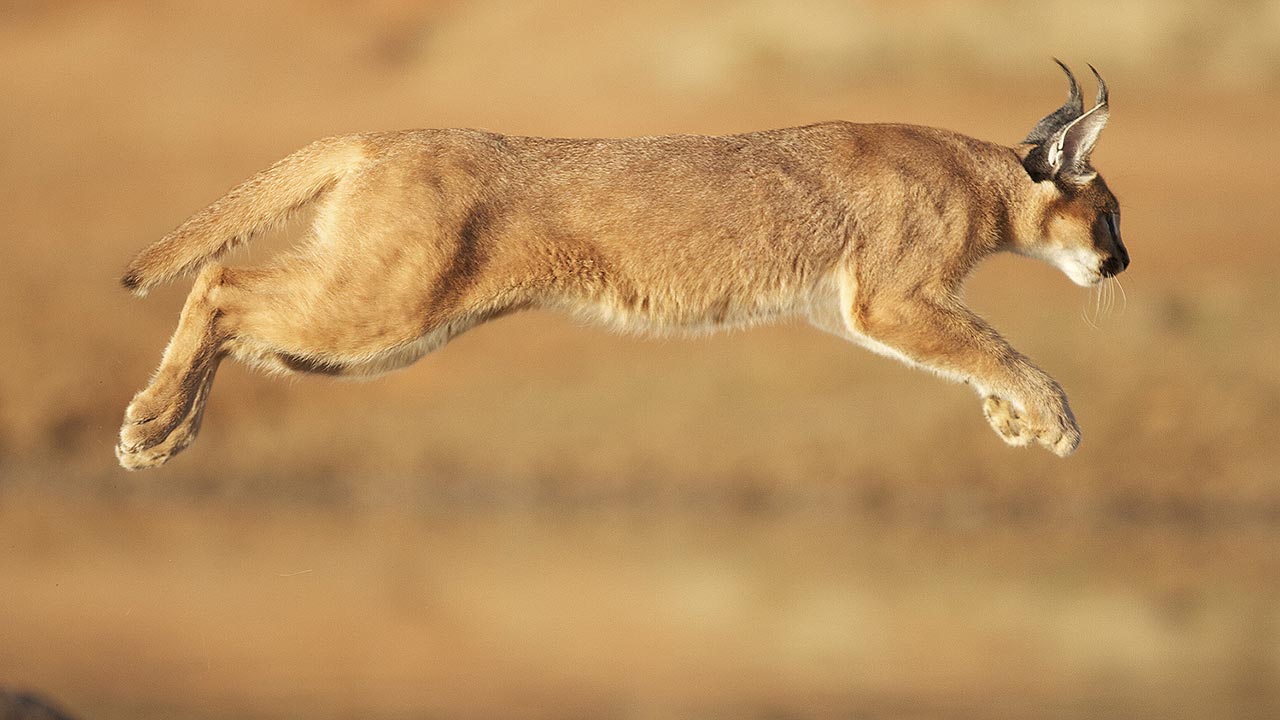
- Caracals are medium-sized wildcats. They roam most parts of savanna grassland, forests, and deserts in Africa and some parts of the Middle East. The caracals have yawny/reddish gold coat on their bodies. Their chins are white, plus some parts of the throat and underside.
- Unlike other cats, caracals have a crown, and big, pointy ears, tipped with the black and tufted feature as their trademarks.
- Each of Caracals’ ears has about 20 muscles that swivel around like a satellite. It is what they use for detecting their prey in the wild. At times, they use tuffs to enhance the incoming sound/communicate to each other.
- Caracals are the biggest of the small wild cats in Africa. They appear like a cross between hynx and the leopard. Caracals have sandy-colored coats which is the best to help them camouflage.

What caracals feed on & behaviors
- Caracals are among the opportunistic predators that often prey on small monkeys, antelopes, mongooses, birds, hyraxes, and more. They are capable of hunting in local communities and they target mostly goats, sheep, and others.
- Caracals are largely nocturnal animals, solitary and secretive. They can also become very aggressive, and because they are targeted by hunters, their population is still small.
- The gestation period of the female caracal takes from 70 to 78 days. They give birth to one or 4 litters, and these can live for 12 years in the wild, and in captivity, they can go up to 20 years.
- The main threats to caracals include mostly humans and wild animals such as hyenas and lions.
- They have strong hind legs, that lets them leap about 10 feet high and they can grab birds even in midair. They have thick and hooked claws. At times, caracals are spotted climbing trees, and they get hold of their prey the same way leopards do.
Where to find the Caracals in Uganda?
Caracals in Uganda reside in the semi-arid desert region of Karamoja, and in particular, they live in Kidepo Valley National Park. Kidepo is one of the least visited parks in Uganda, yet holds abundant wildlife species worthy of exploring on Uganda safaris. This park lies in extreme Northeastern Uganda, and accessing it from Kampala can take a 10-12 hours drive depending on the route you take and driving speed.
Other wildlife of Kidepo
Kidepo National Park was founded in 1962, and it extends to cover a land area of about 1442sq. km. It offers refuge to other enormous wildlife species, including cheetahs, black-backed jackals, aardwolf, bat-eared fox, the Rothschild giraffes, leopards, oribis, hartebeest, elands, and zebras. Bush pigs, side-backed jackals, spotted hyenas, buffaloes, elephants, and lions.
Over 475 bird species are also supported within the different habitats of Kidepo Valley National Park. Kidepo National Park’s birds include the purple grenadier, Karamoja Apalis, fox kestrel, black-breasted barbet, Abyssinian scimitar bill, Abyssinian rollers, rufous chatterers, ostriches, white-bellied go-away bird, rose-ringed parakeet, pygmy falcon, chestnut weavers, Golden pipit, Jackson’s hornbill, red-billed oxpeckers, Clapperton’s francolin, Verreaux’s eagle, fox kestrel, etc.
The most favorite time to go birding in Kidepo National Park is around the months of March, and April when you can also come across migratory birds. On a birding expedition in Kidepo, the must-visit bird-watching sites include Apoka rest camp, Namamukweny, and the fringes of Narus Valley.[/vc_column_text][/vc_column][/vc_row]