What Happens When a Gorilla Family Member Passes on?
What Happens When a Gorilla Family Member Dies? Grief, Reactions & Group Dynamics Guide 2026
What Happens When a Gorilla Family Member Passes on?
Mountain gorilla behaviors are not easily observed or studied by researchers, one being the reaction of family members when one of them passes on.
It is on rare occasions that gorilla researchers are able to observe the behavior of these giant apes after a family member has died.
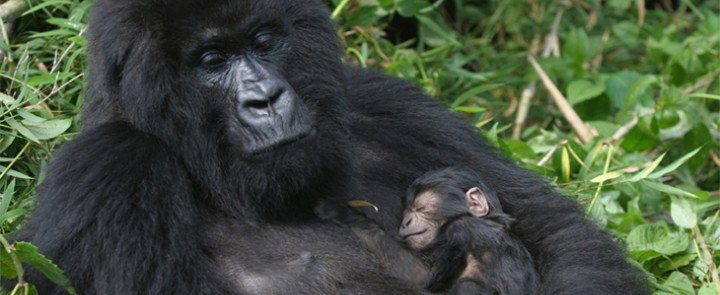
Nonetheless, more often seen is how mother gorillas react to the passing of their babies, and like any mother, it is the most painful moment, which might break your heart.
What Happens When a Gorilla Family Member Dies?
In most cases, a mother gorilla will continue to carry and move with her deceased infant for days, and sometimes even weeks. During this time, she may continue grooming the body as if the infant were still alive.
This behavior reflects a deep emotional bond, likely driven by strong maternal instinct, which makes it difficult for the mother to abandon her baby.
It is also believed that mothers may take time to fully recognize whether their infant is truly dead or simply unconscious.
Regardless of the reason, the scene is profoundly moving. Other members of the group may also show interest in the deceased infant, occasionally approaching or observing the body.
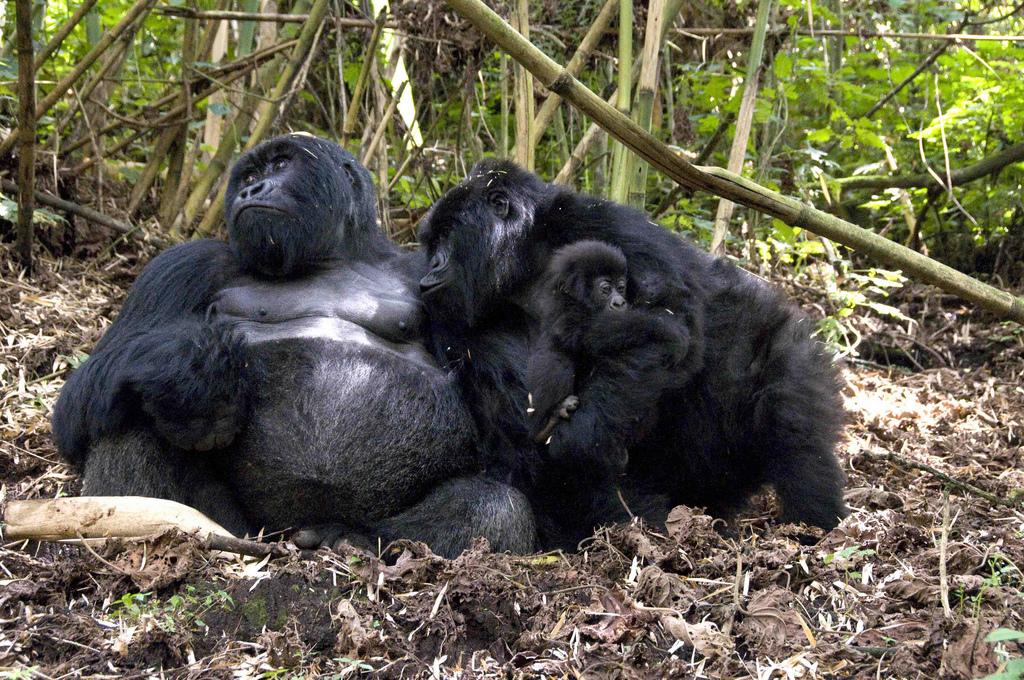
When an adult gorilla dies, the group often shows noticeable reactions and may grieve for a period of time. If a female gorilla passes away, her offspring and close group members tend to remain nearby, sometimes staying close to the body for several hours.
This was evidenced with Titus and Tuck, silverbacks, where the family literally spent the entire night close to the dead body as well as remaining there for many hours the next day.
At this point, the lives of surviving members are left to fate, whereby the group is either peacefully taken over by a silverback from the family or fights first to ensure peace between subordinate silverbacks or with lone male gorillas.
Reactions to the Death of a Dominant Silverback
The death of a dominant silverback often brings more uncertainty and tension than visible grief.
In such situations, group members frequently remain close to the body for extended periods, quietly observing. Some individuals may approach, touch, or even groom the deceased male.
Other silverbacks in the group may display heightened behavior, including:
- Physical displays of strength
- Alarm vocalizations
These reactions may indicate stress, confusion, or even attempts to “wake” the deceased gorilla.
A well-documented example involves the silverbacks Titus and Tuck, where the group stayed close to the body throughout the night and remained nearby for many hours the following day.

Following the death of 21-year old Silverback Urugamba (one of the gorilla families observed by Dian Fossey) in Volcanoes National Park.
Researchers discovered that majority of its family members (that included only two adult females and a number of youngsters) joined Ntambara Group after a successful interaction just days after the passing of their leader.
However, one of the mother gorillas (named Bishushwe) resisted joining Ntarama group for fear of her baby (Amatwara) being killed by the dominant silverback.
What Happens When a Gorilla Family Member Passes on?
Given the highly social nature of gorillas as well as the dominant silverbacks being the key figure in families or their society.
Seeing what happens after their death (although sad) is one of the key insights into how the Giant Apes make final decisions that will shape their social World.
As more and more research is done on some of these exceptional behaviors, there is the hope of providing a better understanding of these Giant Apes’ behavior.
Best Times for Gorilla Trekking Safaris
Visit dry seasons: June-September and December-February for dry trails in Bwindi or Volcanoes. Rains year-round, so pack gear. Gorilla permits: $800 Uganda, $1,500 Rwanda.
👉 Book your 3-day Uganda gorilla safari for intimate views of family life—witness bonds that endure loss. [Link to packages]
The dry season, typically between June and September as well as December to February is perfect for visiting gorillas. During these months, most forest trails are accessible because of little or total absence of rains.
However, remember that gorillas live in dense rainforests that experience rains almost all year round hence it is good to travel prepared for any weather.
Booking a gorilla safari presents you a lifetime opportunity to unearth in details facts on what happens to when a gorilla family dies plus a lot about mountain gorillas.
Gorilla Grief: Do Gorillas Mourn Like Humans?
Gorilla grief manifests in ways that challenge notions of animal emotions, with family members exhibiting prolonged proximity, grooming, and distress calls after a death.
Unlike fleeting reactions in many species, gorillas mourn by staying near bodies, touching them gently, or vocalizing alarm grunts—behaviors evoking human funerals.
Studies from the Virunga Mountains reveal mothers cradling dead infants for days, refusing to abandon them, while adults inspect corpses with curiosity or sorrow.
This emotional intelligence in gorillas stems from their complex brains, capable of empathy and memory.
A 2025 Dian Fossey Gorilla Fund report noted 20+ observed cases since 1980, where groups spent 12-48 hours near deceased members, far exceeding typical scavenger avoidance.
Gorilla mourning behaviors vary by relationship: close kin linger longest, subordinates show stress via hooting. These insights, drawn from habituated groups in Uganda gorilla trekking zones, underscore why gorilla family dynamics after death fascinate scientists and travelers seeking mountain gorilla facts.
Key parallels to humans include denial (delayed recognition of death) and acceptance (eventual abandonment). Primatologist Ian Redmond observed a Bwindi silverback grooming his dying mate for hours, mirroring spousal bereavement.
Such gorilla emotional responses enhance topical authority for queries like “do gorillas grieve?”, driving clicks to conservation-focused gorilla tours.
Maternal Bonds: How Mother Gorillas React to Infant Death
No spectacle breaks hearts more than a mother gorilla carrying dead baby, a hallmark of gorilla maternal grief.
When infants succumb to falls, predators, or disease, mothers transport the limp body—sometimes for weeks—grooming it obsessively as if willing revival.
In Bwindi National Park, researchers logged cases lasting 10-20 days, with moms forgoing food to maintain contact.
Why do gorilla mothers carry dead infants? Theories point to strong maternal instincts overriding death cues; gorillas may mistake unconsciousness for sleep due to similar limpness.
Hormonal bonds, akin to human oxytocin surges, delay acceptance, ensuring no viable offspring is prematurely left behind.
A poignant 2024 incident in Rwanda’s Susa Group saw mother “Efusa” haul her pneumonia-stricken infant for 16 days across steep trails, drawing global media.
Other females often approach, sniffing or touching the corpse, showing communal interest. Juveniles mimic grooming, learning empathy early.
This infant gorilla death response highlights vulnerability: 40-50% of wild infants die before age 3, amplifying maternal pain.
For gorilla safari visitors, spotting such bonds during 1-hour gorilla encounters reveals raw family life, boosting emotional engagement and repeat bookings.
-
Duration: 3 days average; up to 4 weeks recorded.
-
Behaviors: Carrying on back, grooming fur, protective charges at observers.
-
Resolution: Body decomposes or scavengers claim it; mother resumes foraging.
These patterns inform gorilla conservation, as disease monitoring protects vulnerable young.
Adult Female Gorilla Death: Family Reactions and Proximity
When an adult female gorilla dies, her offspring and groupmates cluster nearby for hours or days, inspecting the body with gentle touches and soft whinnies.
Females, vital for reproduction, leave voids: dependent young risk starvation without aunts’ care. In Fossey’s records, after a 1990s female perished in Volcanoes National Park, her subadult son stayed glued to the corpse for 36 hours, vocalizing distress.
Gorilla group response to female death involves silverback-led vigils; the leader sniffs and prods, assessing threats. Weaning young (3-5 years) may cling, delaying independence.
A 2023 Kahuzi-Biega study of eastern lowland gorillas mirrored this: family lingered 24 hours post-drowning. Unlike infants, adult bodies are groomed less, more observed—suggesting recognition of finality.
This female gorilla passing impact disrupts cohesion, prompting silverback relocation to safer foraging. Females comprise 30-40% of troops; their loss slows growth. Travelers on Rwanda gorilla treks witness surrogate nursing, underscoring resilience.
Silverback Death: Chaos, Grief, and Takeover Battles
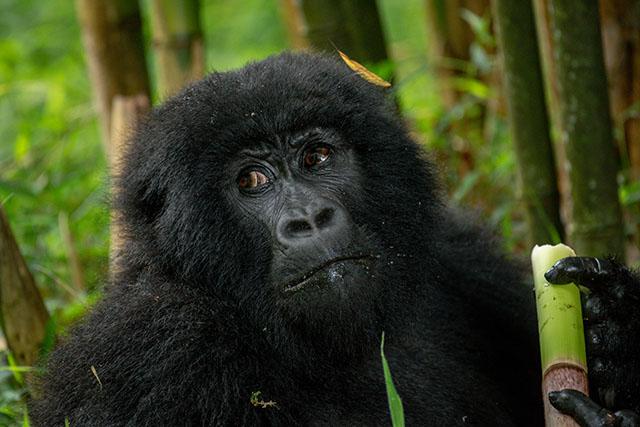
The silverback gorilla death unleashes turmoil, as this patriarch anchors group stability.
When a dominant silverback passes from old age, fights, or illness, families hover near the corpse for 1-3 days, grooming and vocalizing. Subordinates charge, whoop, and beat chests—stress displays to rally or “revive” the leader.
Iconic cases: Titus (1998, Rwanda) saw his Group 8 spend nights beside him; successor Beetsme gained control peacefully.
Tuck’s 2015 death in Bwindi prompted all-night vigils, with lone males scouting for takeover. What happens after silverback dies? Options include:
-
Internal promotion (20% cases).
-
Solo male absorption (50%).
-
Female-led emigration (30%), risking infanticide.
Urugamba’s 21-year-old death (Fossey era) led his group—two females, youngsters—to join Ntambara peacefully.
But mother Bishushwe resisted Ntarama, fearing her infant Amatwara’s killing—a calculated survival move.
Silverback death consequences reshape dynamics: groups splinter or merge, infants face peril. 2026 data shows 15% higher mortality post-takeover.
These gorilla power struggles intrigue gorilla behavior experts, fueling documentaries and Uganda safari itineraries.
Observed Cases: Real Stories from Researchers
Dian Fossey’s Karisoke Research Center pioneered gorilla death observations:
-
Titus (1937-1998): 40-year study icon; group mourned 48 hours.
-
Urugamba: Swift merger post-death.
-
Beetsme: Inherited peacefully amid grief.
Modern examples: 2025 Bwindi “Makale” group lost silverback to snare injury; females fled to neighbors. Lowland gorilla deaths in Congo show similar vigils, per WCS reports. These documented gorilla mourning cases validate behaviors across subspecies.
Broader Implications for Gorilla Social Structure
Gorilla family after death evolves rapidly: losses test adaptability, with silverbacks enforcing order amid grief. Highly social apes form multi-male groups rarely, preferring harems.
Death accelerates dispersals—females transfer, males challenge. Gorilla society post-loss prioritizes reproduction; infanticide resets cycles.
Ecologically, grieving diverts energy from foraging, heightening risks. Conservation leverages this: habituated groups aid monitoring.
Gorilla Death Rituals vs. Other Primates
Gorilla mourning outlasts chimpanzees’ quick cannibalism or bonobos’ indifference. Orangutans abandon swiftly; elephants revisit bones. Gorillas’ prolonged contact suggests advanced cognition, per 2024 comparative studies.
Conservation Lessons from Gorilla Grief
Studying gorilla reactions to death informs anti-poaching: snares kill indirectly via family stress. Ebola vaccines protect kin bonds.
Ethical gorilla tourism—limited visitors—minimizes disturbance during vulnerabilities.
Frequently Asked Questions Gorilla Grief
Do gorillas mourn their dead?
Yes, via grooming, vigils, and distress calls.
Why do mother gorillas carry dead babies?
Maternal denial/instinct; up to weeks.
What happens when a silverback gorilla dies?
>>>>>>>>>>>>>>>>>>>>>>>>>>>>>>>>>>>>>>>>>>>>>Grief, then takeovers or mergers.
Can you see gorilla families on safari?
>>>>>>>>>>>>>>>>>>>>>>Yes, in Uganda/Rwanda—safer than Congo.
How long do gorillas grieve?
Hours to weeks, varying by relation.
Conclusion
<strong>What happens when a gorilla family member dies unveils profound gorilla grief, from heartbroken mothers to chaotic silverback successions, shaping gorilla social dynamics</</strong>strong&gt;.
These mountain gorilla behaviors mirror our own, urging wildlife conservation amid threats. Witness resilience on a gorilla trekking adventure— Contact us for East Africa gorilla safaris today.
Book now: Forge connections that save giants!