Silverback Gorilla Male vs Female
Silverback Gorilla Male vs Female: Uganda Trekking Guide | Adventure Uganda Safaris
Silverback Gorilla Male vs Female: The silverback gorilla is Uganda’s most iconic wildlife symbol, commanding awe as the majestic leader of the mountain gorilla family.
Understanding the critical male vs female mountain gorilla differences isn’t just fascinating—it’s essential for anyone planning an unforgettable gorilla trekking Uganda experience.
At Adventure Uganda Safaris, we’ve guided thousands of travelers through Bwindi Impenetrable National Park to witness these incredible creatures in their natural habitat.
Making us the trusted gorilla trekking operator for premium Uganda safari adventures.
In this comprehensive guide, you’ll discover the physical characteristics that distinguish silverback males from female gorillas.
Their unique behavioral differences, why trekking gorillas in Uganda offers a once-in-a-lifetime encounter, and how to book gorilla trekking permits seamlessly with Adventure Uganda Safaris for 2026–2027.
Ready to meet the legendary silverback? Let’s dive into everything you need to know before your Bwindi National Park adventure.
What Is a Silverback Gorilla?
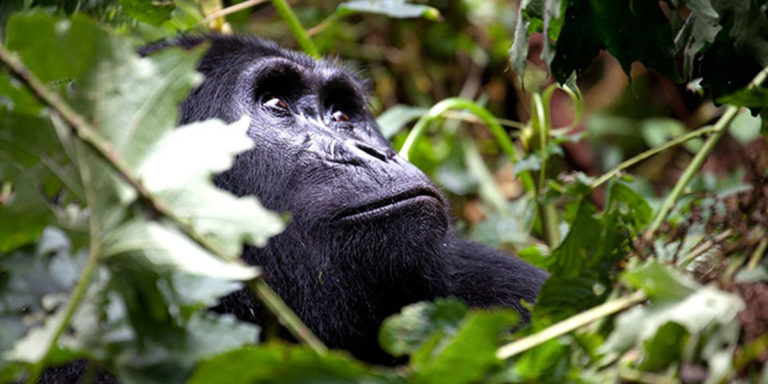
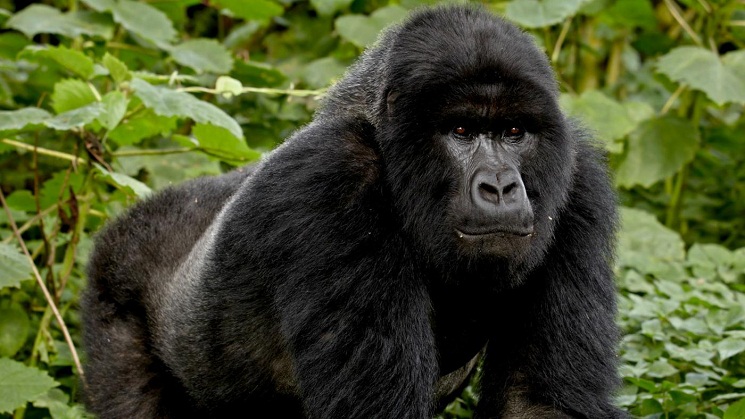
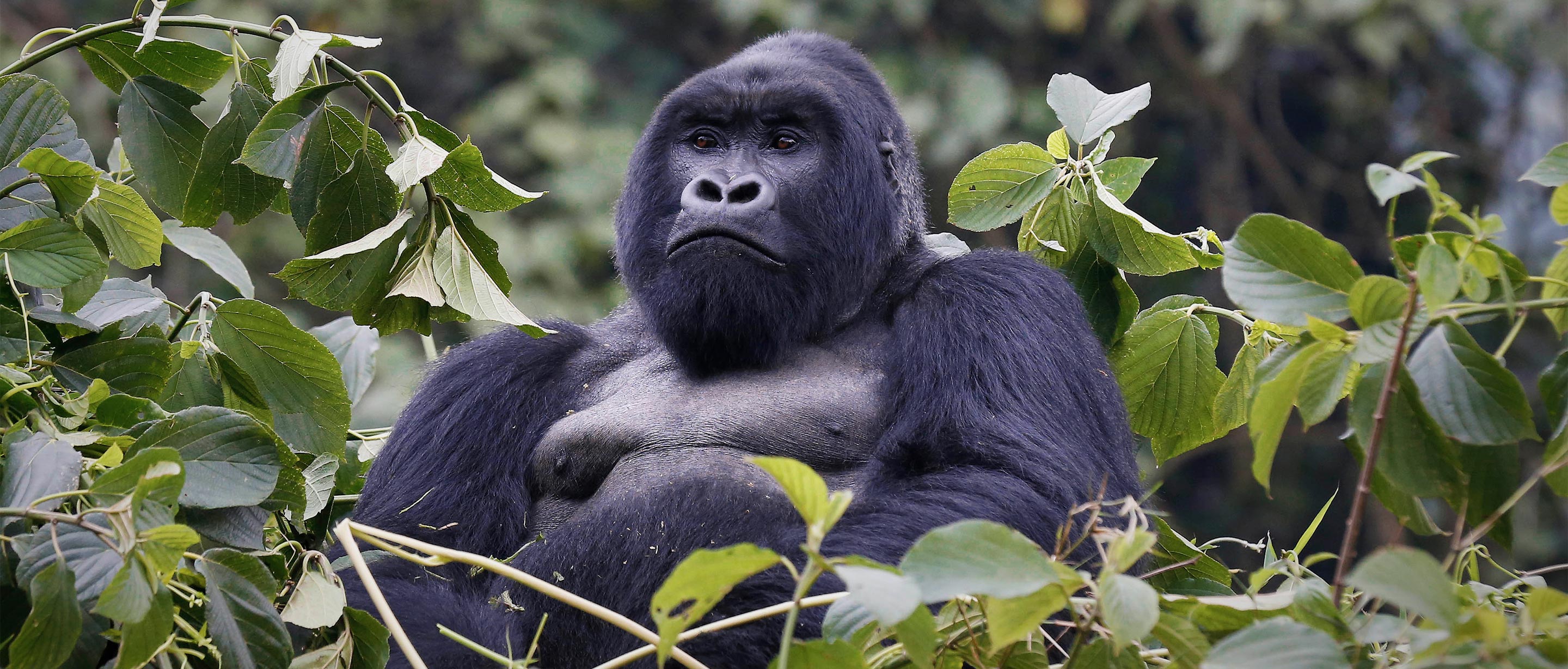
A silverback gorilla is a mature male mountain gorilla distinguished by the distinctive silver saddle of hair that develops across his back and shoulders.
This striking silver hair signal indicates full maturity, typically appearing between 12–15 years of age when the male transitions from a “blackback” to the dominant silverback status.
The silverback serves as the group leader and protector of the entire gorilla family, making critical decisions about movement, feeding locations, and safety protocols for all members.
Without the silverback’s leadership, the gorilla group would lack the stability and protection necessary to survive in the wild.
These magnificent silverback gorillas are found exclusively in the dense forests of the Virunga Mountains and primarily in Bwindi Impenetrable National Park and Mgahinga National Park, Uganda.
Bwindi National Park hosts the world’s largest population of mountain gorillas, making it the premier destination for gorilla trekking Uganda.
The silverback’s role extends beyond leadership—he’s the primary defender against threats like leopards, rival gorillas, or human encroachment, ensuring his group’s survival.
Understanding what defines a silverback gorilla helps travelers appreciate why seeing one during gorilla trekking is the ultimate Uganda safari experience.
At Adventure Uganda Safaris, we specialize in getting you face-to-face with these legendary silverbacks in their natural Bwindi forest habitat.
Male Gorilla Physical Characteristics
The male gorilla, especially the silverback, boasts the most impressive physical characteristics in the mountain gorilla species.
Adult male gorillas weigh between 400 and 500 lbs (180 and 227 kg) and stand 5–6 feet tall when upright, making them the largest primates on Earth.
Their most trademark feature is the silver hair on their back—a saddle-like patch of silver-grey fur spanning from shoulders to hips, contrasting sharply with their black fur elsewhere on the body.
This silver saddle is the defining visual marker that separates mature silverbacks from younger males and female gorillas.
Male gorillas possess massive jaw muscles and a prominent brow ridge, giving them an intimidating, powerful appearance that reinforces their dominance.
Their arms are longer than their legs, enabling them to traverse forest terrain with incredible strength.
The silverback’s body mass provides the power needed to defend his group, while his silver hair signals maturity and authority to other gorillas.
In terms of lifespan, male gorillas live 35–40 years in the wild, though some reach 50 years under optimal conditions.
The silverback’s physical dominance is unmatched—he’s significantly larger and stronger than females, with thicker bone structure and more robust musculature.
When you trek gorillas in Uganda, spotting a silverback’s physical characteristics is the main goal.
The silver hair, massive size, and powerful jaw make him instantly recognizable.
Adventure Uganda Safaris guides are trained to identify these traits, helping you appreciate the male gorilla’s physical superiority during your Bwindi trek.
Seeing a 500-lb silverback up close is a humbling, unforgettable moment that defines the Uganda safari experience.
Female Gorilla Physical Characteristics
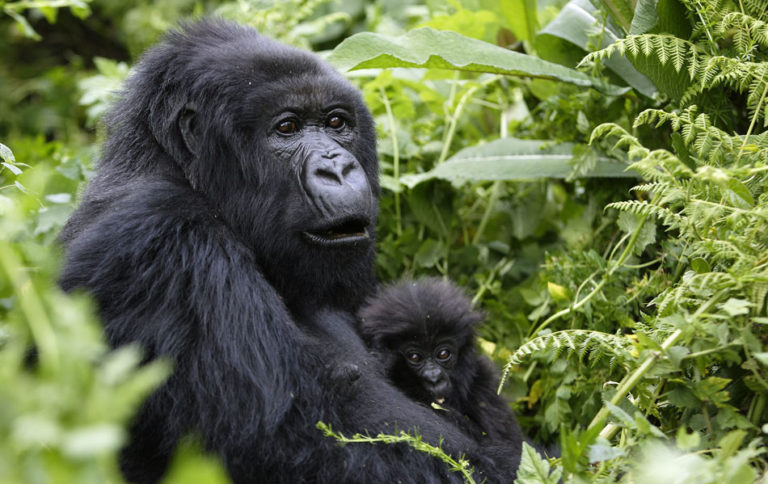
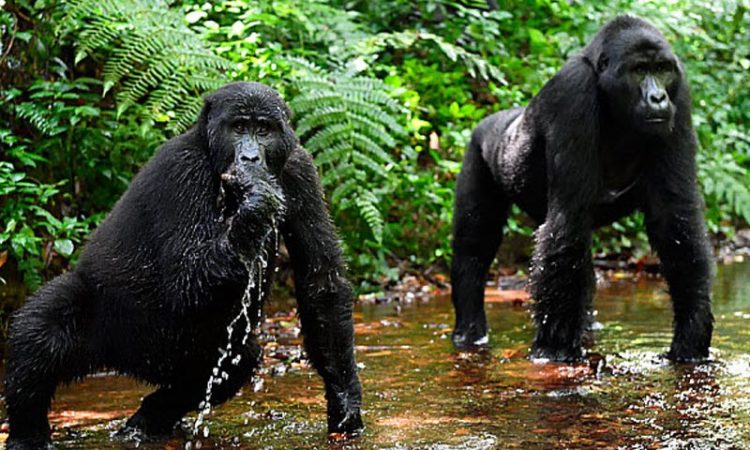
Female gorillas display distinctly different physical characteristics compared to male gorillas, reflecting their specialized role as caregivers rather than defenders.
Adult female gorillas weigh significantly less at 200–300 lbs (90–136 kg) and stand only 3.5–4.5 feet tall, making them roughly half the size of a silverback male.
The most apparent difference is that females have no silver saddle—their fur is entirely black/brown fur across their entire body, with no silver-grey markings.
Female gorillas possess a smaller jaw and lighter build overall, lacking the massive jaw muscles and prominent brow ridge that characterize male gorillas.
Their physical structure is optimised for nurturing offspring rather than fighting threats.
Despite their smaller size, female gorillas are incredibly strong, capable of carrying infants weighing up to 4 lbs and climbing forest trees with agility.
Their lighter build enables them to move quickly through dense vegetation while protecting their young.
The female gorilla’s primary role is being the primary caregiver for offspring.
Females bear 1 infant every 4–5 years, investing massive energy in raising each child for 3–4 years before conceiving again.
Their physical characteristics support this nurturing role: a smaller size allows closer bonding with infants, while their black/brown fur provides camouflage in the forest.
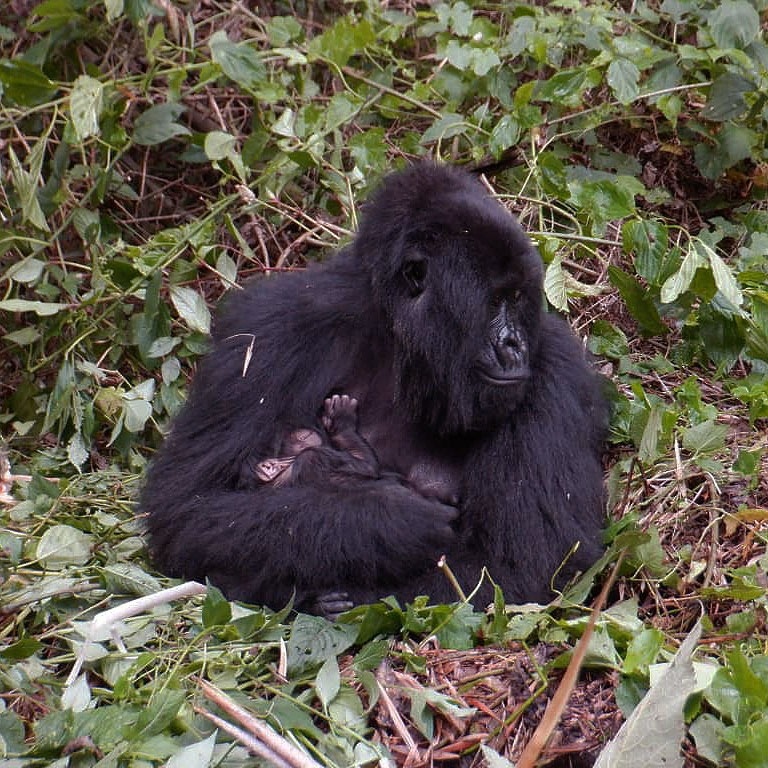
When trekking gorillas in Uganda, you’ll often see female gorillas with infants clinging to their backs or chests—a heartwarming sight that contrasts with the silverback’s imposing dominance.
Adventure Uganda Safaris guides help you spot female gorillas and explain their vital role in mountain gorilla group stability.
Understanding these female physical characteristics deepens your appreciation for the complex social dynamics of gorilla families in Bwindi National Park.
Behavioral Differences: Male vs Female
The behavioural differences between male vs female mountain gorillas reveal a highly organised social structure where each gender plays distinct, complementary roles.
Understanding these differences is crucial for appreciating gorilla trekking Uganda experiences and the ecology of Bwindi National Park.
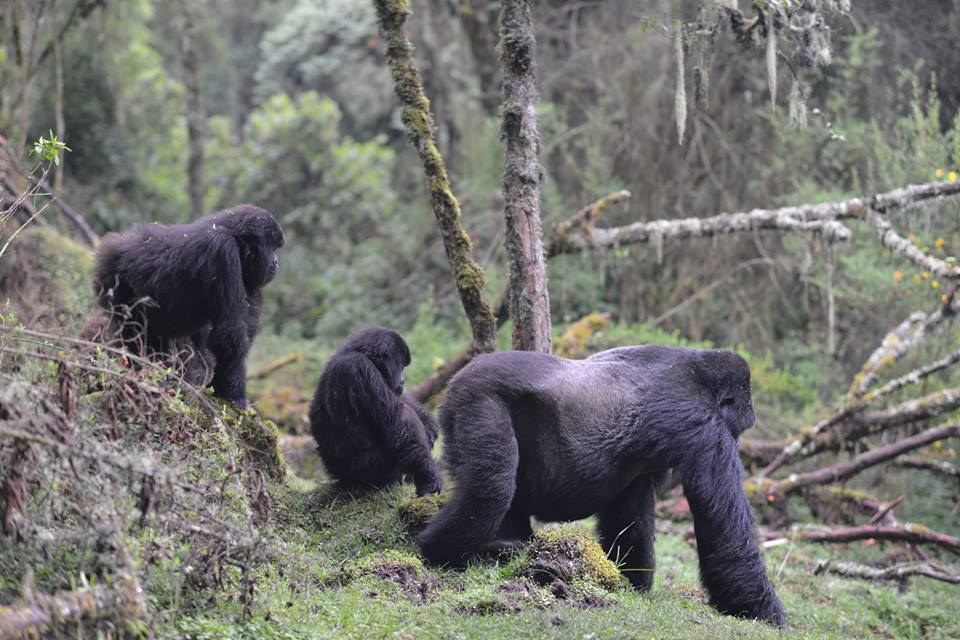
The silverback’s leadership role is absolute—he’s the decision-maker for the entire family.
When danger approaches, the silverback positions himself between threats and the group, using his massive size and power as a deterrent.
Females, meanwhile, prioritize infant protection, keeping babies close and hidden during conflicts.
Mating behavior differs drastically: the silverback breeds with all mature females in his group, ensuring his genetic dominance.
Females invest enormous energy in reproduction, nursing infants for 3 years and spacing births by 4–5 years.
This slow reproduction rate makes mountain gorillas vulnerable to population decline.
Social behavior shows the silverback as central to group stability—without him, groups often split or collapse.
Females nurture the young and maintain social bonds through grooming, creating the emotional fabric of the group.
During gorilla trekking in Uganda, observing these behavioral differences is mesmerizing.
You’ll see the silverback commanding attention while females tend to infants.
Adventure Uganda Safaris guides explain these dynamics, transforming your Bwindi trek into an educational wildlife experience.
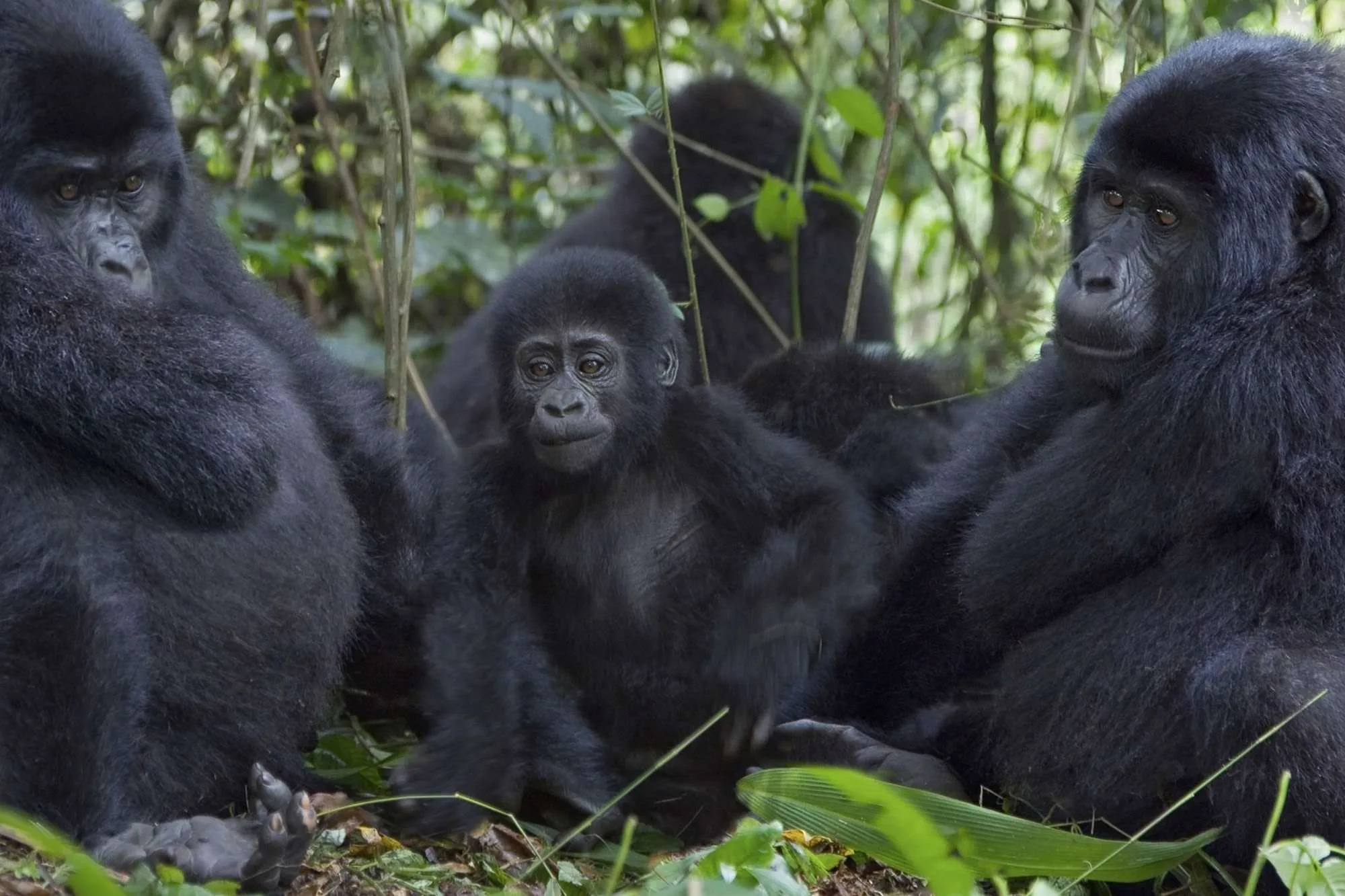
Why Trekking Gorillas in Uganda Is Unforgettable
Trekking gorillas in Uganda offers an unforgettable wildlife experience that ranks among the world’s most thrilling Uganda safari adventures.
The journey begins with a 10-hour trek experience in Bwindi’s impenetrable forest, where you’ll navigate dense vegetation, steep hills, and muddy trails to reach your mountain gorilla family.
This physical challenge amplifies the reward: the chance to see 1+ silverbacks in their natural habitat, standing mere meters from the legendary silverback gorilla leading his group.
Uganda’s mountain gorilla population represents a conservation success story: the population is rising after decades of decline.
From fewer than 600 in the 1980s, the population now exceeds 1,000, thanks to rigorous protection efforts in Bwindi National Park and Mgahinga National Park.
Your gorilla trekking permit directly supports this conservation, funding anti-poaching patrols, veterinary care, and community programs.
Adventure Uganda Safaris handles everything seamlessly: permits, transport, guides, and lodging.
We secure your $800/person gorilla permit through the Uganda Wildlife Authority, arrange comfortable transport from Kampala to Bwindi, and pair you with expert English-speaking guides trained in gorilla behavior.
Our guides know which gorilla families are most accessible, maximizing your chances of seeing a silverback.
The emotional impact of encountering a 500-lb silverback up close is indescribable.
You’ll witness silver hair on your back, massive jaw muscles, and intelligent eyes staring back at you—a moment that reshapes your perspective on wildlife.
Gorilla trekking in Uganda isn’t just tourism; it’s a conservation pilgrimage that supports endangered species survival.
Book your 2026–2027 gorilla trek with Adventure Uganda Safaris and experience the ultimate Uganda safari adventure.
Limited permits mean you must act fast—don’t miss this once-in-a-lifetime opportunity!
How to Book Gorilla Trekking with Adventure Uganda Safaris
Booking gorilla trekking with Adventure Uganda Safaris is simple, secure, and stress-free.
Follow these four steps to guarantee your Bwindi National Park adventure:
Step 1: Choose trek date (2026–2027)
Select your preferred trekking dates. Adventure Uganda Safaris recommends booking 6–12 months ahead, as permits are limited and sell out quickly for peak seasons (June–September, December–February).
Step 2: Secure permit ($800/person via Uganda Wildlife Authority)
Adventure Uganda Safaris reserves your $800/person gorilla permit directly through the Uganda Wildlife Authority.
This permit is mandatory for all gorilla trekking visitors in Uganda and includes 1 hour with the gorillas.
Step 3: Adventure Uganda Safaris arranges transport, lodging, guide
We handle all logistics: private transport from Kampala to Bwindi; accommodation at premium lodges (e.g., Bufundo Camp, Bwindi Forest Lodge), and assignment of an expert gorilla trekking guide familiar with local gorilla families.
Step 4: Trek day! Meet expert guide, follow rules, photograph gorillas
On trek day, meet your guide at 7:00 AM. Follow safety rules: stay 7 meters from gorillas, no flash photography, and whisper quietly.
You’ll spend 1 hour observing the silverback and his family—an unforgettable experience!
Book now—permits are limited!” Contact Adventure Uganda Safaris today to secure your 2026–2027 gorilla trekking permit.
Our team responds within 24 hours with a custom quote and permit confirmation.
Frequently Asked Question Section
1. What age does a gorilla become a silverback?
A male gorilla becomes a silverback at 12–15 years of age, when silver hair develops across his back.
2. How many gorillas are in a typical group?
A typical mountain gorilla group has 10–20 members, including 1 silverback, 2–3 females, and several juveniles/infants.
3. Can females ever lead a group?
No—females never lead. The silverback male is always the leader. If a silverback dies, a younger male may take over, but females follow authority.
4. What is the cost of a gorilla permit in Uganda?
The gorilla permit in Uganda costs $800/person for foreign non-residents, booked via Uganda Wildlife Authority (UWA).
5. Is gorilla trekking safe for children?
Gorilla trekking is safe for children 15 years and older. The 10-hour trek requires physical fitness, and Uganda Wildlife Authority sets this age limit.
6. Why book with Adventure Uganda Safaris?
Adventure Uganda Safaris is the trusted gorilla trekking operator with 10+ years experience, exclusive permit access, expert guides, and premium Uganda safari packages.
We guarantee your Bwindi trek success!
Conclusion
The male vs female mountain gorilla differences are stark: silverback males lead with 400–500 lbs size and silver hair, while females nurture at 200–300 lbs with black/brown fur.
These behavioural differences create the stable mountain gorilla social structure you’ll witness during gorilla trekking in Uganda.
Adventure Uganda Safaris is the best operator for Bwindi National Park treks, offering seamless permit booking, expert guides, and premium Uganda safari experiences.
Don’t miss your chance to see silverbacks! Contact Adventure Uganda Safaris today to secure your 2026–2027 gorilla trekking permit.
Permits are limited—book now!