
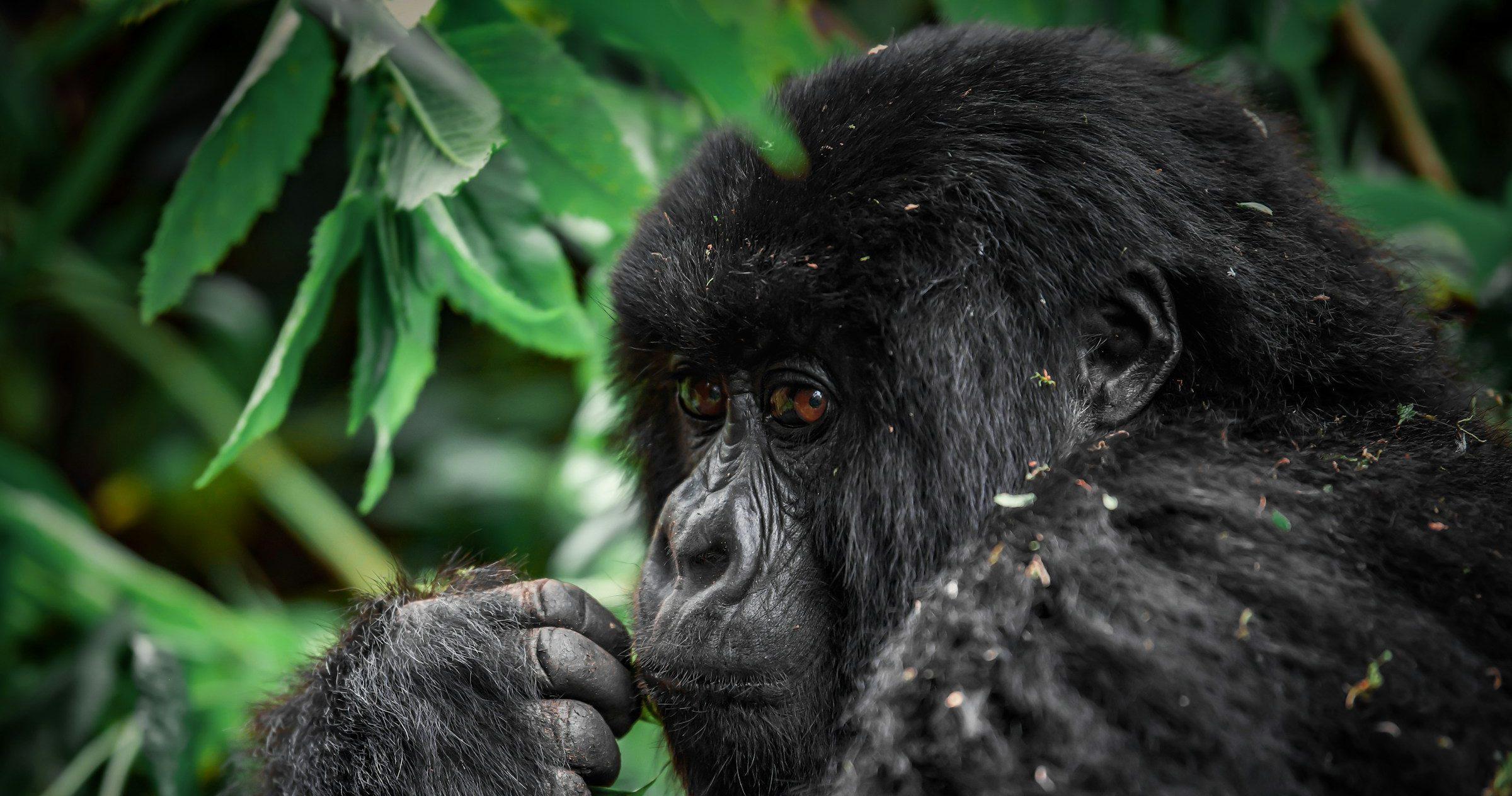
Mountain Gorilla Filming in Uganda and Rwanda: Ultimate Guide for Film Crews and Documentary Makers
African safaris are often described as once‑in‑a‑lifetime journeys, and for many visitors, the dream is to create a lasting, high‑quality memory they can relive and share with the world.
For professional storytellers, however, the goal goes beyond memories to powerful visual narratives that inform, inspire, and support conservation.
While traditional game drives and classic gorilla trekking already offer unforgettable moments, there are only a few adventures that truly stand out as rare, exclusive, and capable of producing broadcast‑quality stories.
One of these is mountain gorilla filming in Uganda and Rwanda, a highly specialized experience that allows film crews.
Documentary producers, conservation organizations, and passionate storytellers to spend extended time with critically endangered mountain gorillas in their natural habitat.
Unlike standard gorilla treks where you spend one hour with a gorilla family in a group of eight trekkers, gorilla filming in Uganda or Rwanda offers a more immersive, private.
And professional environment that is ideal for creating documentaries, television features, conservation content, branded films, and high‑end digital campaigns.
Instead of simply capturing a few photographs, you get the opportunity to record authentic behavior, family dynamics, feeding habits, and complex interactions with minimal distractions from other tourists.
This is the kind of unique adventure you should add to your bucket list if you are planning a gorilla safari in Uganda or Rwanda and want more than a typical tourist experience.
It is also one of the most impactful ways to promote gorilla tourism and conservation, especially considering that fewer than 1,004 mountain gorillas remain in the wild, thriving only in the high‑altitude forests of Uganda, Rwanda, and the Democratic Republic of Congo (DRC).

Where Gorilla Filming Takes Place: Key Parks in Uganda and Rwanda
Mountain gorilla filming in East Africa is not just an exciting field assignment; it is a responsibility and an opportunity to contribute to global awareness of one of the world’s most endangered primates.
In Uganda, gorilla filming is mainly done in Bwindi Impenetrable Forest National Park and Mgahinga Gorilla National Park, both located in the southwestern part of the country at the edge of the Albertine Rift Valley.
Bwindi is famous for its dense, ancient rainforest and for hosting almost half of the remaining mountain gorillas.
While Mgahinga, though smaller, offers dramatic volcanic scenery and more intimate encounters with fewer visitors.
In Rwanda, gorilla filming is conducted exclusively in Volcanoes National Park, located in the northwest, a region of misty volcanoes, bamboo forests, and rich biodiversity where many iconic gorilla documentaries have been filmed.
These parks are ideal locations for TV filming crews, documentary companies, conservation NGOs, research teams.
And independent filmmakers who want to produce high‑quality content focused on gorilla behavior, conservation challenges, community tourism, and eco‑tourism stories.
Whether you are working for a global network, an online streaming platform, a conservation charity, or a small film studio.
The opportunity to spend extended time with habituated gorilla families offers unmatched access to natural behavior that cannot be staged or replicated in captivity.
To be part of this rare adventure, you need to plan carefully, work with a reliable local tour operator or fixer, and comply with all filming regulations and conservation guidelines.
This is where booking your gorilla filming safari and logistics through a reputable tour company becomes essential.
A good operator will not only handle transport, accommodation, and on-ground logistics but will also manage the complex paperwork.
Gorilla filming permits and coordination with the Uganda Wildlife Authority (UWA) and Rwanda Development Board (RDB).
Why Professional Support Matters for Gorilla Filming Logistics
Because gorilla filming in Uganda and Rwanda involves protected species and sensitive habitats, paperwork and compliance are very important.
And working with a professional tour company or local fixer makes the entire process smoother, faster, and less stressful.
A trusted operator can help you obtain the necessary gorilla filming permits, liaise directly with UWA and RDB, and ensure you have all letters, media cards, and clearances required for an international crew.
This minimizes delays at every stage and gives you more time to focus on creative planning, shot lists, scripts, and technical preparation.
Professional assistance is especially valuable if you are bringing expensive cameras, drones (which require separate permissions), sound gear, lighting rigs, and support equipment, or if you are coordinating a large team.
In addition, a local partner understands the terrain, weather patterns, park regulations, cultural context, and local languages.
Which helps you schedule filming days efficiently, choose the right gorilla families for your narrative, and avoid common pitfalls such as unexpected road closures, weather disruptions, or last‑minute changes in gorilla group assignments.
To give you a clear picture of what is required, the next section explains the requirements and costs for gorilla filming in Uganda and Rwanda.
Including permit structure, additional fees, and key conditions every crew should know before planning a shoot.
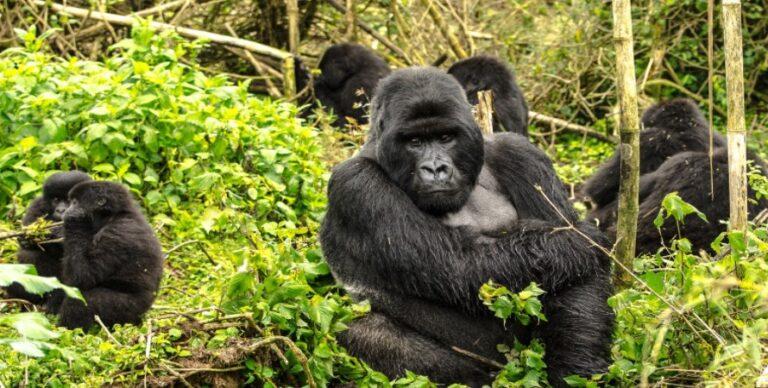
Requirements and Costs for Gorilla Filming in Uganda and Rwanda
In order to participate in gorilla filming in Uganda or Rwanda, obtaining the correct filming permits is mandatory.
These permits are different from standard gorilla trekking permits because they grant specialized filming rights and often extend or modify normal visitor rules.
Core Gorilla Filming Permit Fees
A. Uganda gorilla filming permit:
Typically priced at USD 4,200. This fee gives your crew permission to spend a dedicated hour with a selected gorilla family specifically for filming purposes.
The hour is carefully managed by park rangers and trackers to ensure safety for both the crew and the gorillas while also minimizing disturbance.
B. Rwanda gorilla filming permit:
Usually around USD 5,000, paid directly to Rwanda Development Board (RDB). Rwanda positions itself as a high‑end gorilla tourism destination, and the permit fee reflects its luxury market strategy and conservation model.
The cost difference between the two countries reflects different conservation strategies, market positioning, and tourism policies.
With Rwanda emphasizing high‑end gorilla tourism and Uganda offering a more mid‑range‑friendly structure that still funds strong conservation.
Booking the Entire Gorilla Family
A key condition for gorilla filming is that crews generally must book the entire gorilla family for the filming session.
This means that you are effectively buying all the standard trekking permits for that group for the allocated day, ensuring no other tourists join the family during your filming window.
-
If a gorilla group normally allows eight trekkers per day and your filming crew has five members, you must cover the cost of those five standard permits plus the filming fee.
-
In many cases, you may also be required to pay for the remaining permits for the day so that the family is reserved exclusively for your filming work.
Standard gorilla trekking permits in Uganda cost about USD 800 per person for foreign non‑residents, while gorilla trekking permits in Rwanda cost about USD 1,500 per person.
A price set to position Rwanda as a luxury gorilla destination. When you combine the filming permit with these trekking permits, you get a clear picture of the overall budget needed for a professional shoot.

Gorilla Habituation Experience for Extended Filming Time
For filmmakers who want more time with the gorillas and greater flexibility in capturing complex behavior, an excellent option is to book the Gorilla Habituation Experience in Uganda.
This unique product is available only in Bwindi Impenetrable National Park and allows visitors to spend up to four hours with a gorilla family that is still in the process of being habituated to human presence.
Gorilla Habituation Experience permit prices:
-
Foreign non‑residents: USD 1,500 per person
-
Foreign residents: USD 1,000 per person
-
East African Community residents: UGX 750,000 per person
These permits can be booked through the Uganda Wildlife Authority (UWA) or through a recognized local tour operator. While habituation experiences are not purely filming permits.
They provide extended time and a more intimate atmosphere, which can be extremely valuable for documentary crews who want detailed behavioral footage and broader story arcs.
Unlike standard treks that limit you to one hour, habituation permits open up a half‑day with the gorillas, giving you more opportunities to capture feeding, playing, grooming, and interactions across different phases of the day.
Essential Paperwork: MoUs, Cover Letters, Environmental Levies and Refundable Fees
It is important to note that for any company or crew to obtain gorilla filming permits in Uganda or Rwanda.
A Memorandum of Understanding (MoU) must be signed with the respective authority: Uganda Wildlife Authority (UWA) for Uganda and Rwanda Development Board (RDB) for Rwanda.
Memorandum of Understanding (MoU)
-
After you express interest and share your project concept, an official form is sent to you.
-
You must complete it with accurate details about your crew, filming dates, locations, equipment, and story focus.
-
You then scan and return it through the tour company or contact person handling your filming arrangements.
This MoU helps authorities estimate the level of activity, environmental impact, and associated costs, and it ensures your project aligns with conservation priorities and legal requirements.
Cover Letter and Processing Timelines
In addition to the MoU, you will also need a cover letter authorizing the chosen tour company or fixer to work on your behalf in processing filming permits and coordinating logistics.
-
The processing timeline typically takes about four working days (sometimes more, depending on season and workload).
-
Given the sensitivity and complexity of gorilla filming, it is strongly recommended to book permits well in advance, ideally 1–3 months before the actual filming dates or even earlier for large projects and high‑season shoots.
Early booking allows authorities to manage gorilla group allocations, ensures that your preferred park (Bwindi, Mgahinga, Volcanoes) is available on your filming dates, and helps you avoid last‑minute disappointments.
Environmental Levy
Another crucial aspect is the environmental levy. After the total cost of your gorilla filming project is compiled—covering filming permits.
Trekking permits and related fees—an additional five percent (5%) is usually added to cover environmental effects on the forest ecosystem, which is the critical habitat of the mountain gorillas.
This levy supports:
-
Conservation work and habitat management
-
Anti‑poaching patrols and ranger salaries
-
Mitigation of the impact of human presence and filming activity on sensitive forest ecosystems
Additional Refundable Fee in Rwanda
For Rwanda, there is an extra condition worth noting. Before you embark on actual filming in Volcanoes National Park, you are required to make an additional payment of USD 2,000 to RDB.
-
This fee serves as a form of deposit and regulatory control.
-
It is refundable once you provide a copy of your filmed material to RDB as proof of the project’s purpose and content.
-
The refund mechanism helps the authority confirm that the footage produced is indeed for the declared filming project and meets agreed guidelines around conservation messaging and ethical use.
Media Cards, Clearing Agents and Equipment Logistics
Beyond permits and levies, you will need media cards and a clearing agent to operate legally and efficiently.
Media cards in Uganda are issued by the Uganda Media Centre, headquartered in Kampala, and they grant official recognition and permission for foreign media crews to operate in the country.
A professional clearing agent plays a vital role in enabling smooth entry and exit of filming and photography equipment, especially at Entebbe International Airport and other points of entry.
They handle:
-
Customs declarations and temporary import permits
-
Lists of cameras, lenses, drones (subject to separate approval), audio equipment, and accessories
-
All formalities related to professional gear so that your equipment can enter and leave the country without complications
A good tour operator or fixer will help you find trusted clearing agents and guide you through the documentation required to prevent delays, fines, or equipment seizures.
Smooth equipment logistics are essential when working with tight shooting schedules and international broadcasters.
Compliance with Park Rules and Ethical Filming Standards
Because gorilla filming in Uganda and Rwanda touches many regulatory areas (wildlife, conservation, media, customs, and tourism).
Working with an experienced company ensures you meet every requirement and maintain a professional, compliant presence in the parks.
It is also essential to follow park rules such as:
-
Maintaining the required distance from gorillas (usually 7 meters)
-
Wearing masks when necessary to protect gorillas from respiratory diseases
-
Avoiding direct eye contact for prolonged periods and not imitating gorilla behavior
-
Respecting group behavior and avoiding any action that could provoke stress or aggression
-
Following ranger instructions during every shoot, including when to move, kneel, or retreat
These rules not only protect the gorillas from stress and disease but also secure your crew’s safety in the presence of powerful wild animals.
Ethical filming builds trust with park authorities and communities and ensures that future film crews continue to have access to these rare opportunities.
Why Gorilla Filming Matters for Conservation and Storytelling
While the focus of many crews is on producing visually powerful content, gorilla filming tours in Uganda and Rwanda have deeper significance.
They contribute to education, advocacy, and fundraising for conservation efforts by bringing the story of mountain gorillas to global audiences.
Filmed content reveals the challenges these primates face, including:
-
Habitat loss and fragmentation
-
Human‑wildlife conflict around forest edges
-
Climate change impacts on forest ecosystems
-
Poaching and illegal trade, even when gorillas are protected
High‑quality documentaries, television series, streaming content, YouTube films, and social media campaigns show the positive impact of community‑based tourism, ranger work, and international support.
They highlight how gorilla tourism creates jobs, motivates protection of forests, and generates revenue for park management and local communities.
For film crews, this means that every trip into the forest is an opportunity to craft narratives that go beyond simple wildlife footage.
You can:
-
Highlight the role of park rangers and trackers in daily gorilla protection
-
Feature community projects around Bwindi, Mgahinga, and Volcanoes National Park
-
Explore how revenue from gorilla permits funds schools, health centers, and infrastructure near protected areas
-
Document the transformation of local livelihoods as communities shift from forest exploitation to conservation‑friendly tourism
This deeper storytelling strengthens audience engagement, builds emotional connection, and can lead to partnerships.
Donations, and long‑term support for conservation organizations working in Uganda and Rwanda.
Practical Tips for Planning Gorilla Filming in Uganda and Rwanda
Which align with best practices for filming in sensitive wildlife environments and also help your behind‑the‑scenes content and blog posts rank well online:
1. Start planning early
Begin permit requests, MoU applications, and logistical planning several months before your intended shoot dates.
This gives authorities enough time to process your documents and ensures you get the gorilla groups and filming dates you prefer, especially in peak seasons.
2. Define your storytelling angle
Decide whether your project focuses on gorilla behavior, conservation success, community benefits, scientific research, eco‑tourism experiences, or a mix of these themes.
3. Work with an experienced local operator
Choose a tour company or fixer with a proven track record in handling film crews, gorilla permits, and complex logistics.
This partner will coordinate transport, accommodation, permits, park liaison, and any emergency changes, allowing your crew to focus on filming.
4. Prepare your gear and backups
Because rainforest conditions can be wet, muddy, and unpredictable, pack waterproof covers, spare batteries, multiple memory cards, data backup systems, and sturdy tripods.
Ensure all gear is listed and correctly declared to customs; this protects you against delays and potential equipment confiscation.
5. Respect ethical guidelines
Avoid loud noise, sudden movements, and invasive lighting; follow ranger instructions at all times.
Ethical filming protects the gorillas, maintains park trust, and improves your brand’s reputation with conservation‑minded audiences.
6. Plan for altitude, fitness and safety
Gorilla filming often involves trekking at high elevations on steep, slippery slopes.
Crew members should be reasonably fit and prepared with proper hiking boots, rain jackets, hydration, and, if needed, porters to carry heavy gear.
7. Communicate clearly with authorities
Maintain professional communication with UWA, RDB, and media centers, submitting all required documents on time and keeping copies of every approval letter and permit.
Clear communication prevents misunderstandings and last‑minute permit issues.
Conclusion: Why You Should Consider Gorilla Filming in Uganda and Rwanda
Uganda and Rwanda are not only world‑class destinations for standard gorilla trekking adventures but also exceptional locations for gorilla filming.
Offering film crews and documentary producers a rare opportunity to capture intimate, authentic footage of critically endangered mountain gorillas in their natural habitats.
From the dense, mist‑covered slopes of Bwindi Impenetrable Forest and Mgahinga Gorilla National Park in Uganda to the volcanic landscapes of Volcanoes National Park in Rwanda.
These regions provide rich backdrops for powerful stories that blend wildlife, conservation, culture, and community development.
If you are a filmmaker, television producer, conservation communicator, digital content creator, or brand storyteller looking to bring the story of mountain gorillas to the global stage.
Planning a gorilla filming safari in Uganda and Rwanda should be at the top of your list.
By working with a reliable local tour operator, securing all necessary permits, respecting park guidelines, and preparing thoroughly.
You can achieve a successful shoot that not only meets your technical and creative goals but also supports long‑term conservation of these remarkable primates.
To begin organizing your filming adventure, simply contact a professional reservation team or fixer, share your project details, and let them handle the permits and logistics.
With the right support, your dream of producing a memorable gorilla documentary or series can quickly become a reality.
While helping to secure a future for the mountain gorillas that make East Africa’s forests so unique and invaluable to the world.