

Geographical Location of Uganda: Complete Guide to Uganda’s Landscape, Lakes, Rivers & Natural Wonders
Introduction to Uganda’s Geographical Location
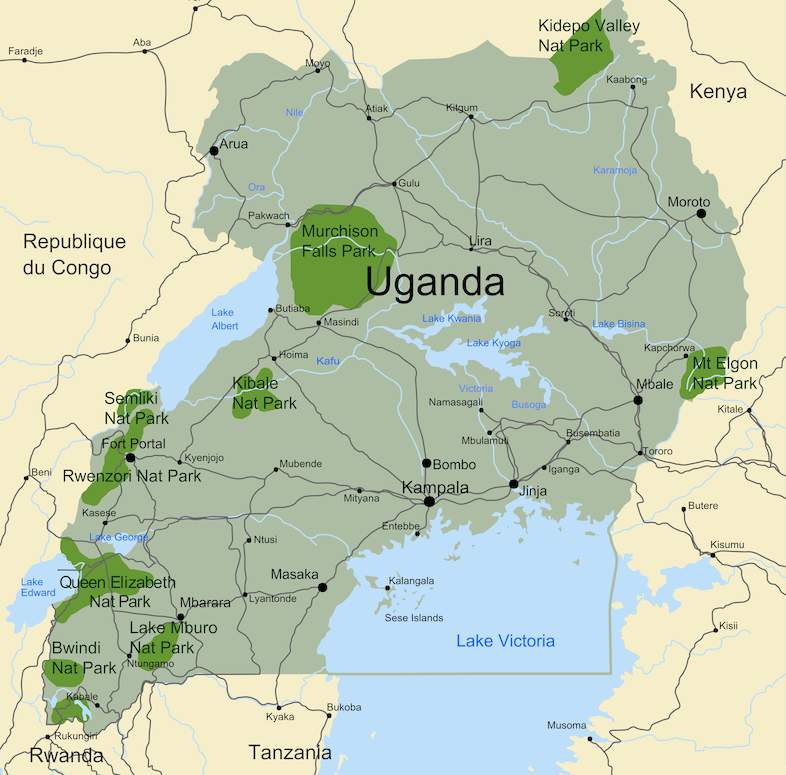
Uganda is located on the edge of the Equator, positioned in south-central Africa, making it one of the most strategically placed countries in East Africa.
This unique geographical location of Uganda offers diverse ecosystems.
From tropical forests to snow-capped mountains, and makes Uganda a premier destination for wildlife tourism, gorilla trekking, and adventure safaris.
Uganda is bordered by the Democratic Republic of the Congo (DRC) in the west, Kenya in the east, Rwanda in the southwest, South Sudan in the north, and Tanzania in the south.
This central positioning allows travelers to easily access multiple countries while exploring East Africa’s greatest wildlife and cultural experiences.
Despite being landlocked with no direct access to the sea, Uganda’s average elevation of 1,100 meters (3,609 ft.) above sea level creates comfortable temperatures year-round.
While much of its border follows lakeshore lines, the country is predominantly plateau with rolling hills and low mountains.
Grassland and tropical forest dominate the central region, with volcanic foothills in the east, creating a landscape that supports incredible biodiversity and world-renowned wildlife populations.
Uganda’s Mountainous Borders & Highest Peaks
The Rwenzori Mountains (Mountains of the Moon) form much of the southwestern border between Uganda and the DRC, creating one of Africa’s most dramatic mountain ranges.
The highest peaks there are snow-capped, reaching over 5,000 meters, making them the tallest in East Africa.
These glaciers and ice fields are rare in Africa’s equatorial region and attract mountaineers worldwide seeking to conquer Africa’s third-highest peak, Margherita Peak, at 5,109 meters.
In eastern Uganda, the border with Kenya is marked by volcanic hills, including the famous Mount Elgon, which stands at 4,321 meters and is the world’s largest isolated volcanic massif.
The rolling hills of Kigezi sub-region adorned with terraces create a spectacular landscape as one traverses the gorilla homeland.
This area’s scenery and cool conditions have earned it the reputation as the “Switzerland of Africa”.
With deep narrow valleys, inter-twinning hills, and terraced farming that adds an extra touch to the landscape.
Uganda’s Water Resources: Lakes, Rivers & Swamps
Uganda is replete with water and contains many large lakes, making it one of Africa’s most water-rich countries.
In fact, almost one-fifth of its total area is open water or swampland, meaning that Uganda holds the second biggest freshwater body in the world.
This abundance of water resources supports incredible biodiversity, including over 1,000 bird species, numerous fish populations, and vast aquatic ecosystems.
East Africa’s Great Lakes Within Uganda
The famous four of East Africa’s Great Lakes—Lake Victoria, Lake Kyoga, Lake Albert, and Lake Edward—lie within Uganda or on its borders, creating a unique network of freshwater ecosystems:
-
Lake Victoria is the second largest inland freshwater lake in the world (after Lake Superior) and feeds the upper waters of the Nile River, referred to in this region as the Victoria Nile. This massive lake spans 68,800 square kilometers and supports over 30 million people across Uganda, Kenya, and Tanzania. Experience an adventure on Lake Victoria with boat cruises, fishing trips, and island visits.
-
Lake Kyoga and the surrounding basin dominate central Uganda, creating a vast network of swamps, islands, and shallow waters that support millions of aquatic birds and fish species.
-
Additional lakes of note include Lake Kwania, Lake Bugondo, Lake George, and Lake Opeta, each offering unique ecosystems and tourism opportunities.
-
Lake Bunyonyi, located in the scenic Kigezi region, is popular for its fascinating scenery and enormous bird life, to which the lake is named. This lake is a sanctuary for many bird species that inhabit its scattered islands and serves as a perfect getaway for visitors seeking to refresh and recuperate after a tiresome safari or strenuous gorilla trek. It’s also ideal for honeymooners and bird enthusiasts.
1. The Nile River: Uganda’s Most Famous Waterway
The Nile River, the longest river in the world, leaves Lake Victoria near Jinja as the Victoria Nile.
It flows for approximately 300 miles (500 km) further, through Lake Kyoga, until it reaches Lake Albert.
After leaving Lake Albert, the river is known as the Albert Nile and then flows into Sudan, where it is called the Bahr al Jabal or Mountain Nile.
2. Murchison Falls: The Hardest Waterfall in the World
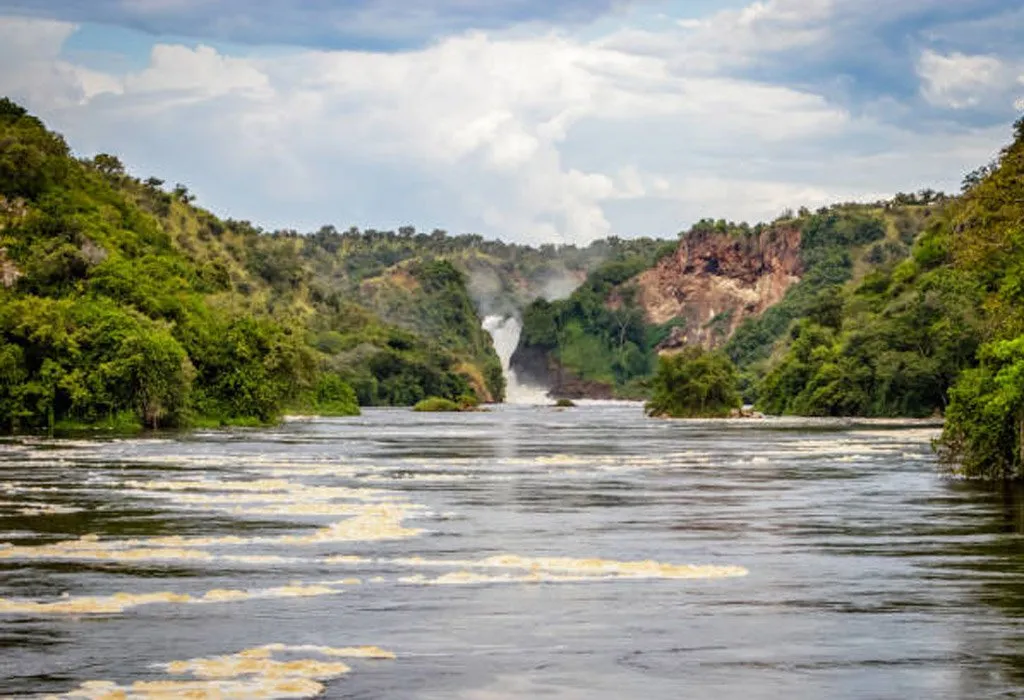
The famous Murchison Falls (also spelled Morchison Falls) lies along this meandering river and has been regarded as the hardest waterfall in the world because of its force and depth.
At the top of the falls, the Nile crushes through an 8-meter wide gap before plunging down 42 meters deep into the gorge, producing a thunderous roar and a rainbow that is very fascinating to see.
This natural wonder attracts thousands of visitors annually for boat cruises, hiking trails, and wildlife viewing in Murchison Falls National Park.
3. Unique Geographical Features: Hot Springs, Caves & Waterfalls
The geographical location of tectonic forces in this area has created wondrous features like the Sempaya Hot Springs, which are amazing because of their varying temperatures.
You will be left in awe when you see local people bathing in the upper stream where water is warm.
The Sempaya hot springs are believed to cure all kinds of skin diseases, while on the hotter spots, people are always busy boiling eggs and making porridge in an environment where you can never see any source of fire.
Caves and waterfalls that lie along some of its rivers flowing down slopes beautify this landscape, creating dramatic scenery for tourists and wildlife alike.
Plenty of wildlife, like buffalos, elephants, waterbucks, and a number of primates, inhabit the slopes of this mountain, which led to the formation of Mt Elgon National Park to protect this wildlife.
The park offers cave exploration, waterfall hiking, and pristine forest trails for eco-tourism.
Uganda’s Climate & Ecosystem Diversity
The geographical location of Uganda on the Equator creates a unique climate pattern with two distinct dry seasons
(June–September and December–February) and two wet seasons (March–May and October–November).
This climate variation supports diverse ecosystems:
-
Tropical rainforests in Bwindi and Ngamba for gorilla and chimpanzee trekking
-
Acacia grasslands in Murchison Falls and Queen Elizabeth National Parks for wildlife viewing
-
Savanna ecosystems in Kidepo and Semuliki for rare species like cheetahs and Rothschild’s giraffes
-
Alpine mountains in Ruwenzori and Mt. Elgon for mountaineering and unique flora
-
Freshwater lakes and swamps throughout central Uganda for birdwatching and aquatic wildlife
Why Uganda’s Geography Matters for Tourism
The unique geographical location of Uganda makes it a premier destination for adventure tourism, offering:
-
Gorilla trekking in Bwindi and Mgahinga National Parks
-
Chimpanzee tracking in Kibale and Ngamba Islands
-
Wildlife safaris in Murchison Falls, Queen Elizabeth, and Kidepo National Parks
-
Mountaineering in Ruwenzori and Mt. Elgon
-
Boat cruises on Lake Victoria, Nile River, and Lake Kyoga
-
Birdwatching with over 1,000 species including rare shoebills and papyrus gonooks
-
Cultural experiences with diverse ethnic groups across regions
Best Time to Visit Uganda Based on Geography
The best time to visit Uganda depends on your destination and activities:
-
Dry seasons (June–September, December–February): Ideal for gorilla trekking, wildlife viewing, and mountaineering with firm trails
-
Wet seasons (March–May, October–November): Perfect for birdwatching, lush landscapes, and lower accommodation prices
Conclusion: Uganda’s Geographical Advantage
Uganda’s central location in south-central Africa, equatorial positioning, diverse ecosystems.
And abundance of water resources make it one of Africa’s most unique and accessible countries for tourism.
Whether you’re seeking gorilla trekking in Bwindi, wildlife safaris in Murchison Falls, mountaineering in Ruwenzori, or boat cruises on Lake Victoria.
Uganda’s geographical location offers unparalleled natural beauty and adventure opportunities.
Book your Uganda safari with Adventure Uganda Safaris to experience the country’s incredible geography.
From snow-capped mountains to tropical forests, massive lakes to thundering waterfalls, and diverse wildlife to rich cultural traditions.
Contact us today for a customized itinerary that showcases Uganda‘s geographical wonders.