Comparing Mountain Gorillas And Monkeys
Comparing Mountain Gorillas And Monkeys
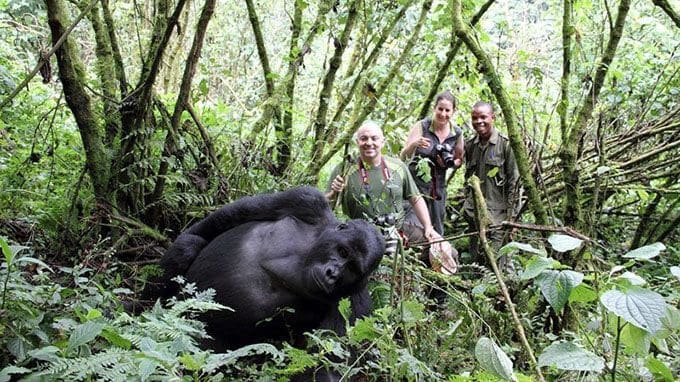
The Virunga Conservation Area (comprising Uganda’s Mgahinga Gorilla National Park, Rwanda’s Volcanoes National Park, and the Virunga National Park) are one of the most biodiverse regions in the World. It shelters the endangered mountain gorillas, and another rare and beautiful primate specie- the golden monkey. While mountain gorilla studies began way back, with the significant period being in the 1960s when Dian Fossey established her Research Center along the slopes of Bisoke and Karisimbi Volcanoes in Volcanoes National Park, the golden monkeys were ignored until recently when different scientists began studies of these beautiful primates.
Golden monkeys are endemic to the Virunga Conservation Area and are habituated, studied, monitored, and tracked by primate lovers. There are about 1063 mountain gorillas and over 4620 golden monkeys in the whole World and thanks to continued studies and census of these creatures, there is enough information that can help us compare the mountain gorillas and golden monkeys. To compare these two prominent primate species in the Virunga Conservation Area, we shall have to look at how similar or different they are in terms of diet, reproduction, social life (group composition), natural habitats, process/difficulty of tracking them, to mention but a few.
Diet
Both mountain gorillas and golden monkeys are herbivores that consume numerous varieties of plant species The latter mainly consume bamboo branchlets, young bamboo leaves, and bamboo shoots, which they supplement with fruits, shrubs, and flowers. It is for this reason that these primates will mainly be found ranging around bamboo zones of the Virunga Volcano slopes. Mountain gorillas normally stick to leaves, roots, bamboo shoots, stems, vines, and buds of about 142 plant species.
Reproduction
It will interest you to know that golden monkeys’ reproduction is in some way linked to food availability. They tend to reproduce before or during the essential food availability and consumption periods. This is different from the mountain gorillas that breed all year round. Therefore, we can conclude that golden monkeys are seasonal breeders with well-defined mating and birthing seasons.

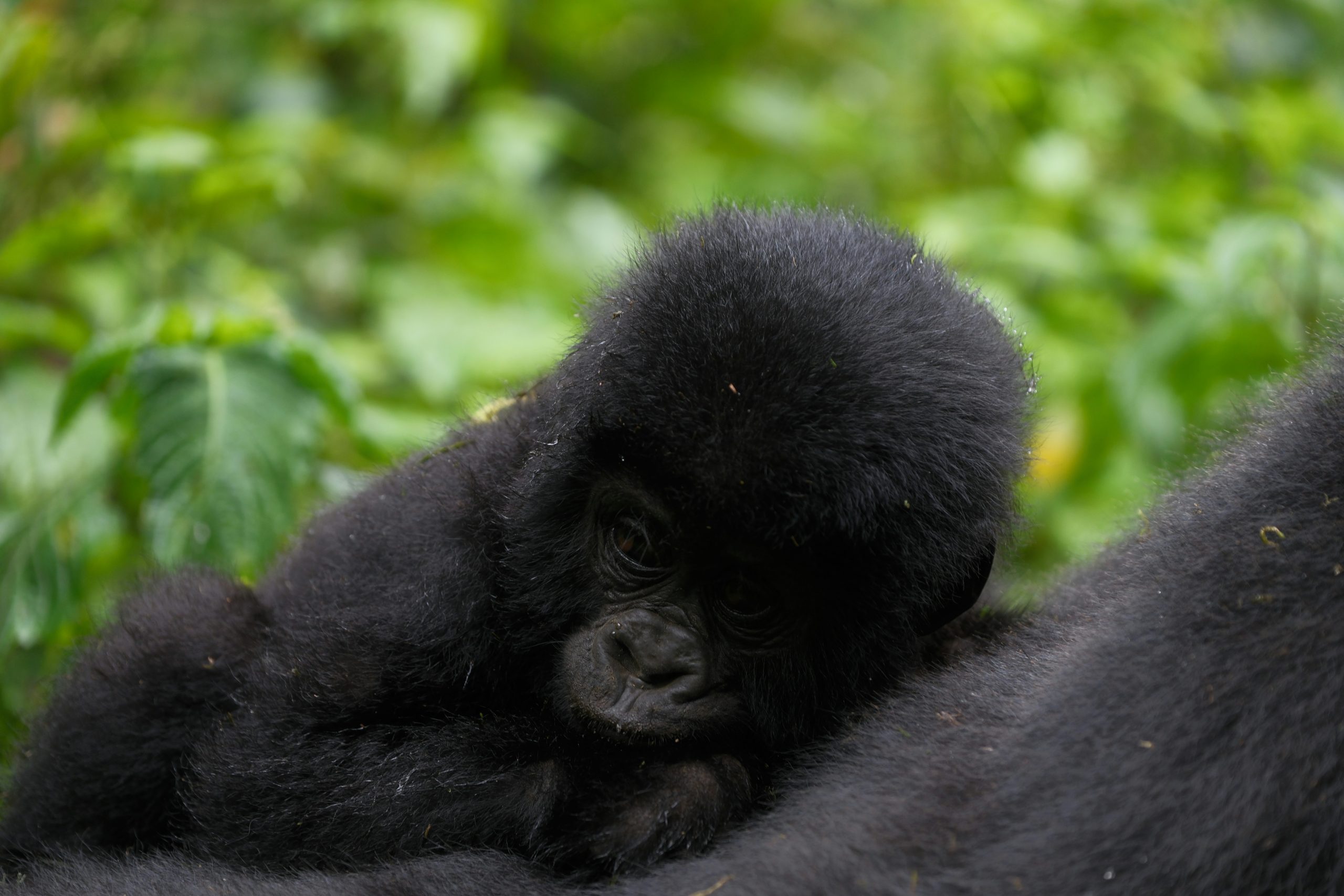
When it comes to carrying and nursing their young ones, mountain gorillas are so human-like. They lift their babies on their backs as soon as they are strong enough to be carried on the backs. This is different from the golden monkeys that always carry young ones ventrally (or close to their chests).
Size
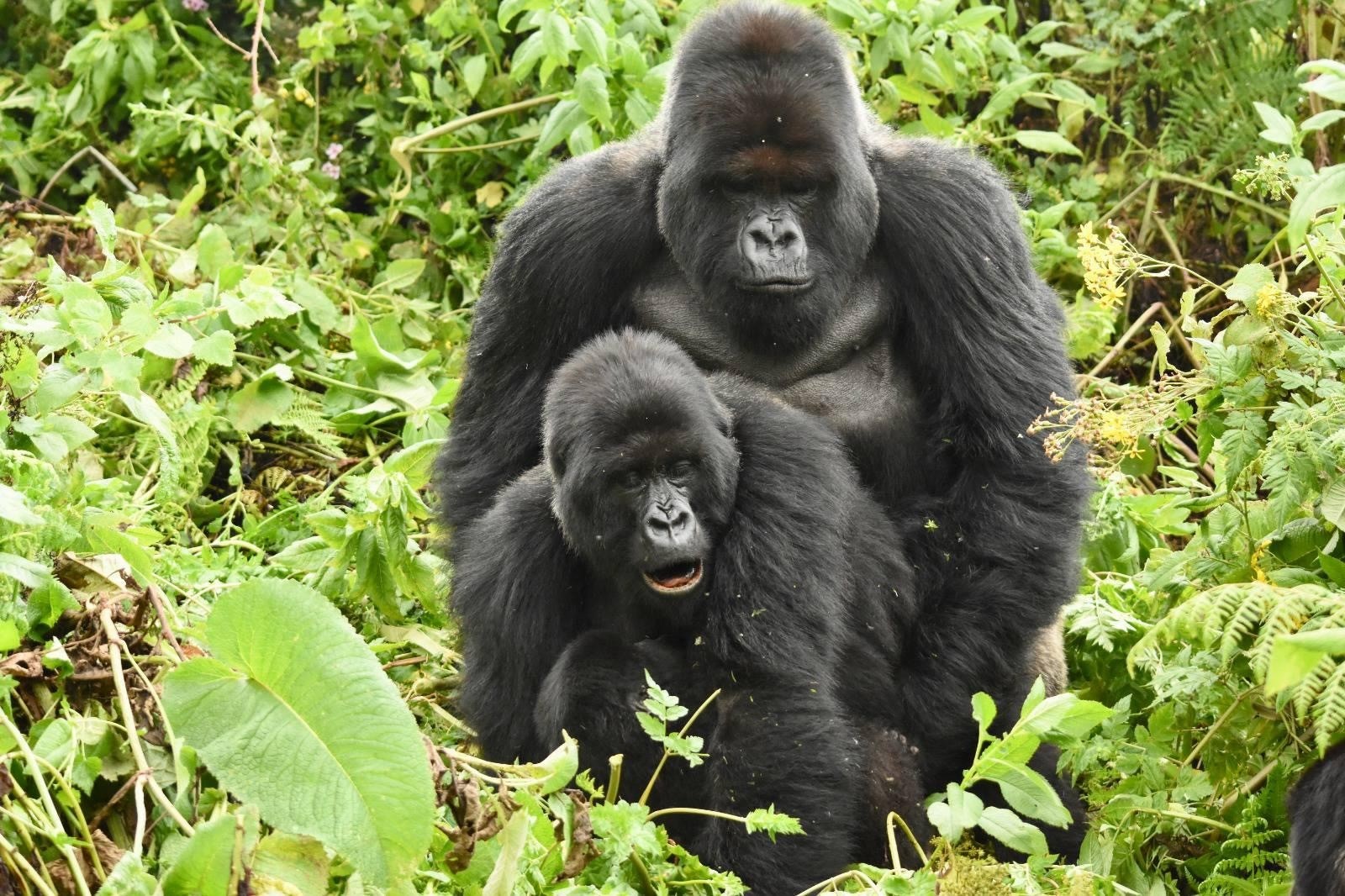
There’s no brainer that mountain gorillas are bulkier and stronger than golden monkeys. On average, a mature male mountain gorilla can weigh between 300 and 480 pounds, with a standing height of 1.2 to 1.8 meters tall. The golden monkeys weigh between 10 and 15 pounds. When it comes to physical features, golden monkeys have tails, yet mountain gorillas (and other Great Apes) don’t.
Nesting
Given their sizes, golden monkeys generally build nests on tree branches, and sometimes branches of bamboo. Mountain gorillas are heavy and for this reason, their nests are made on the ground.
Social composition (groups/troops)
Both mountain gorillas and golden monkeys live in groups that vary in size. However, you will notice or learn that the latter live in much larger groups/troops of up to 150 individuals. Mountain gorilla groups are slightly smaller, with five to 30 individuals only. Once female mountain gorillas reach maturity, they leave their natal groups to join other groups to reproduce and raise their babies. This is not the case with golden monkeys that usually remain in their groups, but form their hierarchies as the males go around searching for the best opportunities.
How much do you have to pay to see them?
A permit is the most important requirement for seeing mountain gorillas and golden monkeys (although physical fitness and age are also considered). A Golden monkey tracking permit in Rwanda costs only $100 per person per trek while you will need to part with a whopping $1500 per person to see the mountain gorillas in their natural habitats. For Uganda, golden monkey permits cost only $60 per person for foreign non-residents, $50 per person for foreign residents, and Shs. 40,000 for East African Citizens, while gorilla permits cost $700 per person for foreign non-residents, $600 per person for foreign residents, and Shs. 250,000 for the East African residents.
Best time to see mountain gorillas and golden monkeys
Whether you plan on visiting the mountain gorillas, golden monkeys, or both, it would interest you to know that the months of June to September and December to February are the driest in these primates’ natural habitats hence making forest trails drier, less muddy, and slippery. The months of March, April, May, October, and November are always the wettest hence always avoided because trails become muddy and slippery. However, the impacts of climate change haven’t spared the mountain gorilla and golden monkey habitats hence what you expect to be a dry month turns out to be the opposite, and vice versa.