
Climate of Uganda: Weather, Seasons, Best Time to Visit Uganda and Safari Planning Guide
Uganda’s climate is one of the country’s biggest travel advantages because it stays pleasantly warm for most of the year, making it a reliable destination for safaris, gorilla trekking, chimpanzee tracking, hiking, and cultural tours.
The country has a tropical climate shaped by its forests, lakes, altitude, mountains, and equatorial location, which means weather patterns vary from one region to another.
But visitors can generally expect comfortable conditions, green landscapes, and excellent wildlife viewing opportunities throughout the year.
Uganda’s Climate
Uganda lies close to the equator, but its climate is moderated by altitude, water bodies, and natural vegetation.
This is why the country does not experience extreme heat like many equatorial destinations and instead enjoys a mild tropical climate with average temperatures that commonly range between 16°C and 28°C.
Areas with high elevation such as mountain regions are cooler, while lower plains and lakeside areas are warmer.
Uganda’s many forests, including Mabira Forest, Budongo Forest, Maramagambo Forest, and Mpanga Forest, also influence humidity and rainfall patterns, helping maintain a lush, green environment for much of the year.
The climate is one of the reasons Uganda is so attractive for travelers interested in nature-based tourism.
Rainfall supports dense forests, fertile landscapes, and abundant wildlife habitats, while the warm temperatures make outdoor activities comfortable.
Whether someone is planning a gorilla safari in Bwindi, a wildlife trip to Queen Elizabeth National Park, a birding tour, or a hiking expedition in the Rwenzori Mountains, understanding the climate of Uganda helps them choose the best travel period.
Uganda Weather by Region
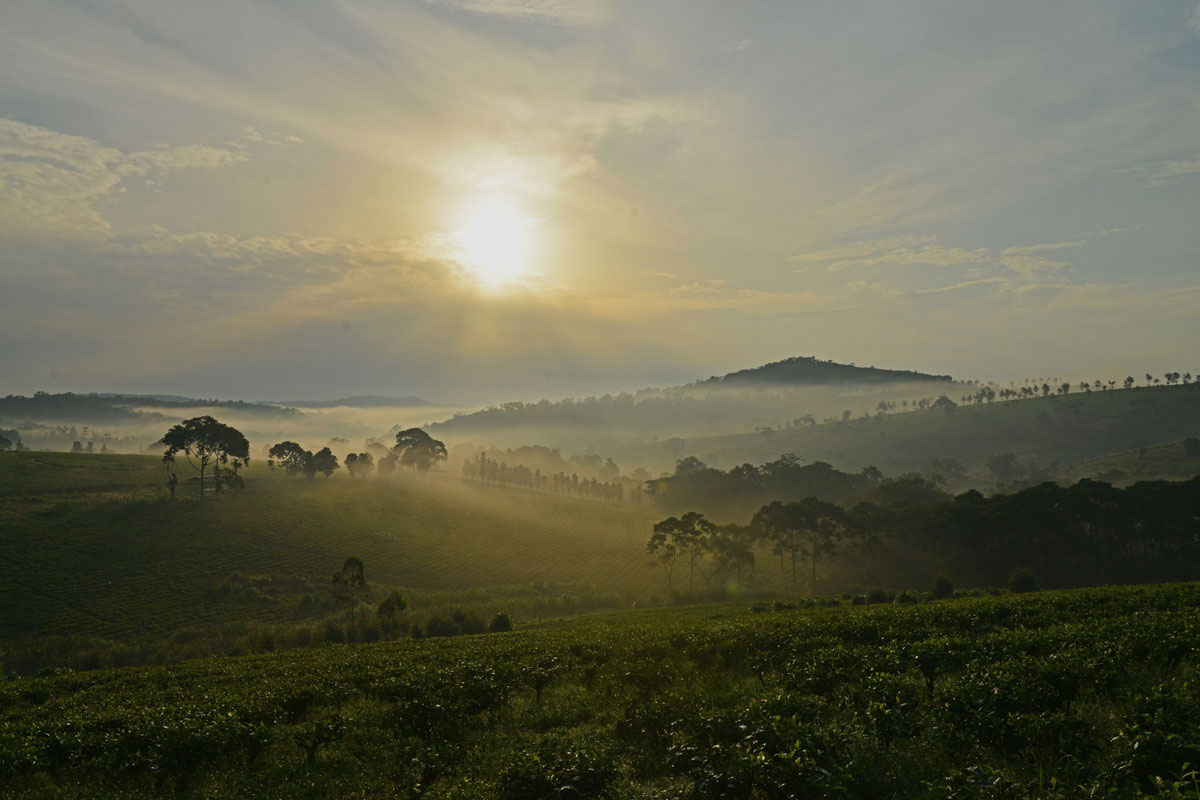
Uganda’s weather is not uniform across the country. Regional differences are shaped by altitude, proximity to Lake Victoria, forest cover, and terrain.
The western region, especially areas near the mountains and forests, tends to receive more rainfall and has cooler temperatures. The eastern and northern plains can be warmer and drier, especially in the more arid northeastern areas.
The highest temperatures are often found in the plains east of Lake Albert, where the land is lower and hotter during the day.
In contrast, the lowest temperatures are experienced on the glacial peaks of the Rwenzori Mountains, where conditions can become extremely cold and misty.
The presence of high mountains, rolling hills, and deep forest zones creates microclimates that can differ significantly within a short distance. This is why travelers should not rely on one national forecast alone when planning a safari in Uganda.
Lake Victoria and the surrounding central region can receive rainfall at almost any time of year. These areas often have a humid and wetter climate compared with the drier parts of the country.
In practical terms, this means that even during the dry season, visitors should always pack a light rain jacket because short showers can still occur.
Rainfall Patterns in Uganda
Uganda generally experiences two rainy seasons and two dry seasons, although the exact timing can vary slightly by region.
The country receives annual rainfall ranging from about 1,000 mm to 2,000 mm in many areas, with heavier rainfall in the central, western, and lake-adjacent regions.
The wettest periods are usually March to May and October to November, when the landscape becomes very green and forest trails can be slippery.
During these rainy months, showers are often intense but short-lived. It may rain heavily for a brief period, accompanied by thunder, and then the sun may come out again soon after. This pattern is common in tropical destinations and does not usually mean the entire day is ruined.
However, for safari travelers, the rain can affect road access in remote areas, especially on upcountry routes where roads may become muddy or difficult to navigate.
The dry periods occur mainly around June to September and December to February.
These are the most popular months for travel because the roads are easier to use, the skies are clearer, and wildlife tends to gather around water points, making game viewing more productive.
For travelers who want a more comfortable safari experience, the dry months are usually the preferred choice.
Dry Season in Uganda
The dry season in Uganda is widely considered the best time to visit for most safari activities. The most favourable dry windows are usually June, July, August, September, December, January, and February.
During these months, rainfall is lower, sunshine is more abundant, and hiking conditions are much better. This makes the season ideal for gorilla trekking, chimpanzee tracking, mountain hiking, and game drives.
For wildlife viewing, the dry season is especially valuable because animals move closer to rivers, lakes, and other water sources.
This increases the chances of seeing elephants, lions, buffaloes, antelopes, hippos, and a wide range of birds.
In places like Queen Elizabeth National Park, Murchison Falls National Park, and Kidepo Valley National Park, dry weather improves road access and viewing conditions.
The dry season is also the best time for trekking in Uganda. Forest trails are less muddy, visibility is better, and walking is easier.
For gorilla trekking in Bwindi Impenetrable Forest and Mgahinga Gorilla National Park, many travelers prefer the dry months because the hike is more manageable.
Because demand is high during these months, visitors should book permits, lodges, and tours well in advance.
Wet Season in Uganda
The wet season in Uganda usually falls in March, April, May, October, and November. These months are often viewed as the low season for safaris because of heavier rainfall and more difficult travel conditions.
Roads in rural and remote areas may become slippery or even partially inaccessible, and forest trails can be muddy and challenging to walk on.
However, the wet season also has advantages. The scenery becomes especially green and beautiful, making it an excellent time for photography and bird watching.
Many bird species are more active during this time, and some lodges may offer lower rates because fewer tourists are traveling. For budget-conscious visitors, the rainy season can provide better value while still offering rewarding safari experiences.
Rain does not fall continuously all day in most parts of Uganda. Instead, showers often come in bursts, which means travelers can still enjoy activities between rainfall periods.
Still, people planning gorilla trekking, hiking, or long road transfers should prepare for delays and muddy conditions. Waterproof boots, rain jackets, and flexible itineraries are especially useful during this period.

Best Time to Visit Uganda
The best time to visit Uganda depends on the type of experience a traveler wants.
For most visitors, especially those interested in wildlife viewing, gorilla trekking, chimpanzee tracking, and hiking, the best months are June to September and December to February.
These periods provide the best combination of dry trails, comfortable temperatures, and good visibility.
If the goal is wildlife photography, the end of the dry season is often the most productive time because animals gather around water sources and are easier to find.
And if the focus is gorilla trekking, dry months offer safer and more comfortable forest conditions, although treks can still happen year-round.
Also, if the traveler prefers fewer crowds and lower prices, the rainy months can be a smart option, especially for flexible tourists who do not mind occasional rain.
Uganda is a destination that works well almost year-round, but timing matters if specific activities are a priority.
Visitors planning a safari should think about road conditions, permit availability, lodge rates, and the level of physical effort they are comfortable with. This is especially important for long treks, mountain hikes, and multi-day road safaris.
Climate and Gorilla Trekking
Gorilla trekking is one of Uganda’s top travel experiences, and weather plays a big role in the quality of the trek.
The best trekking months are generally January to February and June to September, when forest trails are drier and easier to navigate.
In wet months, the trek is still possible, but the hike may take longer and require more effort because of slippery ground and dense vegetation.
Bwindi Impenetrable Forest and Mgahinga Gorilla National Park are both located in areas that can receive significant rainfall, especially in the western part of the country.
This is why even dry-season trekkers should come prepared with waterproof clothing, trekking boots, and walking sticks. The forest environment can change quickly, so packing for both sun and rain is a smart strategy.
Because gorilla trekking permits are limited and highly demanded in dry season, travelers should reserve early. This is especially important for peak months when tour operators and lodges get fully booked.
Visitors who plan in advance can secure better accommodation options and more convenient trekking dates.
Climate and Safari Activities
Uganda’s climate affects different safari activities in different ways. For game drives, the dry season is better because roads are easier and animals are more visible.
And for birding, the wet season can be excellent because many species are breeding and more active. For hiking and mountain climbing, the dry months are safer and less physically demanding.
Here are the best weather conditions by activity:
-
Gorilla trekking: June to September and December to February.
-
Chimpanzee tracking: Dry months are easier, but year-round travel is possible.
-
Wildlife safaris: End of dry season for the best animal concentration.
-
Bird watching: Wet season offers strong birding opportunities.
-
Hiking and mountain climbing: Dry season is the safest and most comfortable.
-
Photography tours: Wet season gives lush landscapes, while dry season gives clearer skies.
This makes Uganda a flexible destination for nature lovers, but trip planning should always reflect the target activity.
Travel Tips for Uganda Weather
Travelers should pack according to the season and region they plan to visit. Even during the dry season, light rain can occur, so a rain jacket is useful year-round.
In cooler highland areas such as the Rwenzori Mountains, warm layers are essential because temperatures can drop significantly, especially at night and on higher slopes.
Useful travel items include:
-
Waterproof hiking boots.
-
A lightweight rain jacket.
-
Long-sleeved shirts and trousers for forest protection.
-
Sunscreen and a hat for hot daytime conditions.
-
A warm sweater for mountain and early morning travel.
-
Insect repellent, especially for humid and forested areas.
It is also wise to leave room in the itinerary for weather-related delays, especially during the rainy seasons. Road conditions can change quickly in remote areas, and flexible planning helps reduce stress.
Why Uganda’s Climate Matters for Safari Planning
Understanding the climate of Uganda helps travelers make better safari decisions. Weather influences permit availability, road access, trekking difficulty, wildlife visibility, and accommodation pricing.
For companies like Adventure Uganda Safaris, this is important when designing itineraries that balance comfort, value, and adventure.
A well-planned safari should match the weather to the activity. Dry season travel works best for first-time visitors, gorilla trekking, and road safaris.
Wet season travel is better for budget travelers, birders, and visitors who prefer green scenery and quieter parks.
Because Uganda’s climate supports tourism throughout the year, there is no truly bad time to visit, only different experiences depending on the season.