
What is Special About a Mountain Gorilla’s Nose?: Unique Secrets Revealed 2026
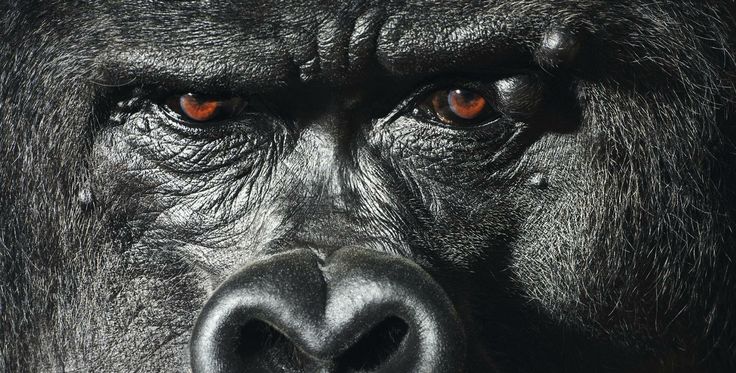
Ever wondered why mountain gorillas have such distinctive noses?
These majestic creatures, dwelling in the misty highlands of Bwindi Impenetrable Forest and the Virunga Massif, boast unique noseprints that serve as nature’s own fingerprint system—a breakthrough pioneered by legendary researcher Dian Fossey for identifying individual gorillas amid their endangered population of around 1,063 as of the 2019 census.
Far more than a facial feature, the special about a mountain gorilla’s nose lies in its role for population tracking, anti-poaching efforts, and evolutionary adaptations to high-altitude life at 2,200-4,300 meters.
This guide uncovers the anatomy, magic of noseprints, conservation impact, and gorilla trekking appeal in Uganda, Rwanda, and DRC, blending science with adventure to captivate wildlife lovers searching for mountain gorilla nose facts.
Whether you’re planning a gorilla safari or curious about Bwindi gorilla identification, read on for expert insights—then book your trek with Adventure Uganda Safaris to witness these wonders up close!
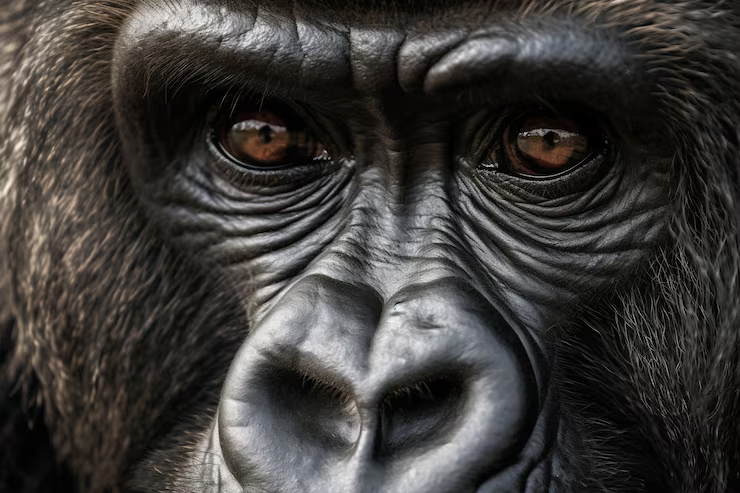
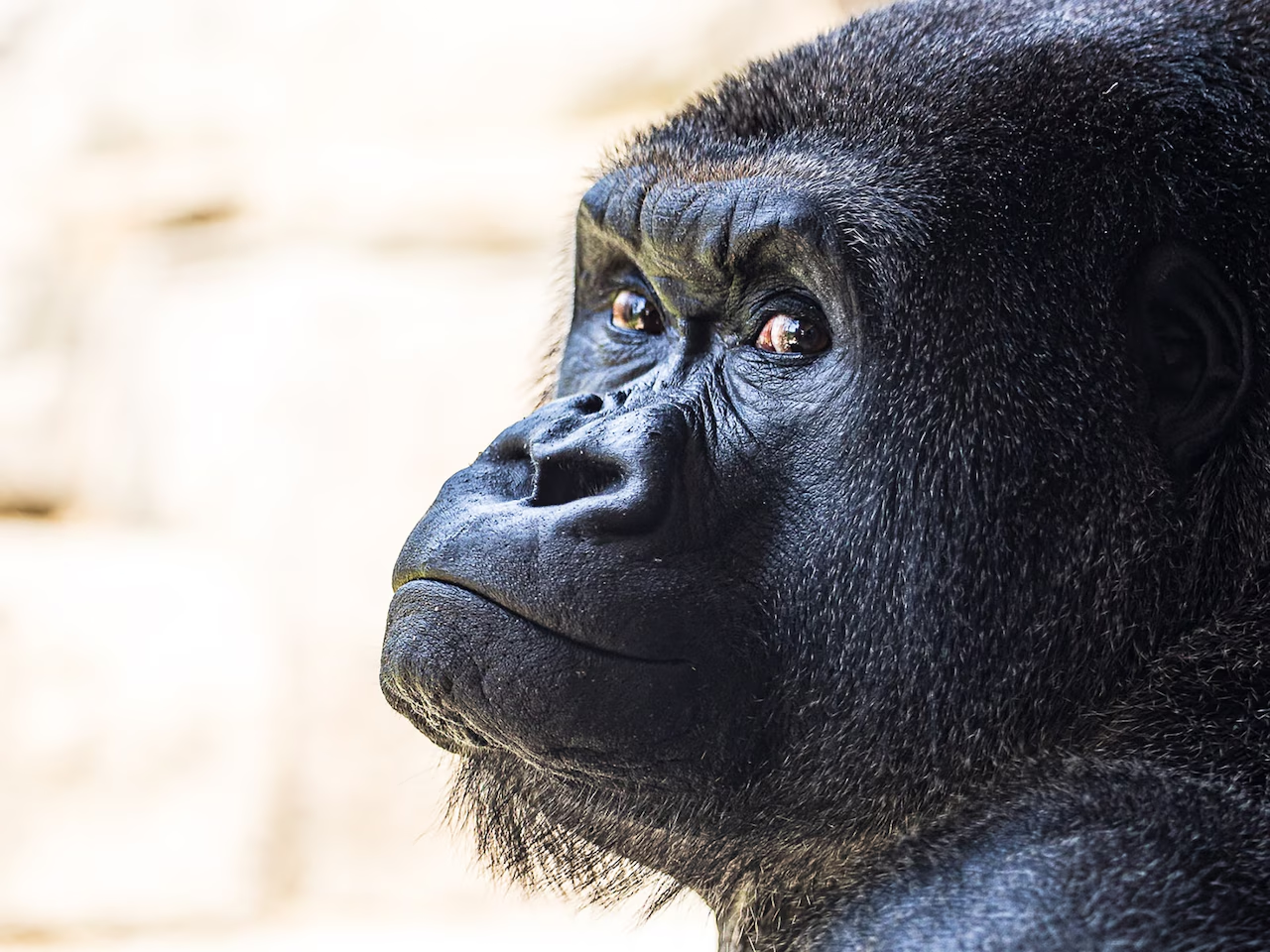
This photo shows a close-up of a gorilla’s wrinkled nose, highlighting its individuality.
Anatomy Basics
The mountain gorilla nose features a broad, flat structure with large oval nostrils, perfectly engineered for efficient breathing in the humid, oxygen-thin forests of their montane habitats.
Unlike protruding human noses, this design maximizes airflow, pulling in cool, misty air essential for their herbivorous diet of tough bamboo, nettles, and thistles—up to 26kg daily.
The dark, wrinkled skin encircling the nostrils forms the famed noseprint, a unique pattern of ridges and creases stable from infancy, supported by flexible cartilage that withstands rugged foraging and social displays.
These adaptations suit high-altitude oxygen needs (2200-4300m), where larger nostrils reduce respiratory strain compared to lowland cousins.
Key traits include enhanced mucus production for pathogen filtration in damp environments and robust bridging for scent detection during family group interactions of 8-25 members.
Compare via this table for clarity on mountain gorilla nose vs. others:
This unique gorilla feature not only aids survival but also aids gorilla noseprint identification from Virunga trekking.
The Magic of Noseprints
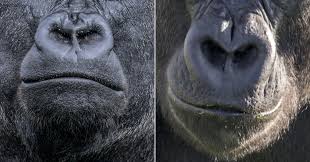
Each mountain gorilla’s nose bears ridges and creases akin to human fingerprints—stable from birth and unchanging through life, making them ideal for individual ID in censuses tracking the fragile 1,063 population.
Dian Fossey pioneered noseprint photography in the 1960s at Karisoke, cataloguing patterns to monitor groups amid poaching threats; today, researchers snap thousands annually for databases, confirming 1-6% growth rates. Common hourglass shapes belie wildly varying details—like forked ridges or deep furrows—unique to each silverback, female, or infant.
In practice, Rwanda’s Sabyinyo Silverback Lodge group uses noseprints for anti-poaching: rangers match photos to known individuals, spotting intruders via unfamiliar prints.
Over 18 habituated groups in Virungas rely on this, enabling precise population censuses every few years. Lowland gorillas share similar traits, but mountain variants show denser wrinkling from highland stress.
Bwindi and Volcanoes National Park offer prime viewing, boosting gorilla trekking Uganda searches—photograph ethically from 7 meters to aid conservation databases yourself.
This noseprint magic fuels special feelings about a mountain gorilla’s nose, converting readers to adventurers.
Evolutionary Adaptations
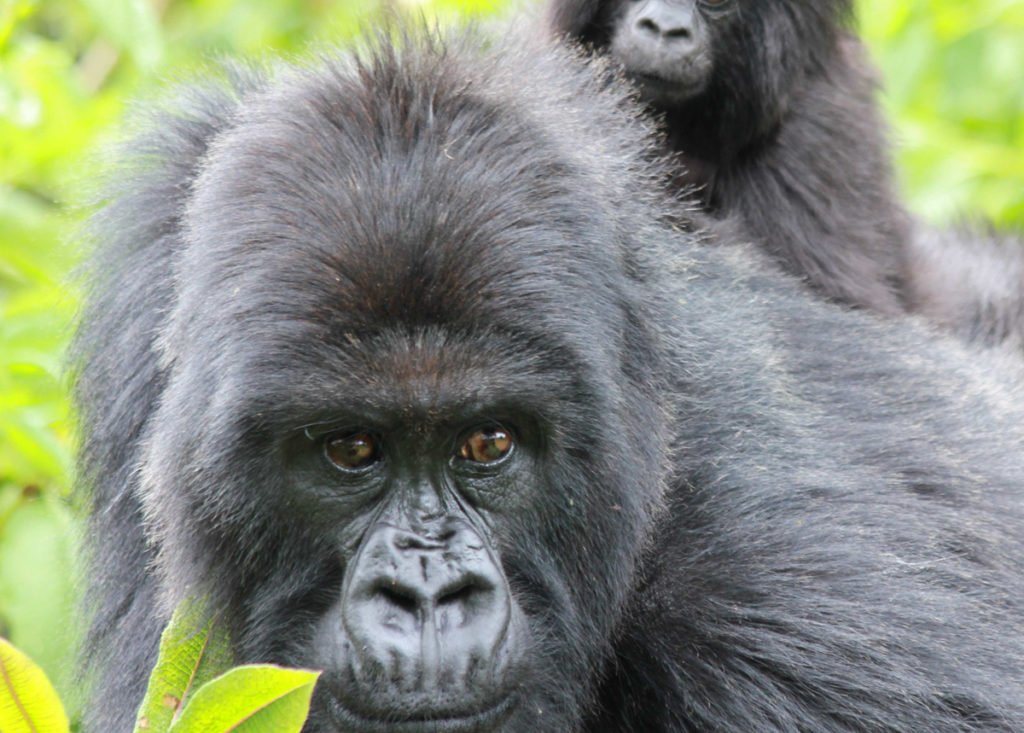
Evolutionary adaptations make the mountain gorilla nose a survival masterpiece for elevation extremes and misty climates.
Large nostrils funnel cool, oxygen-rich air at 4,000m+ peaks, countering thin atmosphere where lowland gorillas falter—evolving over millennia alongside Virunga volcanoes.
Robust structure withstands foraging tough vegetation, with reinforced cartilage preventing injury during chest-beating displays or bamboo-crunching ( 50% diet).
Sensory prowess shines in social bonding: enhanced olfactory nerves detect pheromones up to 50 meters, signaling dominance or fertility in troops; mothers recognise infants by scent amid dense foliage.
Compared to eastern lowland gorillas, mountain noses feature darker pigmentation for UV protection and thicker skin against abrasions.
These traits underscore genetic uniqueness ( 98% human similarity) for Bwindi’s 2,000+ plant species. For trekkers, they reveal behaviors like scent-marking—mountain gorilla adaptations—enhancing dwell time and safari bookings.
Role in Conservation
Noseprints revolutionise mountain gorilla conservation, enabling precise population tracking across Uganda, Rwanda, and DRC’s 604 sq km Virunga and 327 sq km Bwindi ranges.
Biennial censuses photograph every individual, tallying 480 Virunga + 583 Bwindi for 1,063 total, guiding ranger deployments that cut poaching 50%+. IGCP and AWF databases flag threats like scabies outbreaks, prioritizing interventions.
At Adventure Uganda Safaris, as a Uganda-based safari operator, we’ve seen trekkers contribute via $800 permits funding 80% park budgets—revenue sharing (20% to locals) reduces conflicts, protecting 26 habituated groups.
Noseprints aid anti-snaring ( 200+ rescues yearly) and habitat restoration, tying tourism to survival. This conservation role for gorilla noseprint tracking
Gorilla Trekking Connection
Gorilla trekking spotlights unique noses up close, with $800 Uganda permits ( $1,500 Rwanda) directly funding rangers via Bwindi and Volcanoes NP—best for noseprint viewing in dry June-Sept. Trek for 2-7 hours, observe for one hour from 7m, and ID stars via guides.
Our low-impact tours cap at 8/group, perfect for family safaris. Book your trek to meet these unique noses with Rivo Safaris—visit Adevnture Uganda Safaris /book for custom itineraries boosting conservation!
Myths vs. Facts
Myths cloud mountain gorilla nose truths—here’s clarity:
-
Myth: Noses are mainly for smell. Fact: Primarily ID tool; smell secondary.
-
Myth: Patterns change with age. Fact: Lifelong stable like fingerprints.
-
Myth: All gorillas are identical. Fact: 1,063 unique prints.
-
Myth: Useless for conservation. Fact: Enables censuses, cuts poaching.
-
Myth: Lowland is the same. Fact: Mountain noses denser wrinkles.
Frequently Asked Questions: Mountain Gorilla Nose
1. What is special about a mountain gorilla’s nose?
The mountain gorilla nose features unique noseprints—wrinkles and ridges around nostrils acting like fingerprints for lifelong individual identification, pioneered by Dian Fossey for tracking the 1,063 population.
2. Do mountain gorillas have unique nose prints?
Yes, every mountain gorilla has a distinct noseprint pattern (e.g., hourglass, forked ridges) that remains constant from infancy, used non-invasively by rangers for censuses in Bwindi and Virunga.
3. How do researchers use gorilla noseprints?
Researchers photograph noseprints for databases, monitoring family groups, health (e.g., scabies), and 1-6% growth rates without tags—key for anti-poaching in Uganda/Rwanda/DRC.
4. Why is the mountain gorilla nose flat and broad?
Adapted for high-altitude (2,200-4,300m) respiration, the flat, broad nostrils enable efficient oxygen intake in misty forests, supporting 26kg daily foraging unlike protruding human noses.
5. Can you see gorilla noseprints on a trek?
Absolutely—gorilla trekking in Bwindi or Volcanoes NP lets you spot unique prints up close (7m, 1hr); book ethical tours to contribute via $800 permits funding conservation.
6. Do lowland gorillas have noseprints like mountain gorillas?
Lowland gorillas have similar but fainter prints; mountain gorillas show the clearest, densest wrinkles due to highland evolution, clearest for monitoring.
7. How do noseprints aid mountain gorilla conservation?
Noseprints enable precise population tracking (e.g., 480 Virunga, 583 Bwindi), guiding patrols that cut poaching 50%+ and support revenue-sharing from trekking.
Conclusion
The noseprint uniqueness defines what’s special about a mountain gorilla’s nose—a conservation game-changer securing 1,063+ populations.
Urge ethical trekking to sustain this. Contact Adventure Uganda Safaris for custom gorilla safaris—boost your adventure at Adventure Uganda Safaris!