A Blackback Vs Silverback Gorilla
Blackback Vs Silverback Gorilla: Key Differences Guide 2026
Curious about blackback vs silverback gorilla differences? These terms describe stages in male mountain gorilla life, with blackbacks as young adults (8-12 years) sporting all-black fur and silverbacks as mature leaders (12+ years) marked by silver-gray saddle hair.
In this comprehensive 2026 guide, explore blackback vs silverback contrasts in age, size, strength, behavior, height, role in family, and habitat—tailored for gorilla trekking enthusiasts eyeing Uganda, Rwanda, or DRC safaris.
Discover quick facts, evolutionary insights, and best spots like Bwindi Impenetrable National Park to witness both during your adventure. Whether planning a gorilla tour Uganda or pondering “difference between blackback and silverback gorilla,”
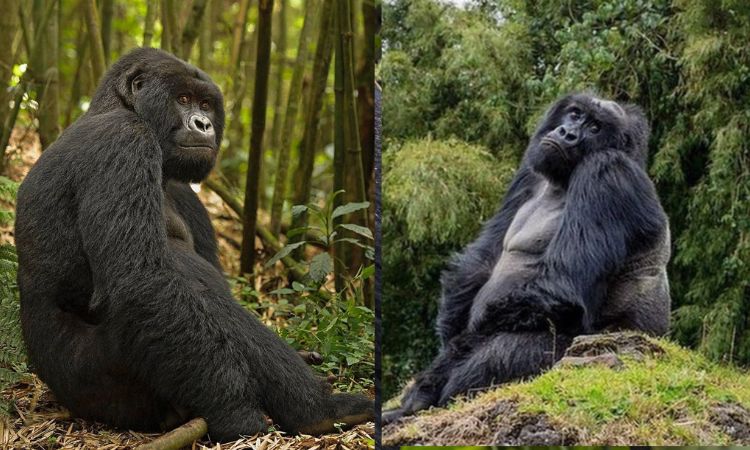
Detailed info About a Blackback Vs Silverback Gorilla.
What Is a Silverback Gorilla?
A silverback gorilla is a mature adult male gorilla, typically 12-15 years or older, distinguished by a striking silver-gray saddle of hair across its back and hips—a sign of full maturity and breeding dominance.
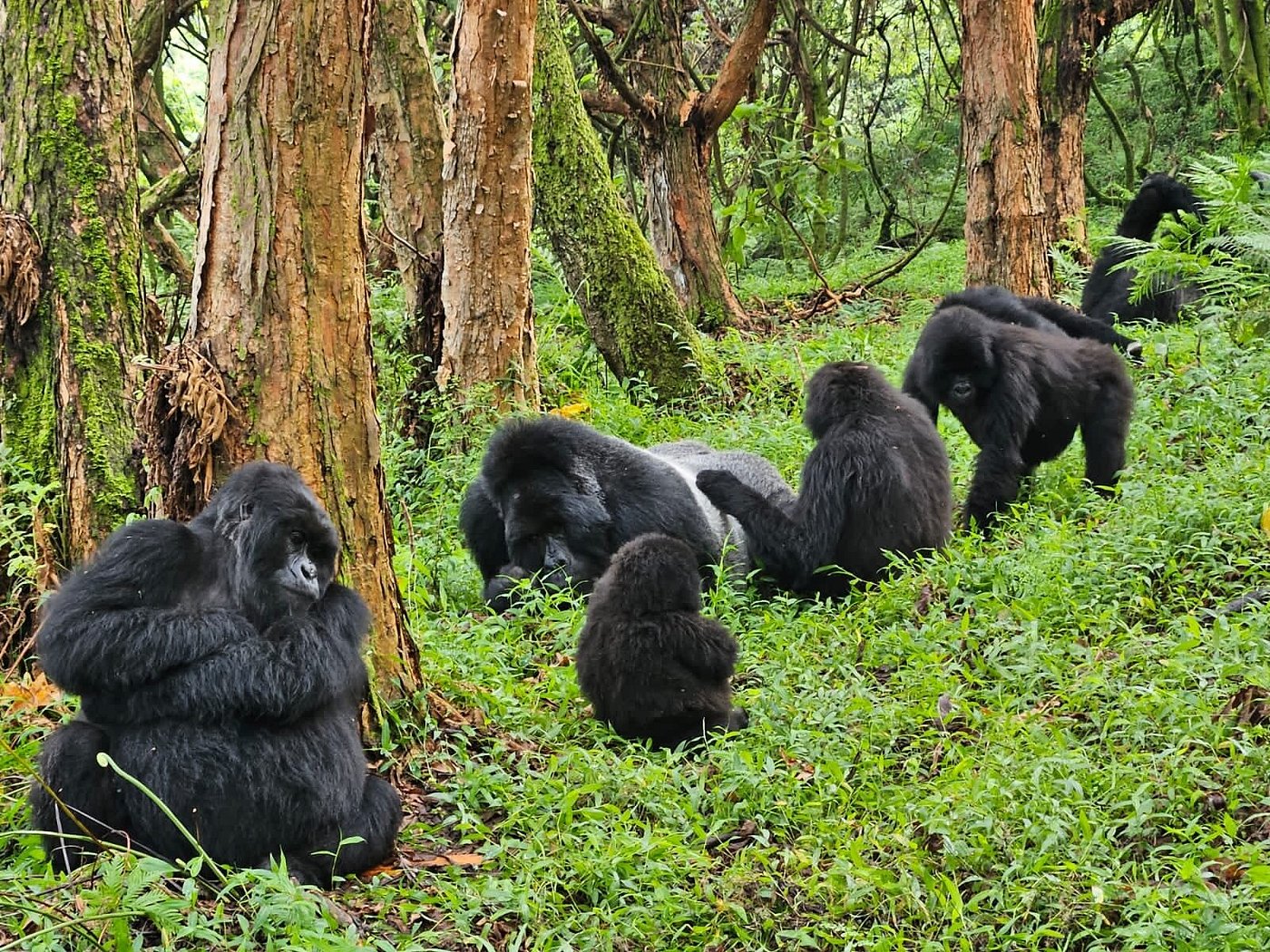
Often the alpha male in a troop of 5-35 members, silverbacks lead with authority, deciding daily activities like foraging, resting, and mating while protecting females, infants, juveniles, and subordinate males from threats.
Silverback mountain gorillas average 1.65-1.75 m (5.4-5.7 ft) standing height, shoulder height ~1.1 m, and weight 170-220 kg (375-485 lbs)—up to twice a female’s mass—with broad chests, massive arms, and sagittal crests for powerful jaws.
Their strength is legendary: capable of lifting 800-1,000 kg dead weight, uprooting trees for fruit, or charging at 40 km/h. Displays like chest-beating, whooping, or branch-slapping assert dominance, especially against rivals.
In mountain gorilla families, the dominant silverback monopolizes mating, though multi-male groups may have secondary silverbacks challenging for power.
Lifespan: 35-50 years in the wild, shorter due to conflicts. Spot them on Volcanoes National Park Rwanda treks, where their charisma shines
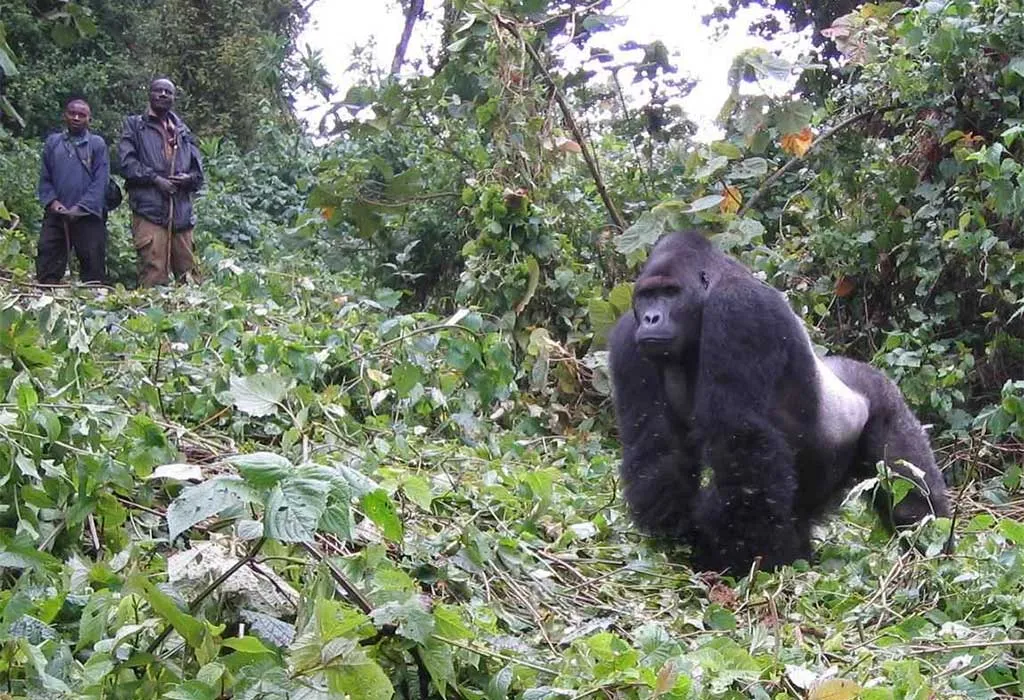
What Is a Blackback Gorilla? A Blackback Vs Silverback gorilla
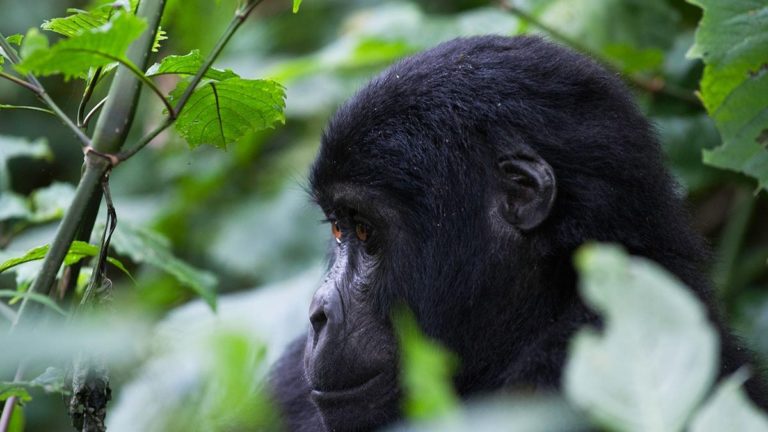
A blackback gorilla, in contrast, is a young adult male gorilla aged 8-12 years—past juvenile but pre-silverback maturity—with sleek, entirely black fur covering the back, hence the name.
At this transitional stage, blackbacks are robust and strong but subordinate, often staying in natal troops to learn leadership or venturing solo to form new groups.
Blackback size lags: 1.4-1.6 m height, 120-160 kg weight, slimmer builds without the silverback’s bulk or crest. They exhibit playful, curious behaviors—exploring, grooming juveniles—while obeying the silverback, assisting in patrols without breeding rights.
Blackbacks may challenge weakly or “steal” females if ousted, common in mountain gorillas unlike lowlands.
This phase prepares them for silverback status around 12-15 years, when silver hair emerges with testosterone surges. During Bwindi gorilla safaris, guides point out blackbacks trailing leaders, highlighting family dynamics.
Blackback Vs Silverback: Age Differences
Age defines blackback vs silverback gorilla: Blackbacks span 8-12 years, sexually mature but not fully grown; silverbacks hit 12-15+ years, with silver hair signaling peak fertility.
Males mature slower than females (8-10 years), spending early years as infants (0-3), juveniles (3-6), then blackbacks.
By 8 years, blackbacks leave natal groups ~50% of the time, wandering as solitaries or joining others to bulk up. Silverbacks solidify leadership post-15, ruling up to 20 years until overthrow or death.
In 2026 censuses, aging silverbacks in Virunga show troop stability challenges. This timeline fuels “blackback gorilla age” searches for trekkers decoding hierarchies.
Quick facts about silverback gorillas; size, height, and lifespan
Gorillas live in families that are headed by silverback gorillas. The silverback gorilla isn’t a different gorilla species but rather a mature male gorilla.
Silverback mountain gorillas grow grayish-white hairline on the back and shoulders. A male that is still a juvenile and not yet a grown-up silverback is called a black back.
Silverback gorillas are massive in size compared to females. The silverback gorillas weigh about 270 kg. Male gorillas become adults when they reach 8 (eight) years.
It is around this age bracket when most of the males often decide to leave the original families to form their own.
It is around this age when the hair of gorillas starts turning greyish. A mature and lone blackback or silverback gorilla can stay close to a particular family and try to dethrone the dominant silverback, especially when they become strong.
In case he fails to overthrow the dominant leader of the group, he can try to steal some females from the family.
Some males tend not to leave the main family even when they reach maturity age. They keep loyal to the dominant silverback and also assist in the protection of the family from intruders. This kind of arrangement is common with mountain gorillas unlike with the western lowland gorillas.
While it is possible to find many silverbacks in a single gorilla family, the family can only have one silverback. The dominant male of the group has 100% authority and dictates what it is to be done and when in the course of the day.
He is the one who determines when to set off for eating, resting and above all, he is entitled to mating with all the females in the family.
Gorilla mating is usually initiated by the female upon reaching maturity age. The dominant silverback gorilla takes control of the family comprising of 5-35 members. The family can have infants, juveniles, and adult males.
Blackback Vs Silverback: Size and Height Comparison Table
Size starkly differentiates blackback vs silverback: Silverbacks tower at 1.65-1.95 m standing, 170-250 kg, with 2.3-2.6 m arm spans and barrel chests; blackbacks measure 1.4-1.6 m, 120-160 kg, leaner frames.
Comparison table:
Silverback height aids intimidation; blackback size suits agility. Wild mountain gorillas outsize captives by 10-20% due to diet. Visualize on Mgahinga National Park hikes.
Blackback Vs Silverback: Strength and Physical Power
Silverback strength crushes blackbacks: 9-10x human male, lifting 800+ kg, bite force 1,300 PSI; blackbacks match juveniles at 4-6x, strong but unproven. Silverbacks fell trees, hurl 200 kg logs; blackbacks climb/play wrestle.
Muscle density, testosterone drive this—silverbacks have 2x fast-twitch fibers. In clashes, silverbacks win 90%, teaching blackbacks limits. “Silverback gorilla strength” queries spike for safari prep
Blackback Vs Silverback: Behavior and Social Roles
Silverback behavior is authoritative: leads migrations, mates exclusively, protects via charges/displays.
Blackbacks are subordinate—playful groomers, secondary sentinels, biding time for takeover. Silverbacks rarely aggress internally; blackbacks test boundaries subtly.
In multi-male troops (common mountains), loyal blackbacks aid defense, gaining tolerance. Females initiate mating, but silverbacks claim priority. Observe on Kahuzi-Biega treks.
Blackback Vs Silverback: Habitat and Family Dynamics
Both inhabit montane forests (2,500-4,000m): Bwindi, Virunga for mountains. Silverbacks anchor stable groups; blackbacks roam edges or solitaries. Troops: 5-35, silverback-led.
Diet: 30-50 kg vegetation daily—leaves, fruits; silverbacks access tougher foods via power. No aggression preference; both peaceful unless provoked.
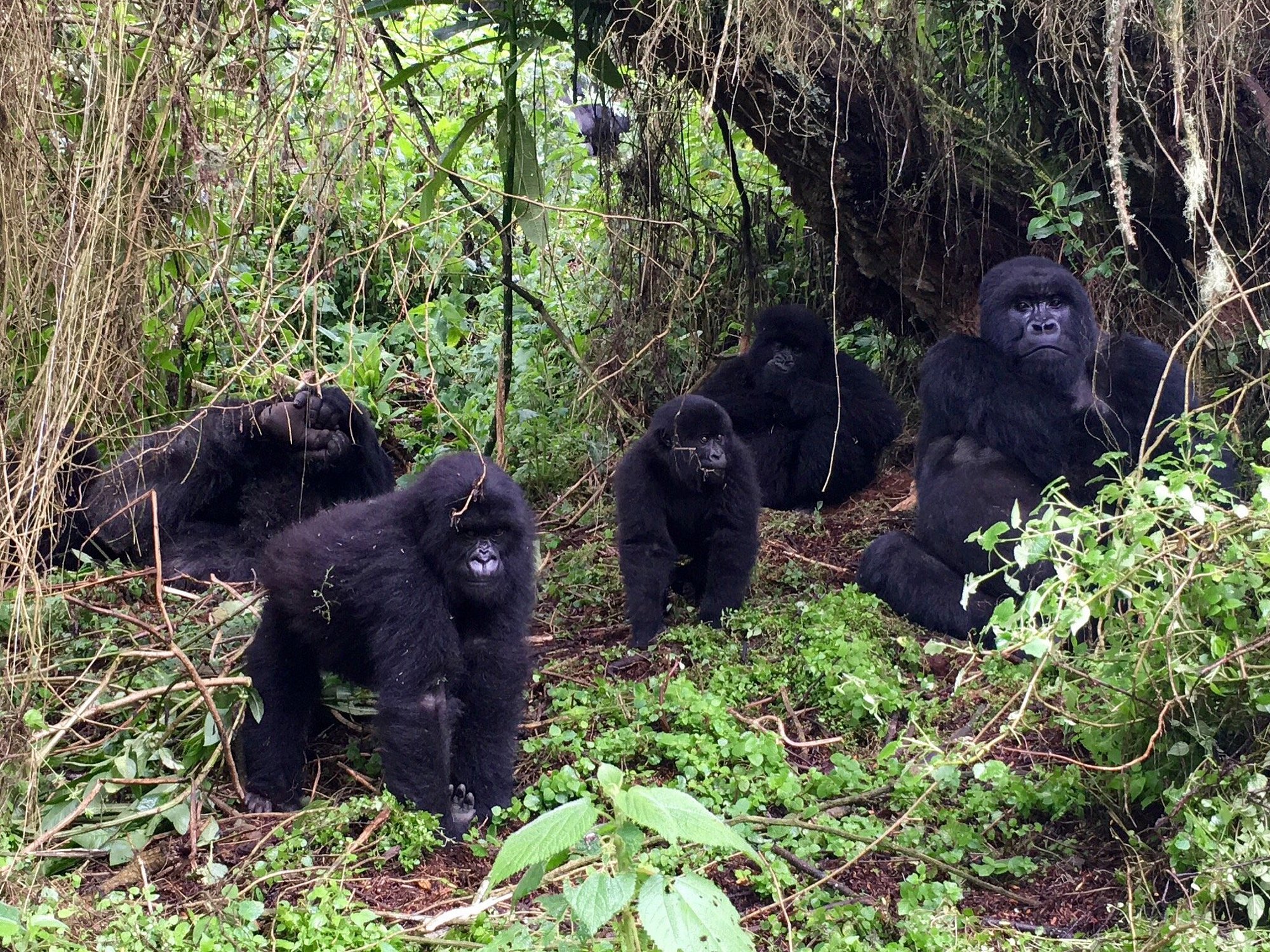
Are Silverback Gorillas Aggressive?
A dominant silverback gorilla leads by example and with charisma. Often, the silverback is peaceful, and rarely does he use force, except when provoked. When an intruder gets o threatens the family, then the dominant gorilla can react.
What do Silverback Gorillas Feed?
Silverback gorillas like other gorillas depend on the plants, shoots, fruits, and leaves. At times, they also depend on termites, insects, and ants. Silverback gorillas can also feed on flowers, tree bark, and fungi.
Best places to find the blackback & silverback gorillas in Africa?
In Africa, the best places to find silverback and blackback gorillas include Uganda, Rwanda, and Congo. In Uganda, silverbacks and blackbacks can be spotted in Bwindi Impenetrable National Park and Mgahinga National Park.
These two parks protect up to about 25 gorilla groups that exist in the 5 regions –Ruhija, Buhoma, Nkuringo, and Rushaga sectors.
In Rwanda, visit Volcanoes National Park in Ruhengeri. While in the Democratic Republic of Congo (DRC), black backs and silverback gorillas thrive in the Virunga National Park (for mountain gorillas) then Kahuzi-Biega National Park and Maiko National Park –for the Eastern lowland gorillas.
Permits: Uganda $800, Rwanda $1,500, DRC $450 (2026 rates). Dry seasons (Jun-Feb) best. Age 15+.
Book gorilla trekking tours: 3-Day Bwindi ($2,500/pp), 4-Day Rwanda Double Trek. Contact info@adventureugandasafaris.com.
How to See Blackback and Silverback Gorillas in Africa?
To see the blackback and silverback gorillas in Uganda, Rwanda, and Congo, you should plan and book a gorilla tour with Maranatha Tours and Travel.
Contact our team via info@adventureugandasafaris.comor call: +256 414 231 454 | +256 701800149.
How Many Silverback Gorillas are in the World?
The exact number of silverback gorillas isn’t known because it varies depending on the gorilla families. The same with black backs, their population varies significantly depending on a number of factors, especially the available gorilla families.
Blackback and Silverback Gorilla Trekking Permits in Uganda, Rwanda and Congo.
The cost of gorilla permits for trekking blackback and silverback gorillas differs depending on the destination. In Uganda, a single gorilla permit costs USD 800 per person, then in Rwanda, you can book a permit at USD 1500 per visitor.
If you are visiting the Democratic Republic of the Congo (DRC), a permit costs USD 450 per visitor and the charge applies to all gorilla safaris to see mountain gorillas and eastern lowland silverback gorillas.
When to go and see the Blackback and Silverback Gorillas?
Silverback and blackback gorillas can be encountered at any time of the year. However, the dry months are the best to travel to Uganda, Rwanda, and Congo to explore the silverback and blackback gorillas in their natural habitat.
The dry season occurs in the months of June, July, August, September, December, January, to February.
Minimum Age limit for Blackback and Silverback Gorilla Trekking
Black back Vs silverback gorillas: The acceptable age limit to consider for trekking the blackback and silverback gorillas in the wild is 15 years and above.
Conclusively, blackback and silverback gorillas are must-see on gorilla tours. The two are distinct in one way or the other. Visit Uganda, Rwanda, or Congo to have a deep understanding of the difference between blackback and silverback gorillas in the wild.
Popular Tours for A Blackback Vs Silverback gorilla
3 Days Bwindi Gorilla Trekking Tour
3 Days Bwindi Gorilla Trekking Tour is the best budget and Short Uganda Safaris Tour package designed for you to get up close with a group of mountain gorillas while in their natural habitat.
Bwindi Impenetrable National Park is in southwestern Uganda, 530 kilometers that is approximately 8-10 hours’ drive from Entebbe or Kampala city center and 3-4 hours by road from Kigali. Read more
4 days Rwanda double gorilla trek
4 days Rwanda double gorilla trek involves trekking mountain gorillas in Volcanoes National Park twice.
This double gorilla trekking safari package in Volcanoes National Park takes you through two distinct habituated groups each having unique story to share. Explore our 4 days Rwanda double gorilla trek
Gorilla Trekking Tips: Spotting Blackback Vs Silverback
Stay 7m back, quiet; guides ID via hair/size. Silverbacks front/charge; blackbacks rear/curious. Ethical tours fund conservation (~1,000 mountains left).
Interesting Facts: Blackback Vs Silverback
-
Silverbacks live 35-50 years; blackbacks transition ~13 years.
-
Multi-silverback troops rarer in lowlands.
-
Blackbacks eat less (20-30 kg/day).
Frequently Asked Questions
What is the difference between blackback and silverback gorilla?
Blackbacks (8-12 yrs, black fur, subordinate); silverbacks (12+ yrs, silver saddle, leaders).
How strong is a blackback vs silverback?
Silverback 800+ kg lift; blackback less muscular.
Where to see blackback and silverback gorillas?
Bwindi Uganda, Volcanoes Rwanda.
Age for blackback to silverback?
12-15 years.
Conclusion
Blackback vs silverback gorilla boils to maturity: youth vs leadership, black vs silver, support vs dominance. Trek Bwindi or Virunga 2026—book today for unforgettable gorilla safaris Uganda Rwanda! Support conservation, witness evolution live.