
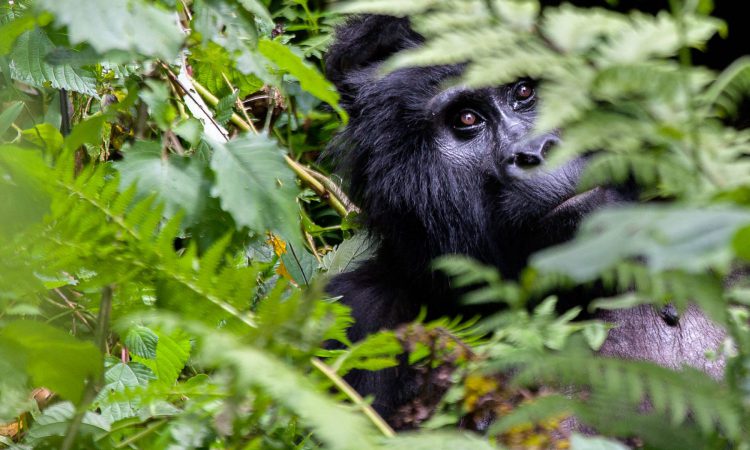
Best Time to Visit Uganda: A Season-by-Season Uganda Safari Guide
What is the best time to visit Uganda for wildlife safaris, gorilla trekking, and hiking? It’s one of the first questions every traveler asks before booking a Uganda safari, and the good news is that Uganda genuinely is a year-round safari destination.
Straddling the Equator, Uganda enjoys warm, tropical weather with only modest seasonal shifts, which is exactly why the Pearl of Africa can support game drives, gorilla trekking, and chimpanzee tracking in virtually any month you choose to travel.
Uganda’s Location and Weather Pattern
Uganda sits at the heart of Sub-Saharan Africa, bordered by South Sudan to the north, Kenya to the east, Tanzania to the south, Rwanda to the southwest, and the Democratic Republic of Congo to the west. Lying directly astride the Equator gives Uganda its pleasantly warm, tropical climate and is the main reason a Uganda safari works so well at any time of year.
Average daytime temperatures across the country hover around 21.5°C (71°F), dropping to roughly 12°C (54°F) overnight, with altitude playing a major role — higher-elevation destinations like Bwindi Impenetrable National Park stay noticeably cooler than the savanna parks.
Annual rainfall typically falls between 1,000 and 2,000 millimeters, usually arriving as short, sharp downpours rather than all-day rain, which is why a Uganda gorilla trekking safari can usually continue even when a shower rolls through.
Uganda experiences two dry seasons and two wet seasons each year, and this rhythm is the real foundation for planning the best time to visit Uganda.
The Dry Season in Uganda: June to Mid-September and December to February
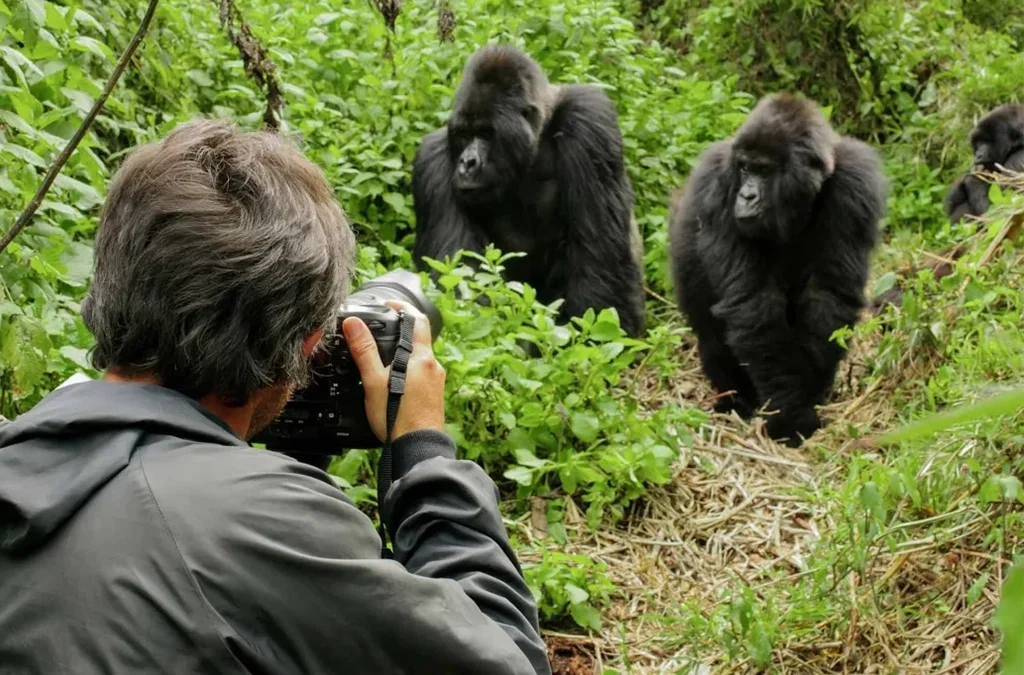
The two dry seasons — from June through mid-September and again from December through February — are widely considered the best time to visit Uganda for game viewing and gorilla trekking.
With drier trails underfoot, hiking through Bwindi Impenetrable Forest for gorilla trekking is noticeably easier, and cooler high-altitude temperatures in the forest keep the trek comfortable even though it falls in the dry season.
Because Uganda’s climate is tropical, some rainfall is still possible during these months, but it rarely disrupts a Uganda safari itinerary or a scheduled gorilla trek. Daytime temperatures generally range between 17°C and 28°C, occasionally dipping to around 13°C in mountainous regions and during the evenings.
This period is peak season for a Uganda safari, meaning all ten national parks are fully accessible and wildlife sightings — elephants, lions, leopards, buffalo, and more — are at their most reliable in the savanna parks.
It’s also when demand is highest, so gorilla permits and lodge availability should be booked as much as six months in advance if you want to secure your preferred dates.
Even during peak season, Uganda’s national parks rarely feel crowded, so you can expect a genuinely intimate wildlife experience even at the busiest time of year.
Travelers who want to combine both dry-season highlights often head first to Queen Elizabeth National Park for game viewing before continuing on to Bwindi for a face-to-face encounter with mountain gorillas — a classic pairing on any well-planned Uganda safari.
The Wet Season in Uganda: March to May and September to November
The wet season, spanning March through May and again from September through November, brings more consistent rainfall across the country, but it doesn’t rule Uganda out as a safari destination.
None of the parks are at their absolute peak for game viewing during these months, but wildlife sightings are still very achievable, and traveling outside peak season typically means lower prices and far more lodge availability.
Rain during Uganda’s wet season rarely lasts all day — skies tend to clear quickly after a downpour, leaving plenty of time to continue game drives, nature walks, or gorilla trekking.
The long rains of March and April, which run into May, are generally considered the least ideal window for a Uganda safari, though travelers who don’t mind occasional rain are rewarded with lush, green landscapes and dramatic photography conditions.
The wet season is also when Uganda’s birding safaris shine. Migratory birds begin arriving in November, kicking off the best birdwatching season, which runs through April. With over 1,000 recorded bird species, Uganda is a serious birding destination, and the quieter wet-season months between March–May and October–November are often cited as the best time to visit Uganda if you want fewer crowds alongside excellent birding.
A dedicated Uganda birding safari built around these months can be one of the most rewarding ways to experience the country’s wildlife away from the peak-season rush.
Murchison Falls maintains fairly steady conditions year-round, making a visit to see the Nile and the falls themselves a strong addition to a Uganda safari regardless of season.
Top Things to Do on a Uganda Safari, Any Time of Year
Uganda’s appeal goes well beyond weather. On a well-rounded Uganda safari you can track mountain gorillas on a gorilla trekking safari in Bwindi or Mgahinga Gorilla National Park, follow chimpanzees through Kibale Forest, Kyambura Gorge, Kalinzu Forest, Budongo Forest, or Toro-Semliki Wildlife Reserve, and trek golden monkeys in Mgahinga. Hikers can tackle the snow-capped Rwenzori Mountains, Mount Elgon, or the Virunga volcanoes of Sabyinyo, Gahinga, and Muhabura.
For classic savanna game viewing, Murchison Falls National Park, Lake Mburo National Park, and Queen Elizabeth National Park remain the country’s best wildlife destinations, home to elephants, buffalo, lions (including Uganda’s famous tree-climbing lions), leopards, and rhinos.
Add in over 1,000 bird species, the source of the Nile, Lake Victoria, and the tropical Ssese Islands, and it’s easy to see why Uganda safaris draw such a wide range of travelers, from dedicated birders to first-time primate trekkers.
With 10 national parks, 12 wildlife reserves, and numerous sanctuaries, Uganda genuinely earns its nickname as the Pearl of Africa — and choosing the right season simply helps you decide which of these experiences to prioritize first.
What to Pack for a Uganda Safari
Packing light but smart makes a real difference on a Uganda safari. Essentials include waterproof hiking boots, a good camera, long-sleeved shirts and trousers for gorilla trekking, a daypack, gardening gloves, a first-aid kit, sunglasses, sunscreen, insect repellent, bottled water, snacks, toiletries, and your passport and visa documents.
For more detailed planning advice, Adventure Uganda Safaris’ travel information page and money tips for visitors guide cover the practical details worth sorting out before you fly.
Planning Your Uganda Safari
Whether you’re chasing the driest trekking conditions or the quietest birding months, the best time to visit Uganda really depends on what you want most from your trip.
If you’d like help matching your travel dates to gorilla permits, park conditions, and lodge availability, Adventure Uganda Safaris can build a tailor-made Uganda safari itinerary around the season that suits you best.