

What is gorilla trekking: Top Guide to Uganda Safari 2026
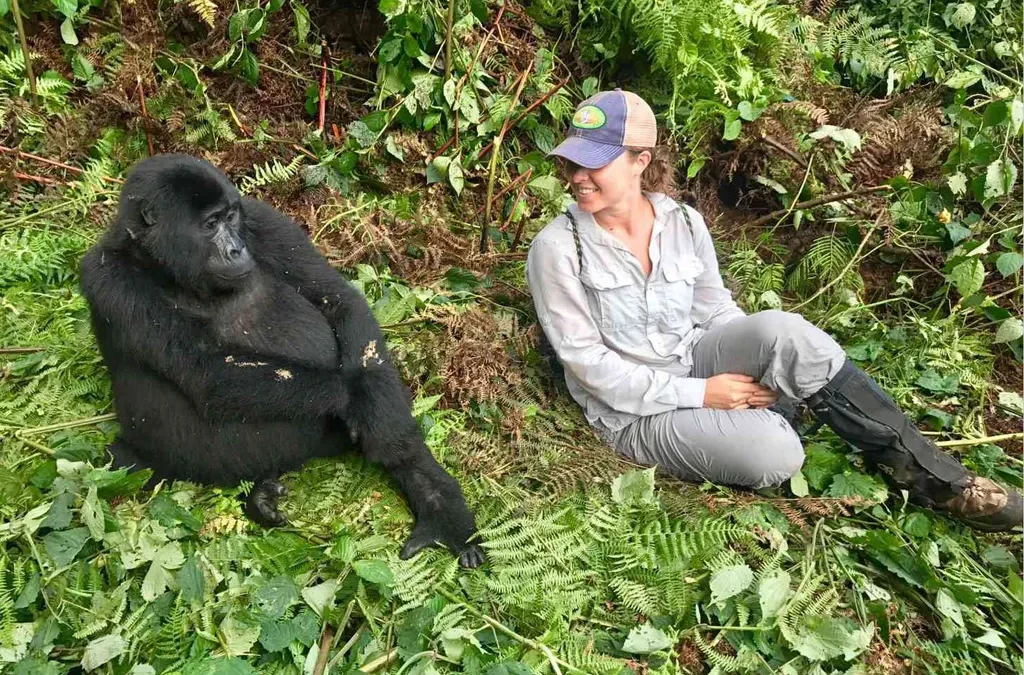
Gorilla trekking is a guided walk through the forest to find a family of wild mountain gorillas and spend one hour watching them.
You follow trackers and rangers along the trail the gorillas left, meet a habituated family and observe them feeding, playing and resting at close range.
Every visitor needs a gorilla permit, a document from the park authority that gives access to trek the gorillas in their protected habitat.
Permit fees fund conservation and help the communities living around the forests.
What does a gorilla trekking safari involve?
A typical trek day in Uganda follows the same steps:
- Early briefing: you meet at the park headquarters, where rangers assign you to a gorilla family and explain the rules.
- The hike: you set off with armed ranger guides and trackers, who have already located the group that morning.
- The encounter: once you find the family, you have exactly one hour to watch, photograph and listen.
- The return: you walk back to the trailhead and receive a certificate to mark the experience.
The hike can take anywhere from 30 minutes to most of a day, depending on where the gorillas moved overnight. That is why a reasonable level of fitness matters, and why many visitors hire a porter.
If you would rather not organise permits, transport and lodging yourself, a local operator such as Adventure Uganda Safaris can plan a tailor-made gorilla safari from start to finish.
Where to Go Gorilla Trekking
Mountain gorilla trekking is offered in four national parks across three countries: Bwindi and Mgahinga in Uganda, Volcanoes in Rwanda and Virunga in the Democratic Republic of Congo.
Uganda has the most gorilla families and the most choice.
1. Bwindi Impenetrable National Park (Uganda)
Bwindi is the heart of gorilla trekking in Uganda. It lies on the edge of the Albertine Rift in southwestern Uganda, covers roughly 320 square kilometres of dense, ancient rainforest and borders the Democratic Republic of Congo.
More than 20 habituated gorilla families are open to visitors, and a maximum of eight people can visit each family per day.
Bwindi has four trekking sectors, each with its own feel:
| Sector | Location | What to expect |
|---|---|---|
| Buhoma | North | Most developed and easiest to reach; good for first-timers and birders |
| Ruhija | East | Higher and cooler, with beautiful forest and excellent birding |
| Rushaga | South | The largest number of gorilla families, so more choice and flexibility |
| Nkuringo | South | Steep, scenic and challenging, with sweeping views |
Your operator can help you choose a sector based on your fitness, budget and travel dates.
2. Mgahinga Gorilla National Park (Uganda)
Mgahinga sits in the far southwest corner of Uganda, bordering Rwanda and the Democratic Republic of Congo.
At only 33.7 square kilometres, it is the smallest of the gorilla parks and has one habituated group, the Nyakagezi family. Many visitors combine it with golden monkey tracking and a volcano hike.
3. Volcanoes National Park (Rwanda)
Volcanoes National Park covers more than 160 square kilometres of Afro-montane forest in northwestern Rwanda.
More than ten gorilla families are open for trekking, with the same limit of eight visitors per family each day. It is a popular choice, though permits cost much more than in Uganda.
4. Virunga National Park (DR Congo)
Virunga National Park in eastern Congo offers gorilla trekking at the lowest permit price, but security conditions can change, so check government travel advice and book through a reputable operator.
How Much Does a Gorilla Trekking Permit Cost?
A gorilla permit costs USD 800 per person in Uganda, USD 1,500 in Rwanda and about USD 400 in the Democratic Republic of Congo, based on the rates available at the time of writing.
Uganda is the best value of the two most popular destinations.
| Country | Park | Permit price (per person) |
|---|---|---|
| Uganda | Bwindi Impenetrable National Park | USD 800 |
| Uganda | Mgahinga Gorilla National Park | USD 800 |
| Rwanda | Volcanoes National Park | USD 1,500 |
| DR Congo | Virunga National Park | About USD 400 |
Permit prices are set by the park authorities and are revised from time to time, so always confirm the current rate with your operator before you pay.
How to book a gorilla permit
- Choose your dates early. Permits are limited to eight visitors per gorilla family per day, so peak months sell out. Book about six months ahead for June to September and December to February.
- Pick your park or sector. Your operator will match a sector in Bwindi to your fitness and budget.
- Book through a licensed operator. A reliable company reserves your permit with the park authority and arranges transport and lodging around it.
- Check the refund and rescheduling rules before you pay, as they vary by country and by when you cancel.
How Difficult Is Gorilla Trekking?
Gorilla trekking is moderately demanding, and the difficulty depends on where the gorillas are that day, the terrain and your fitness.
Bwindi has steep, forested slopes that can challenge even fit hikers, while some families are reached in under an hour.
Most treks take between two and six hours in total, though they can be shorter or occasionally longer. You walk at a gentle pace, and guides stop for breaks.
Tips to make the trek easier
- Train with hill walks or stair climbs for a few weeks beforehand.
- Ask for an easier family if you have limited fitness; your guide will do their best to match you.
- Hire a porter to carry your daypack and help you on steep sections.
- Wear broken-in waterproof boots and carry plenty of water. See our full what to pack for gorilla trekking guide.
Is Gorilla Trekking Safe?
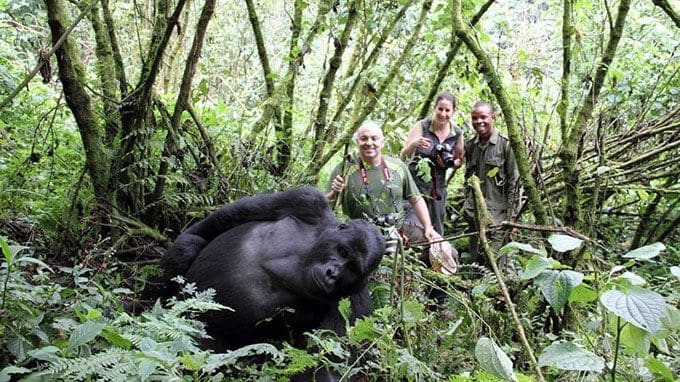
Gorilla trekking is safe and well managed. An experienced, armed ranger leads every group, and you only visit gorilla families that are fully habituated, so the animals are used to people and stay calm.
Follow your guide’s instructions, keep your distance and stay still if a gorilla comes close.
What Is the Age Limit for Gorilla Trekking?
The minimum age for gorilla trekking is 15 years old in Uganda and Rwanda.
The rule protects the gorillas from childhood illnesses and ensures trekkers can follow instructions, including how to behave if a gorilla approaches.
Younger children can enjoy other activities, such as nature walks or community visits, while the rest of the group trek.
Gorilla Trekking Rules
The rules protect the gorillas, which are vulnerable to human illness, and they keep you safe.
- Keep at least about seven metres from the gorillas, and step back if they approach.
- Stay in a group of no more than eight visitors and spend no more than one hour with the family.
- Do not trek if you are ill, even with a cold, as gorillas can catch human diseases.
- Keep your voice low and do not eat, drink or smoke near the gorillas.
- Do not use flash photography, and switch it off before you start.
- Do not touch the gorillas, even if one comes close; stay still and let it pass.
- If you need to sneeze or cough, turn away and cover your mouth.
- Take your litter back out of the forest.
Best Time for Gorilla Trekking
Gorillas can be trekked all year. The dry months, June to September and December to February, are the most comfortable, with drier trails and easier hiking. They are also the busiest, so book early.
The wetter months, March to May and October to November, bring muddier trails but fewer visitors, greener scenery and good birding. Whatever the season, pack a rain jacket and waterproof boots.
Is Gorilla Trekking Worth It?
Yes. Gorilla trekking is one of the most powerful wildlife encounters in the world, and your permit directly supports conservation.
Mountain gorillas cannot survive in captivity, so there are none in any zoo, and trekking is the only way to see them.
More than 1,000 mountain gorillas remain in the wild, found only in Uganda, Rwanda and the Democratic Republic of Congo.
They are classified as endangered, though their numbers have been growing thanks to protection and tourism income.
How gorilla trekking helps conservation
- Permit fees: a share goes to park management, rangers and anti-poaching work.
- Community benefit: a portion of revenue is shared with communities around the parks.
- Local jobs: guides, porters, trackers, lodge staff and craft makers all earn income from trekkers.
- Disease protection: strict rules and visitor limits reduce the risk of illness spreading to the gorillas.
Many visitors also combine gorilla trekking with chimpanzee tracking, golden monkey tracking and game drives, which makes Uganda a rewarding primate safari destination.
Frequently Asked Questions About Gorilla Trekking
What is gorilla trekking?
It is a guided forest walk to find a habituated mountain gorilla family and spend one hour watching them.
Where can I go gorilla trekking?
You can trek in Bwindi and Mgahinga in Uganda, Volcanoes National Park in Rwanda and Virunga National Park in the Democratic Republic of Congo.
How much is a gorilla permit?
It was USD 800 in Uganda, USD 1,500 in Rwanda and about USD 400 in Congo at the time of writing. Confirm current prices before booking.
How long does a gorilla trek take?
The hike can take from 30 minutes to most of a day, followed by one hour with the gorillas.
How many people can visit a gorilla family?
A maximum of eight visitors can visit each habituated gorilla family per day.
How far in advance should I book?
Book about six months ahead for peak months, June to September and December to February.
Is gorilla trekking safe?
Yes. Armed rangers lead every trek, and you only visit fully habituated families.
What is the minimum age?
Trekkers must be at least 15 years old.
What should I pack?
Pack waterproof boots, long sleeves and trousers, a rain jacket, gloves, water and snacks. See our packing guide for the full list.
Plan Your Uganda Gorilla Trekking Safari with Adventure Uganda Safaris
Ready to meet the mountain gorillas? Adventure Uganda Safaris plans tailor-made gorilla trekking safaris in Bwindi Impenetrable National Park and Mgahinga Gorilla National Park and combined Uganda and Rwanda trips, with expert guides, comfortable 4×4 vehicles and carefully chosen lodges.
We book your permit, transport and accommodation from start to finish, and advise on the best sector, season and packing for your dates.
- Permit booking and honest advice on the best dates
- Custom itineraries for couples, families, groups and solo travellers
- Add-ons: golden monkey tracking, chimpanzee tracking, game drives and birding
- Experienced, licensed local guides
Contact Adventure Uganda Safaris today to book your gorilla permit and request a free quote.